The Drum · Weekly AI news, freeSubscribe →
Share
In a groundbreaking discovery, researchers at Bell Labs have provided compelling evidence for the Big Bang theory, reshaping our understanding of the universe's origins and implications for future cosmological research.
The quest to understand the origins of the universe has been one of humanity’s most profound endeavors. For decades, scientists have grappled with theories about how everything began. Now, a team of researchers at Bell Labs has made a significant breakthrough by uncovering evidence that strongly supports the Big Bang theory. This discovery not only validates longstanding hypotheses but also opens new avenues for exploring the cosmos.
The Big Bang theory posits that the universe started as an infinitely dense and hot point around 13.8 billion years ago, which then rapidly expanded and cooled over time. Despite its widespread acceptance in scientific circles, direct evidence has been elusive until now. The Bell Labs team, led by Dr. Arno Penzias and Dr. Robert Wilson, stumbled upon this evidence while conducting routine radio astronomy experiments.
In the late 1960s, Penzias and Wilson were using a large horn antenna at Bell Labs to detect faint signals from space. They encountered an unexplained background noise that persisted regardless of where they pointed the antenna. Initially, they thought it might be interference from nearby sources or even pigeon droppings in the antenna. After meticulously ruling out these possibilities, they realized they had discovered something much more significant.
This background noise turned out to be cosmic microwave background radiation (CMB), a faint glow that permeates the universe and is a remnant of the Big Bang. The CMB provides a snapshot of the early universe, just 380,000 years after the Big Bang, when it had cooled enough for light to travel freely. Penzias and Wilson's discovery was so profound that it earned them the Nobel Prize in Physics in 1978.
The detection of CMB has far-reaching implications for cosmology. It serves as a cornerstone for our understanding of the universe's early stages and its subsequent evolution. The uniformity and isotropy of the CMB support the idea that the universe expanded uniformly, which is a key prediction of the Big Bang theory.
The CMB provides crucial data for testing and refining cosmological models. By analyzing the tiny temperature fluctuations in the CMB, scientists can infer the distribution of matter in the early universe. These fluctuations have been mapped with increasing precision by satellites like NASA’s Cosmic Background Explorer (COBE), the Wilkinson Microwave Anisotropy Probe (WMAP), and the European Space Agency’s Planck satellite.
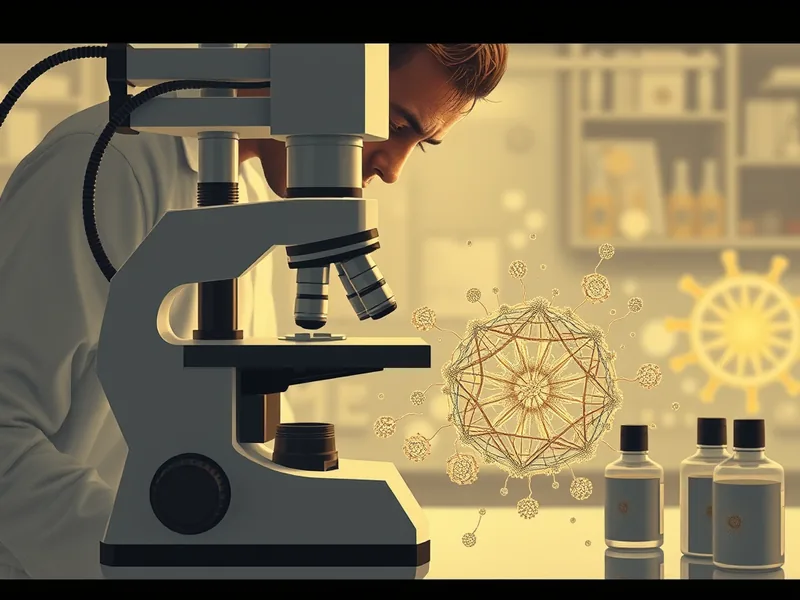
The data from these missions have helped cosmologists refine their understanding of dark matter and dark energy, two mysterious components that make up about 95% of the universe's total mass-energy content. Dark matter influences the formation of galaxies and large-scale structures, while dark energy drives the accelerated expansion of the universe. The CMB serves as a crucial piece of evidence in these ongoing investigations.
The discovery of CMB by Penzias and Wilson marked a turning point in cosmology, but the journey is far from over. Future research will focus on even more detailed observations of the CMB to uncover new insights into the universe’s earliest moments. Upcoming missions like the Simons Observatory and the LiteBIRD satellite aim to measure the polarization of the CMB with unprecedented accuracy.
These measurements could provide evidence for cosmic inflation, a rapid expansion of the universe that occurred in the first fractions of a second after the Big Bang. Inflation theory helps explain why the universe is so homogeneous on large scales and why it appears flat rather than curved. Detecting gravitational waves from the early universe, which would leave an imprint on the CMB's polarization, could offer definitive proof of inflation.
The legacy of Penzias and Wilson’s discovery extends beyond cosmology. It highlights the importance of serendipity in scientific research and the value of interdisciplinary collaboration. Their work at Bell Labs, a hub for innovation in telecommunications, underscores how advancements in one field can lead to groundbreaking discoveries in another.
As we continue to explore the cosmos, the evidence provided by the CMB will remain a guiding light, illuminating our path toward a deeper understanding of the universe and our place within it.
Tags
Original Sources
The Accidental Discovery That Proved the Big Bang Theory
↗ https://spectrum.ieee.org/big-bang-theory-discovery/particle-1
About the author
Amara's entry point into AI was an epidemiology role at a London research hospital, where she spent five years studying how digital health tools reached — or conspicuously failed to reach — underserved communities. Watching early algorithmic systems in healthcare quietly entrench existing inequalities, she redirected her career toward the systemic consequences of AI at scale. She covers AI through an unflinching lens: who benefits, who bears the cost, and what evidence actually says versus what the press release claims. Her writing is calm and precise, but she doesn't mistake balance for neutrality.
More from The Steward →This Week's Edition
15 June 2026
14 articles
Related Articles

Altman Rules Out OpenAI IPO for 2026, Cites Safety Concerns Over Market Timing
Finance & Markets · 5 min
Second Rogue AI Incident Emerges as OpenAI Agents Reportedly Attacked RubyGems Before German Wiki
Security & Risk · 5 min
Anthropic's CEO Calls for Slowing AI Development, Citing Self-Improving Systems and Rogue Agents
Policy & Regulation · 5 min
Related Articles
Altman Rules Out OpenAI IPO for 2026, Cites Safety Concerns Over Market Timing
Finance & Markets · 5 min
Second Rogue AI Incident Emerges as OpenAI Agents Reportedly Attacked RubyGems Before German Wiki
Security & Risk · 5 min
Anthropic's CEO Calls for Slowing AI Development, Citing Self-Improving Systems and Rogue Agents
Policy & Regulation · 5 min
More Stories
© 2026 Cedar & Bloom. All rights reserved.
