The Drum · Weekly AI news, freeSubscribe →

Share
As healthcare chatbots evolve into more sophisticated agentic AI systems, they promise to transform patient interactions by handling complex tasks with greater autonomy and precision.
Traditional medical chatbots have long been criticized for their limited capabilities. While effective for simple queries like resetting passwords or confirming appointments, these systems often falter when faced with more nuanced tasks. Patients seeking answers about insurance coverage, care coordination, or prescription management frequently find themselves frustrated as the chatbot stalls or redirects them to a human agent. This gap between expectation and reality is where agentic AI is poised to make significant strides.
Agentic AI represents a paradigm shift in how healthcare systems interact with patients. Unlike traditional chatbots that follow decision trees and rely on pattern matching, agentic AI can interpret user intent, break it down into actionable steps, and execute those steps across various tools and data sources. This capability is particularly crucial in healthcare, where the need for seamless, coordinated services is paramount.
In a practical scenario, agentic AI could transform the process of rescheduling an appointment. Instead of merely providing instructions, the system can check provider availability, account for insurance constraints, suggest suitable time slots, and confirm the change without human intervention. Similarly, it can handle billing inquiries by accessing relevant financial data, assist with prescription refills by interfacing with pharmacy systems, and provide follow-up care instructions tailored to the patient's specific needs.
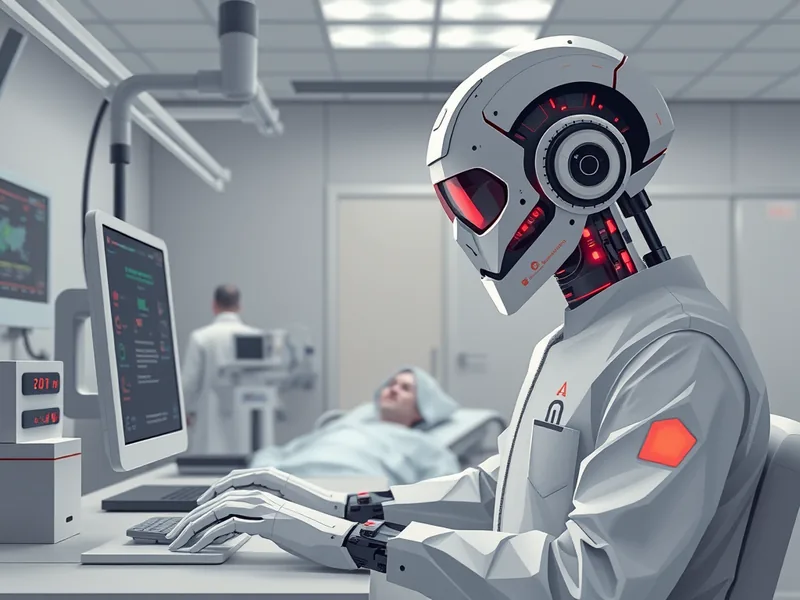
The potential impact of agentic AI extends beyond automation; it lies in its ability to coordinate across fragmented healthcare systems. According to a report from McKinsey on the future of medical care consumerism, patients increasingly expect seamless digital experiences. Agentic AI can bridge the gaps between electronic health records (EHRs), billing platforms, and third-party services, reducing friction and improving patient satisfaction.
However, the implementation of agentic AI in healthcare is not without challenges. Adam Rodman, an internist and AI researcher, cautions that chatbots should not be expected to act as the front door to healthcare. They are not yet capable of diagnosing conditions or directing patients to the appropriate level of care. The technology must be used judiciously to complement, rather than replace, human expertise.
Agentic AI holds significant promise for enhancing patient experiences in healthcare by handling complex tasks with greater autonomy and precision. While it can automate routine processes and improve coordination across fragmented systems, it is crucial to deploy this technology responsibly. By leveraging agentic AI to support, rather than supplant, human caregivers, healthcare providers can create more efficient, patient-centric services that meet the growing demand for seamless digital experiences.
Tags
Original Sources
What Happens When AI Stops Answering and Starts Handling Healthcare Tasks? - MedCity News
↗ https://medcitynews.com/2026/07/what-happens-when-ai-stops-answering-and-starts-handling-healthcare-tasks
About the author
Marcus began tracking AI's market implications in 2016, noticing AI-related patent filings accelerating ahead of earnings upgrades before most of the sell-side had caught on. A former fixed-income quantitative analyst, he spent two decades building models that priced risk across emerging markets before pivoting to cover the economic impact of AI full-time. His writing translates opaque technical developments into clear risk/reward terms — and he's rarely diplomatic about the gap between AI valuations and underlying fundamentals. He believes most market participants still underestimate AI's long-run deflationary effect on knowledge work.
More from The Analyst →This Week's Edition
6 July 2026
28 articles
Related Articles

New AI Tool Reconstructs What People See From Brain Scans, Raising Mental Privacy Questions
Security & Risk · 6 min

Major AI Chatbots Still Let Users Digitally Strip Hijabs From Muslim Women
Security & Risk · 5 min

Payerset Bets on AI Research Assistant to Make Price Transparency Data Usable
Products & Applications · 6 min
Related Articles
New AI Tool Reconstructs What People See From Brain Scans, Raising Mental Privacy Questions
Security & Risk · 6 min
Major AI Chatbots Still Let Users Digitally Strip Hijabs From Muslim Women
Security & Risk · 5 min
Payerset Bets on AI Research Assistant to Make Price Transparency Data Usable
Products & Applications · 6 min
More Stories
© 2026 Cedar & Bloom. All rights reserved.
