The Drum · Weekly AI news, freeSubscribe →
Share
"Entanglement" uses AI to explore timeless human emotions, challenging readers to consider how technology influences our deepest connections and reflections on life's enduring themes.
In an age where technology increasingly mediates our interactions, a new form of creative expression is emerging at the intersection of artificial intelligence (AI) and poetry. "Entanglement: A Brief History of Human Connection," a collection of AI-generated poems, offers a unique lens through which to examine the evolving nature of human relationships in the digital era.
At its core, "Entanglement" is not just about technology; it's about us. It delves into themes of love, loss, and connection-fundamental aspects of the human experience that have remained constant even as our means of communication have evolved. By using AI to generate poetry, the project challenges us to reflect on how machines can capture and convey the nuances of human emotion. This intersection raises questions about creativity, authorship, and the role of technology in shaping our cultural narratives.
The process behind "Entanglement" is as fascinating as its output. The AI system was trained on a vast corpus of existing poetry, allowing it to learn patterns, rhythms, and themes that are characteristic of human poetic expression. Think of it like teaching a child to write by showing them countless examples of good writing. Over time, the AI develops an understanding of what makes poetry work, and it begins to generate its own verses.
One key aspect of this process is the concept of "entanglement" itself. In quantum physics, entanglement refers to a phenomenon where particles become interconnected in such a way that the state of one particle can instantaneously affect the state of another, no matter how far apart they are. The poets and AI researchers behind "Entanglement" draw an analogy between this scientific concept and human relationships, suggesting that our connections with others are similarly intricate and profound.
The poems generated by the AI are not just random strings of words; they are carefully crafted to evoke emotion and provoke thought. For example, one poem titled "Whispers in the Digital Ether" explores the idea of fleeting connections in an online world:
In the vast expanse of digital space, Whispers float like electrons, free. Connections form and break with grace, Echoes of a shared humanity.
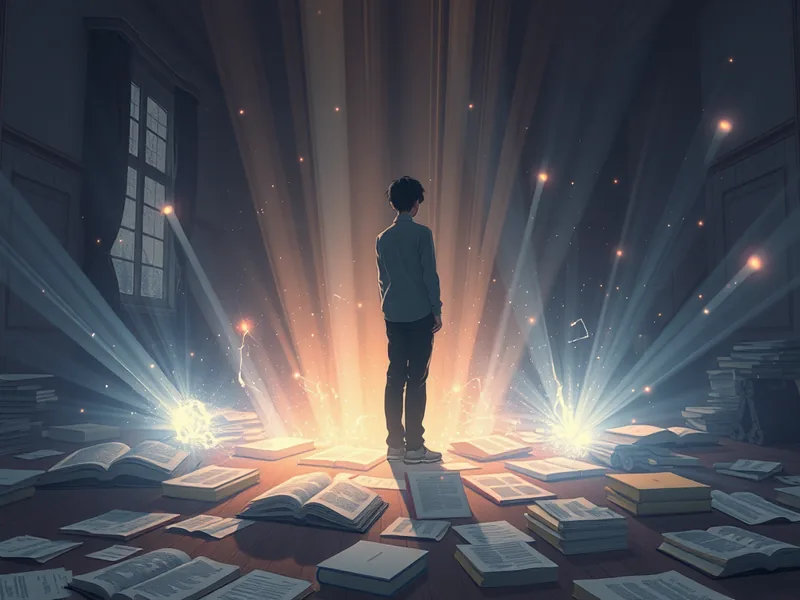
Another piece, "Quantum Love," delves into the complexity of relationships:
Entangled hearts beat as one, Distance fades in the quantum sun. Love transcends the bits and bytes, Binding us through endless nights.
The potential benefits of AI-generated poetry are significant. It can provide a new avenue for creative exploration, allowing poets to collaborate with machines in ways that were previously impossible. This collaboration can lead to innovative forms of expression that challenge traditional boundaries and push the envelope of what poetry can be.
However, there are also risks to consider. One concern is the loss of human touch. Poetry has long been a deeply personal form of art, rooted in individual experiences and emotions. There's a risk that AI-generated poems might lack the depth and authenticity that comes from lived experience. Additionally, questions of authorship and ownership arise when machines create works that are indistinguishable from those written by humans.
As AI continues to advance, its role in creative fields like poetry is likely to grow. This could lead to a future where machine-generated art becomes more prevalent, potentially changing the way we consume and appreciate cultural products. On one hand, this could democratize access to high-quality creative content. On the other hand, it might also homogenize artistic expression, reducing the diversity of voices that contribute to our cultural landscape.
The key to navigating these challenges lies in striking a balance between human and machine creativity. By embracing AI as a tool rather than a replacement for human ingenuity, we can harness its potential while preserving the unique qualities that make art meaningful. "Entanglement" serves as a powerful example of how technology can enhance, rather than diminish, our ability to connect with each other through creative expression.
Tags
Original Sources
↗ https://spectrum.ieee.org/entanglement-poem
About the author
Amara's entry point into AI was an epidemiology role at a London research hospital, where she spent five years studying how digital health tools reached — or conspicuously failed to reach — underserved communities. Watching early algorithmic systems in healthcare quietly entrench existing inequalities, she redirected her career toward the systemic consequences of AI at scale. She covers AI through an unflinching lens: who benefits, who bears the cost, and what evidence actually says versus what the press release claims. Her writing is calm and precise, but she doesn't mistake balance for neutrality.
More from The Steward →This Week's Edition
30 April 2026
29 articles
Related Articles

Iambic Therapeutics Raises $150 Million in IPO to Fund AI-Designed Cancer Drugs
Finance & Markets · 5 min
Biotech's Summer Glow Fades as XBI Slips 11% From August Highs
Finance & Markets · 5 min
States Race to Write the Rules for AI Sandboxes in Health Care, and Lobbyists Are Racing Right Alongside Them
Policy & Regulation · 5 min
Related Articles
Iambic Therapeutics Raises $150 Million in IPO to Fund AI-Designed Cancer Drugs
Finance & Markets · 5 min
Biotech's Summer Glow Fades as XBI Slips 11% From August Highs
Finance & Markets · 5 min
States Race to Write the Rules for AI Sandboxes in Health Care, and Lobbyists Are Racing Right Alongside Them
Policy & Regulation · 5 min
More Stories
© 2026 Cedar & Bloom. All rights reserved.
