The Drum · Weekly AI news, freeSubscribe →

Share
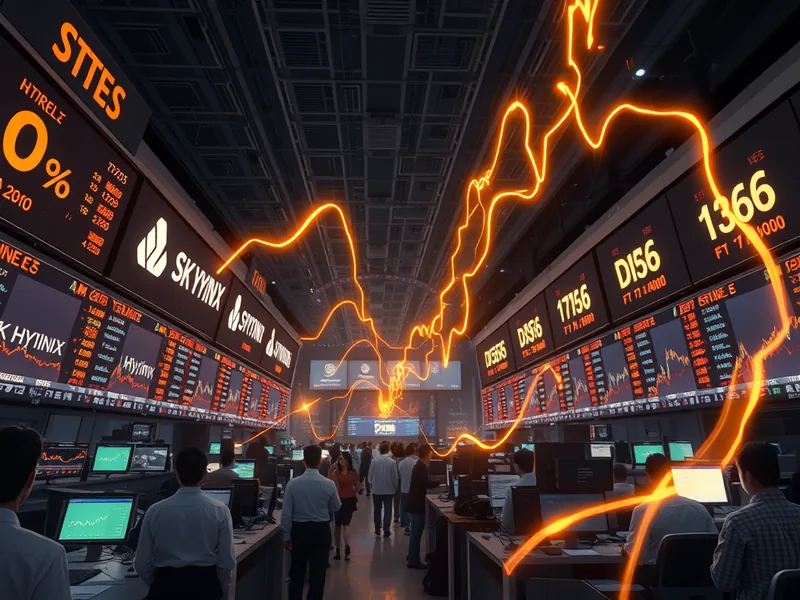
As the AI boom accelerates, chipmakers like SK Hynix and Micron have surged to trillion-dollar valuations, drawing in retail investors but raising concerns about market overheating.
The artificial intelligence (AI) revolution is reshaping global markets, with semiconductor companies at the forefront of this transformation. In recent weeks, South Korea’s SK Hynix and U.S.-listed Micron Technology have both surpassed $1 trillion in market capitalization, driven by surging demand for memory chips essential to AI applications. Samsung Electronics achieved this milestone earlier in May, underscoring the sector's rapid growth.
The enthusiasm is palpable on Wall Street, where analysts are bullish on the future of these tech giants. UBS has more than tripled its target price for Micron, citing the "structural changes AI has driven to the entire memory complex." This optimism comes after a near 250% rally in Micron’s stock so far this year, highlighting the market's confidence in the sector's long-term prospects.
Retail investors are also jumping on the bandwagon. In recent weeks, billions of dollars have flowed into a new exchange-traded fund (ETF) that provides exposure to leading chipmakers like Samsung and SK Hynix. South Korea’s 14 million retail investors have similarly shown strong interest, with these stocks accounting for nearly half of the benchmark KOSPI index.
The surge in demand for memory chips is not just a reflection of technological advancement but also a testament to the broader economic implications of AI. As businesses and governments increasingly adopt AI solutions, the need for high-performance computing resources continues to grow. This trend is expected to fuel further investment in chip manufacturing and related technologies.
However, this rapid growth comes with risks. Breakingviews columnist Robyn Mak notes that retail investors are particularly vulnerable if AI demand falters. With Samsung and SK Hynix comprising a significant portion of the KOSPI index, any downturn could have a substantial impact on investor portfolios. The market's current exuberance may be masking underlying vulnerabilities.
The AI boom is also contributing to broader economic challenges. Policymakers are already grappling with inflationary pressures exacerbated by surging oil prices due to the ongoing conflict in Iran. The productivity gains that new Federal Reserve Chair Kevin Warsh is counting on to mitigate these issues may take years to materialize. In the interim, markets are pricing in a U.S. Rate hike, which could further complicate the economic landscape.
For investors, the AI-driven chip sector presents both opportunities and risks. The potential for continued growth and innovation is significant, but so are the risks of overvaluation and market volatility. Retail investors, in particular, should exercise caution and consider diversifying their portfolios to mitigate exposure to any single sector or company.
Institutional investors may find value in the long-term prospects of AI and related technologies, provided they conduct thorough due diligence and maintain a balanced approach to risk management. The key will be to stay informed about market trends, regulatory developments, and technological advancements that could impact the sector's trajectory.
As the AI boom continues to heat up, it is crucial for investors to remain vigilant and adaptable. While the current momentum is strong, the path ahead may not be without its challenges.
Tags
Original Sources
The AI boom’s rising heat
↗ https://www.reuters.com/markets/econ-world/ai-booms-rising-heat-2026-05-28
About the author
Marcus began tracking AI's market implications in 2016, noticing AI-related patent filings accelerating ahead of earnings upgrades before most of the sell-side had caught on. A former fixed-income quantitative analyst, he spent two decades building models that priced risk across emerging markets before pivoting to cover the economic impact of AI full-time. His writing translates opaque technical developments into clear risk/reward terms — and he's rarely diplomatic about the gap between AI valuations and underlying fundamentals. He believes most market participants still underestimate AI's long-run deflationary effect on knowledge work.
More from The Analyst →This Week's Edition
3 June 2026
29 articles
Related Articles
Related Articles
More Stories
© 2026 Cedar & Bloom. All rights reserved.