The Drum · Weekly AI news, freeSubscribe →

Share
New tools can flag subtle signs of cognitive decline years before a conventional exam would catch them. But a flag in a chart isn't care, and health systems haven't finished building what comes after the alert.
A patient sits down for a routine primary care visit and completes a brief cognitive assessment, the kind that takes a few minutes and feels almost incidental. The result comes back showing a pattern associated with possible impairment. It is not a diagnosis. It is, however, concerning enough that someone should follow up.
Here is where things get complicated. The neurologist's schedule is already full for months. The primary care team is not entirely sure who is supposed to explain the finding, or how. The patient's family wants answers that this result, on its own, simply cannot give them.
That scene is becoming the real test for the next generation of cognitive screening. AI can now pick up on subtle changes in timing, speech patterns, attention and task performance that might slip past a clinician during a normal visit. Blood based biomarkers are also edging closer to routine use in clinical settings. Together, these tools could help identify cognitive decline while people still have meaningful options for treatment, planning and support.
Earlier detection is genuinely valuable. But it comes with an obligation that does not end the moment an alert shows up in the electronic health record. Health systems need to decide, well before that alert ever appears, how a risk signal turns into an actual clinical pathway. Without that groundwork, screening risks simply shifting uncertainty from the clinician's desk onto the patient's shoulders, without bringing either one closer to real care.
A screening result lives in an uncomfortable middle ground. It carries more weight than a routine abnormal lab value because it touches something deeply personal: a person's memory, judgment, independence. And yet it remains far less conclusive than an actual diagnosis. That distinction has to be preserved, carefully and consistently.
Cognitive performance can be thrown off by depression, poor sleep, medication side effects, pain, hearing or vision problems, language barriers, education differences and acute illness. A digital assessment might flag a pattern worth investigating, but it cannot sort out which of these factors, if any, is responsible. Even Alzheimer's biomarkers are meant to be used as one piece of a larger evaluation. Recent coverage of blood based biomarkers noted that imaging or cerebrospinal fluid testing may still be needed for some patients, even after a biomarker test comes back positive.
Words matter enormously here. "Elevated risk," "possible impairment" and "consistent with pathology" sound similar but mean very different things. A health system needs to define, in plain terms, what each result actually means, what it does not establish, and what specific action it should trigger. That language has to stay consistent whether it shows up in primary care, neurology, radiology, lab medicine or a message sent directly to the patient.
Think of it like a smoke detector. A beeping alarm tells you something triggered it. It does not tell you whether there's a fire, a bit of burnt toast, or a dying battery. Someone still has to walk over, check the kitchen and decide what to do next. A cognitive screening result works the same way: it demands a response, not a verdict.
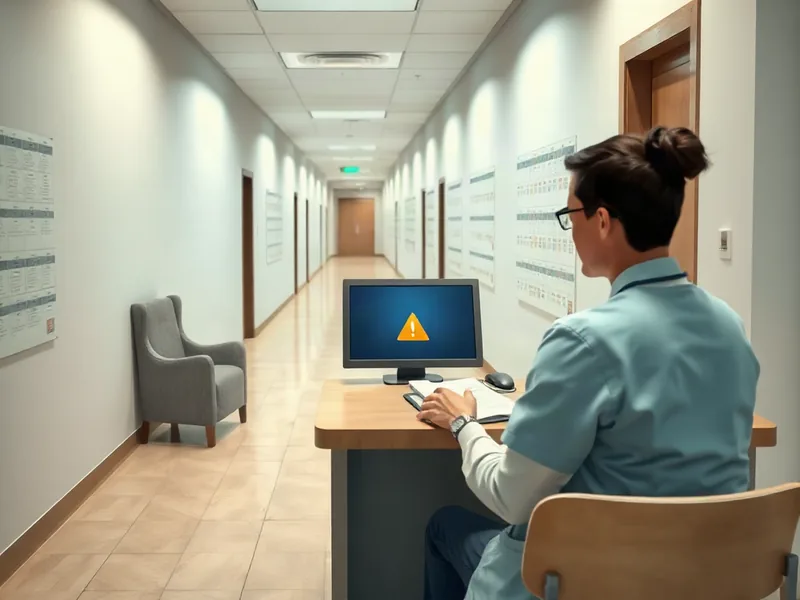
No screening program is ready to scale until someone is clearly responsible for acting on the result. That person might be the ordering clinician, a trained nurse, a cognitive care coordinator or a memory clinic team. The exact model can vary by health system. What cannot vary is the existence of that obligation in the first place.
Before the first patient is ever screened, a few operational questions need concrete answers. Who reviews each result, and within what window of time? Which findings call for a repeat assessment versus a full workup versus a specialist referral? Who checks for reversible causes, like a thyroid problem or a medication interaction? Who actually picks up the phone to contact the patient? And what happens when that patient doesn't answer, or misses the follow up appointment?
Primary care teams already struggle with this kind of uncertainty. One recent analysis of cognitive screening during Medicare wellness visits found that limited confidence in available data often pushes clinicians toward referral, even when specialist capacity is already stretched thin. Simply handing these same clinicians a more sensitive screening tool, without clarifying who owns the result, risks generating more referrals while leaving the core uncertainty completely unresolved. A useful system does not just flag risk and move on. It routes that flag to someone with the authority, time and protocol to actually act on it.
Patients deserve more than an unexplained number showing up on a screen. At minimum, every conversation about a cognitive risk signal should cover three things: what the assessment actually observed, what it cannot determine, and what happens next. A specific date or time frame for follow up means far more to a worried patient than a vague suggestion to "talk to a specialist soon."
Timing matters too. If a result can post automatically to a patient portal, the health system needs to think carefully about whether a clinician's review or an explanatory note should land at the same moment. Finding out about possible cognitive decline alone, in unfamiliar clinical language on a phone screen, can turn a well intentioned screening program into a source of needless fear.
Family can help here, especially when a relative has noticed changes or helps manage appointments. But that involvement should always follow the patient's own preferences and consent. Caregivers already function as an informal extension of the care team in many serious illness situations, and healthcare increasingly depends on them to coordinate complex, ongoing care. They need clear information and real support, not the burden of interpreting an ambiguous result on their own kitchen table.
Earlier identification of cognitive decline will inevitably increase demand for confirmation testing, counseling and ongoing care. Health systems need to estimate that demand before expanding screening, not after. New models, like NYU Langone's virtual dementia care partnership, show one way to shorten wait times for memory care while keeping patients connected to in person diagnostics when needed. The guiding principle is continuity: a virtual visit, a memory clinic or a primary care protocol can each contribute, but patients should never be left to assemble that pathway alone. Access also has to work across language, culture, disability and digital comfort. A screening tool that reaches more people but only connects the digitally savvy to real follow up risks revealing disparities without ever closing them. Early detection buys more time. It is up to health systems to make sure that time actually leads somewhere.
Tags
Original Sources
AI Can Flag Cognitive Decline Earlier — Health Systems Still Own What Happens Next - MedCity News
↗ https://medcitynews.com/2026/10/ai-can-flag-cognitive-decline-earlier-health-systems-still-own-what-happens-next
About the author
Amara's entry point into AI was an epidemiology role at a London research hospital, where she spent five years studying how digital health tools reached — or conspicuously failed to reach — underserved communities. Watching early algorithmic systems in healthcare quietly entrench existing inequalities, she redirected her career toward the systemic consequences of AI at scale. She covers AI through an unflinching lens: who benefits, who bears the cost, and what evidence actually says versus what the press release claims. Her writing is calm and precise, but she doesn't mistake balance for neutrality.
More from The Steward →This Week's Edition
9 October 2026
34 articles
Related Articles

Arboretum LifeSciences Raises $30M to Turn Genetic Tests Into Drug Deals
Health & Science · 6 min

AI Tool Trained on Tumor Images Could Help Doctors Decide Who Needs Abiraterone for Prostate Cancer
Health & Science · 6 min

Cisco's Edge Intelligence Tackles the Unsexy Problem of Getting IoT Data Out of the Field
Tools & Engineering · 5 min
Related Articles
Arboretum LifeSciences Raises $30M to Turn Genetic Tests Into Drug Deals
Health & Science · 6 min
AI Tool Trained on Tumor Images Could Help Doctors Decide Who Needs Abiraterone for Prostate Cancer
Health & Science · 6 min
Cisco's Edge Intelligence Tackles the Unsexy Problem of Getting IoT Data Out of the Field
Tools & Engineering · 5 min
More Stories
© 2026 Cedar & Bloom. All rights reserved.
