The Drum · Weekly AI news, freeSubscribe →

Share
As federal officials tout AI avatars to reach underserved rural patients, a $62 million push to develop autonomous heart failure tools raises a familiar question: can technology close gaps that policy alone has failed to fix?
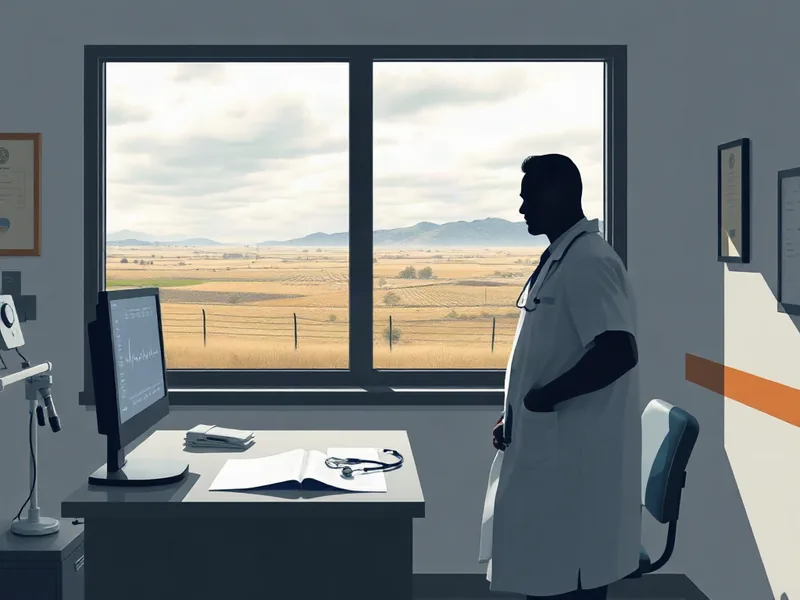
If you live in a rural county without a cardiologist for fifty miles, the promise of artificial intelligence in medicine isn't abstract. It's the difference between catching heart failure early and ending up in an emergency room after it's too late. That tension, between genuine need and justified caution, sits at the center of two developments reshaping how AI is entering American health care this month.
The first comes from ARPA-H, the federal government's health innovation agency, which announced it will invest $62 million to develop FDA-authorized artificial intelligence tools aimed at helping treat heart failure. The program, known as ADVOCATE, is designed to build autonomous AI systems that can assist clinicians in managing a disease that affects roughly 6.7 million American adults and remains one of the leading causes of hospitalization for people over 65.
Heart failure is a slow-moving crisis. The heart doesn't stop, it just stops pumping efficiently enough to keep up with the body's needs. Think of it like a water pump that's lost some of its pressure: the flow doesn't cut off entirely, but everything downstream starts to suffer. Catching the early warning signs, fluid buildup, fatigue, shortness of breath, often requires frequent monitoring and quick clinical judgment. That's exactly the kind of repetitive, data-heavy work where AI systems are supposed to shine.
The second development is more political than technical. Dr. Mehmet Oz, in his role overseeing federal health programs, has been promoting AI-based avatars as a way to extend care into rural communities that lack enough doctors and nurses. The pitch is straightforward: if you can't get a specialist to a small town in Nebraska or West Virginia, maybe you can get a well-trained digital assistant there instead.
Skepticism about that approach isn't coming from nowhere. Rural health advocates and clinicians have spent decades watching promising technologies arrive with big claims and uneven follow-through. Telehealth was supposed to solve rural access gaps a decade ago. It helped, but it didn't close them. AI avatars face the same structural problems that telehealth never fully solved: spotty broadband, limited digital literacy among older patients, and a shortage of local providers who can act on whatever the technology recommends.
There's also the trust question. Rural patients, like most patients, want to feel heard by someone who understands their specific circumstances. An avatar, however sophisticated, isn't a substitute for a doctor who knows a patient's history and community. The risk isn't that AI tools are useless. It's that they get sold as a complete solution when they're really a partial one, and communities end up with a digital patch instead of the sustained investment in rural health infrastructure that experts say is actually needed.
That skepticism extends to the ARPA-H heart failure initiative too, though for different reasons. Autonomous AI systems making treatment recommendations, even with FDA authorization, raise real questions about accountability. Who is responsible if an algorithm misses a warning sign, or if it flags something a human doctor would have dismissed? These aren't hypothetical concerns. Heart failure management involves nuanced judgment calls, adjusting medications, weighing side effects, deciding when a symptom warrants urgent care. Handing pieces of that judgment to a machine, even a well-tested one, requires guardrails that regulators are still working out.
To be fair, the ADVOCATE program isn't trying to replace physicians outright. It's aimed at supporting clinical decision-making, not overriding it, and the FDA authorization requirement suggests a level of regulatory scrutiny that should catch at least some failure modes before they reach patients. Federal investment of this size also signals that heart failure, a condition that's expensive, common, and deadly, is getting serious attention as a target for AI-assisted care rather than just a testing ground for flashy consumer tools.
Still, the broader pattern is worth watching. Both the heart failure initiative and the rural avatar push reflect a government betting heavily on AI to solve problems that are, at their root, about resource distribution. Rural America doesn't just need smarter tools. It needs more clinicians, better broadband, and health systems that aren't stretched to breaking point. Heart failure patients don't just need better algorithms. They need affordable medications, consistent follow-up care, and providers who have time to actually talk with them.
AI can be part of the answer to both problems. It can extend a clinician's reach, flag risks earlier, and give patients in isolated areas some form of contact when none currently exists. But technology tends to work best when it's layered onto a functioning system, not asked to substitute for one that's missing. That's the concern experts keep raising, gently but persistently, whenever officials tout AI as a fix for structural health care gaps.
The stakes here aren't theoretical. Heart failure kills, and rural communities already face higher mortality rates for treatable conditions than urban ones, often because care arrives too late or not at all. If AI tools genuinely extend access and catch problems earlier, that's a real public health win worth pursuing seriously. But if these tools become a substitute for the harder, more expensive work of rebuilding rural health infrastructure and properly funding chronic disease management, the gap between what's promised and what's delivered could widen rather than close.
The $62 million ARPA-H investment and the push for AI avatars both deserve a fair hearing. They also deserve honest scrutiny about what they can and can't fix. Patients in rural clinics and heart failure wards aren't looking for a technological miracle. They're looking for care that actually reaches them, whatever form it takes.
Tags
Original Sources
Oz says ‘AI-based avatars’ can help rural communities. Some leaders disagree
↗ https://www.statnews.com/2026/09/10/health-news-oz-says-ai-based-avatars-can-help-rural-communities-despite-skepticism
About the author
Amara's entry point into AI was an epidemiology role at a London research hospital, where she spent five years studying how digital health tools reached — or conspicuously failed to reach — underserved communities. Watching early algorithmic systems in healthcare quietly entrench existing inequalities, she redirected her career toward the systemic consequences of AI at scale. She covers AI through an unflinching lens: who benefits, who bears the cost, and what evidence actually says versus what the press release claims. Her writing is calm and precise, but she doesn't mistake balance for neutrality.
More from The Steward →This Week's Edition
11 September 2026
18 articles
Related Articles

Christina Applegate's MS Misdiagnosis Reveals a Painful Diagnostic Gap in Neurology
Health & Science · 5 min

IEEE Expands Smart City Advisory Services as Municipal Tech Budgets Grow
Products & Applications · 5 min

Robot Infants Are Being Built to Study Human Emotion. Should They Look So Real?
Products & Applications · 5 min
Related Articles
Christina Applegate's MS Misdiagnosis Reveals a Painful Diagnostic Gap in Neurology
Health & Science · 5 min
IEEE Expands Smart City Advisory Services as Municipal Tech Budgets Grow
Products & Applications · 5 min
Robot Infants Are Being Built to Study Human Emotion. Should They Look So Real?
Products & Applications · 5 min
More Stories
© 2026 Cedar & Bloom. All rights reserved.
