The Drum · Weekly AI news, freeSubscribe →

Share
As AI coding assistants flood pull requests with plausible-looking but often flawed code, engineering teams are discovering their old review habits weren't built for this volume, or this particular flavor of subtle wrongness.
Code review used to be a fairly predictable exercise. A human wrote some code, another human read it, and the mistakes you found tended to follow familiar patterns: off-by-one errors, missed edge cases, a variable name that didn't match its purpose. Now a growing share of the code hitting pull requests wasn't written by a human at all, and that's changing what reviewers need to look for.
The term making the rounds for this problem is "AI slop": code that's syntactically clean, often plausible-sounding, and confidently wrong in ways that are easy to miss on a quick pass. It's not that AI-generated code is universally bad. It's that it fails differently than human-written code does, and a lot of review processes were never designed to catch those failure modes.
That distinction matters because the volume of AI-assisted code is climbing fast. Developers using tools like GitHub Copilot, Cursor, or various LLM-based coding assistants can generate far more code per hour than they could by hand. But generating code faster doesn't shrink the review burden. If anything, it shifts more weight onto the review stage, since that's often the last checkpoint before AI-authored logic ships to production.
Human bugs tend to cluster around genuine misunderstanding: a developer didn't know an API behaved a certain way, or missed a race condition because they didn't think through concurrency carefully enough. AI-generated bugs often look different. The code can be internally consistent, well-formatted, and use all the right terminology, while still solving a slightly wrong version of the problem or quietly assuming something that isn't true in your codebase.
A few patterns reviewers are running into repeatedly:
None of this means AI coding tools are useless, obviously they're not, given how widely adopted they've become. It means the review process has to adapt to a different error distribution than the one most reviewers were trained on.
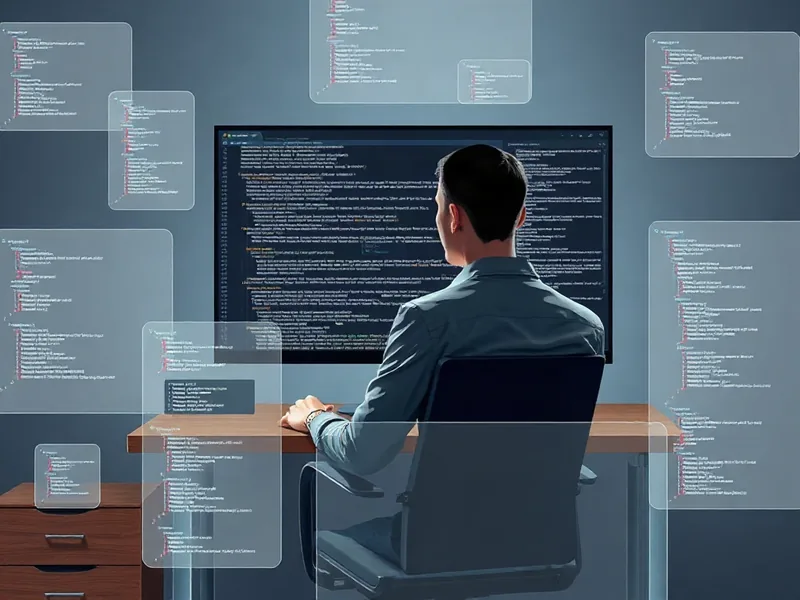
That adaptation is showing up in a few concrete ways. Some teams are pushing for smaller, more atomic pull requests specifically because AI-assisted contributions tend to balloon in size. Others are leaning harder on automated testing and static analysis as a first-pass filter, reasoning that if a tool can catch a hallucinated function call before a human ever sees it, that's less cognitive load on the reviewer. There's also a growing habit of asking contributors, human or AI-assisted, to explain the reasoning behind a change rather than just the diff itself, since AI-generated pull requests often lack the implicit context a human author would naturally provide in commit messages or PR descriptions.
There's a cultural dimension here too. Reviewing code has always carried a bit of social weight: you're implicitly trusting that the person who wrote it understood what they were doing, even if they made a mistake. That trust calculus gets murkier when you don't know how much of a PR was actually written by a person versus generated and lightly edited. Some engineers report reviewing AI-heavy PRs more skeptically by default, essentially treating "this might have been generated" as a signal to slow down and check assumptions rather than skim for style.
None of these are exotic fixes. Smaller diffs, better tests, clearer PR descriptions, these are all things good engineering teams were already supposed to be doing. What's changed is the incentive to actually enforce them, because the cost of skipping that discipline has gone up. A sloppy human-written PR is annoying. A sloppy AI-generated PR that looks polished on the surface can be actively deceptive, in the sense that it passes a casual read far more easily than a genuinely bad piece of human code would.
There's also a longer-term question lurking underneath all this about what code review is even for. If the point of review was originally to catch honest mistakes and transfer knowledge between team members, AI-generated code complicates both goals. The "mistakes" aren't quite the same category of mistake, and there's no person on the other end absorbing feedback the way a junior engineer would. Some teams are starting to treat review less as a mentorship exercise and more as a quality gate, full stop, which is a subtle but real shift in how the practice is understood.
None of this is likely to slow the adoption of AI coding assistants. The productivity upside is too obvious, and the tools keep getting better at handling larger context windows and more complex codebases. But the engineering teams navigating this well seem to share a common thread: they're not treating AI-generated code as either fully trustworthy or fully suspect. They're treating it as a new category of output that needs its own review heuristics, separate from the ones built for human-written code over the last few decades.
AI-generated code fails in patterns distinct from human error, often confidently wrong rather than obviously incomplete, which means old review habits built around catching honest mistakes don't map cleanly onto catching hallucinated APIs or context-blind logic. Teams adapting well are shrinking PR size, leaning on automated testing as a first-pass filter, and demanding more explicit reasoning in PR descriptions. The underlying shift isn't really about the tools themselves, but about recognizing that review processes calibrated for human authorship need deliberate updates for a world where a growing share of code was never typed by a person in the first place.
Tags
Original Sources
Will Junior Engineers Learn Enough in an AI-First Coding World?
↗ https://spectrum.ieee.org/ai-code-review-software-engineers
About the author
Kai built ML infrastructure at a Bay Area startup before developing an obsession with transformer architectures and inference optimisation that eventually pulled him out of product work entirely. A stint at a compute research lab sharpened his instinct for what actually matters in a model release versus what is marketing. He writes from the inside — from the perspective of someone who has debugged the systems he is describing at three in the morning. He is allergic to hype and instinctively drawn to the unglamorous plumbing questions that everyone else skips over.
More from The Engineer →This Week's Edition
9 September 2026
29 articles
Related Articles

Liquid AI's RIPL Engine Pushes LLM Inference Under 50ms for Real-Time Workloads
Tools & Engineering · 5 min

Relational Intelligence: Why "Good Communicator" Isn't the Skill You Think It Is
Tools & Engineering · 5 min

FDA Finalizes Guidance on Drug-Related Apps as Telehealth Outpaces Oversight
Policy & Regulation · 5 min
Related Articles
Liquid AI's RIPL Engine Pushes LLM Inference Under 50ms for Real-Time Workloads
Tools & Engineering · 5 min
Relational Intelligence: Why "Good Communicator" Isn't the Skill You Think It Is
Tools & Engineering · 5 min
FDA Finalizes Guidance on Drug-Related Apps as Telehealth Outpaces Oversight
Policy & Regulation · 5 min
More Stories
© 2026 Cedar & Bloom. All rights reserved.
