The Drum · Weekly AI news, freeSubscribe →
Share
Despite a chorus of boos at university commencements, AI continues to attract significant investment and legal victories, raising questions about market sentiment and long-term prospects.
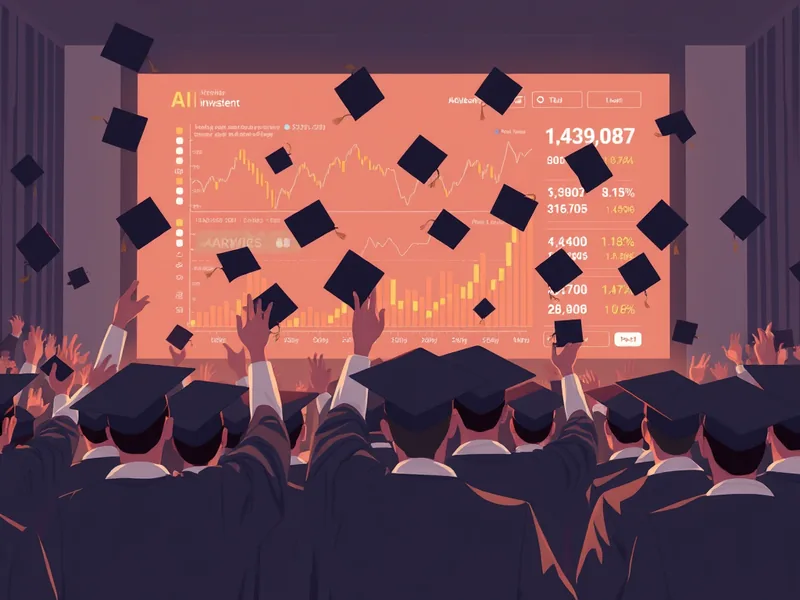
When former Google CEO Eric Schmidt addressed the University of Arizona's graduating class of 2026, he urged them to help shape artificial intelligence. Instead of applause, his words were met with a resounding chorus of boos. "I can hear you," he conceded, acknowledging the rational fears about job displacement and an uncertain future.
This reaction is not isolated. Graduates at other ceremonies, including those at the University of Central Florida and Middle Tennessee State University, have also jeered at AI-related pep talks. The sentiment reflects a growing skepticism among young professionals who are increasingly aware of the potential downsides of rapid technological advancement. However, this backlash has not deterred major players in the AI industry from securing significant wins.
Despite the negative reception, OpenAI continues to secure substantial investments and legal victories. The company recently won a high-profile court case and raised an enormous sum of money, further solidifying its position as a leader in the AI landscape. New partnerships are being formed, indicating that institutional confidence in AI's potential remains strong.
Reese Witherspoon, a prominent figure in Hollywood, has even joined the chorus of AI advocates. She warned women to embrace AI or risk being replaced by it, highlighting the perceived inevitability of AI's integration into various industries. This message, while stark, underscores the broader trend of high-profile endorsements for AI technology.
According to Stanford’s 2026 AI Index, the pace of AI development is outstripping our ability to keep up. The index highlights significant advancements in areas such as natural language processing, computer vision, and robotics. These technological breakthroughs are driving interest from investors and businesses alike, despite public skepticism.
The disconnect between public sentiment and market dynamics presents a unique challenge for investors. On one hand, the negative reactions at university commencements suggest that there is a growing awareness of the risks associated with AI. This could lead to increased regulatory scrutiny and public pressure on companies to address ethical concerns.
On the other hand, the continued flow of investments into AI startups and established players like OpenAI indicates that institutional investors remain bullish on the technology's long-term potential. The recent legal victories and new partnerships further bolster this confidence. For example, OpenAI’s successful court case not only protects its interests but also sets a precedent for future litigation in the industry.
For investors, the key is to strike a balance between recognizing the risks and capitalizing on the opportunities. This involves conducting thorough due diligence on companies' ethical practices, regulatory compliance, and long-term growth strategies. It also means staying attuned to market sentiment and public opinion, which can influence stock prices and investor confidence.
While the AI industry faces growing skepticism from younger professionals, it continues to attract significant investment and legal support. Investors should remain vigilant about both the risks and opportunities presented by this rapidly evolving sector.
Tags
Original Sources
The AI Hype Index: AI gets booed in graduation season
↗ https://www.technologyreview.com/2026/05/28/1138053/the-ai-hype-index-ai-gets-booed-in-graduation-season
About the author
Marcus began tracking AI's market implications in 2016, noticing AI-related patent filings accelerating ahead of earnings upgrades before most of the sell-side had caught on. A former fixed-income quantitative analyst, he spent two decades building models that priced risk across emerging markets before pivoting to cover the economic impact of AI full-time. His writing translates opaque technical developments into clear risk/reward terms — and he's rarely diplomatic about the gap between AI valuations and underlying fundamentals. He believes most market participants still underestimate AI's long-run deflationary effect on knowledge work.
More from The Analyst →This Week's Edition
3 June 2026
29 articles
Related Articles
Related Articles
More Stories
© 2026 Cedar & Bloom. All rights reserved.