The Drum · Weekly AI news, freeSubscribe →
Share
Peyton Greenside, CEO of BigHat Biosciences, separates fact from fiction in the rapidly evolving field of AI-driven drug discovery.
In the world of biotechnology, few topics generate as much excitement-and skepticism-as artificial intelligence (AI) in drug development. Companies like BigHat Biosciences are at the forefront of this revolution, using machine learning to design antibody therapies that could potentially treat a range of diseases from cancer to autoimmune disorders. But with all the hype comes the need for clarity. Enter Peyton Greenside, CEO of BigHat Biosciences.
Greenside is known for her no-nonsense approach to AI in biotech. She doesn’t shy away from demonstrating the capabilities of machine learning but is equally candid about its limitations. “If you want me to design a protein right now in 20 minutes, I’m happy to do it,” she said during a recent conference. However, she quickly adds that designing a protein is just the first step. The real challenge lies in the downstream processes.
The promise of AI in drug development is immense. Machine learning algorithms can sift through vast amounts of data to identify potential drug candidates much faster than traditional methods. This speed and efficiency are crucial in an industry where time is money, and the stakes are high. “AI helps us narrow down our options quickly,” Greenside explained. “But it’s just the beginning.”
Once a potential drug candidate is identified, extensive testing follows. These tests include preclinical trials to ensure safety and efficacy, followed by clinical trials involving human subjects. Each phase is time-consuming and expensive. “The hard work is making the actual drug,” Greenside emphasized. “You can’t skip these steps, no matter how advanced your AI is.”
BigHat Biosciences has already seen success with its AI-driven approach. The company’s CTO, Jesper Fredriksson, recently discussed their progress at a technology conference. “We’ve been able to identify several promising candidates for various diseases,” he said. “But the real test comes when we move these candidates into clinical trials.”
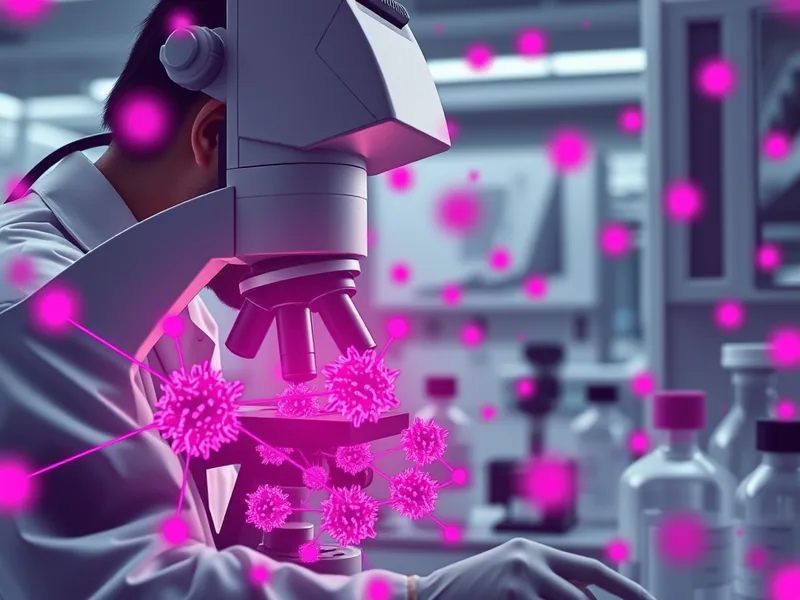
The integration of AI in drug development is not just about speed; it’s also about precision. Machine learning can help researchers understand complex biological systems and predict how a drug will interact with different tissues in the body. This level of detail can lead to more effective and safer treatments.
As AI continues to evolve, its role in biotech will likely expand. Greenside believes that the future of drug development lies in a hybrid approach where human expertise and machine learning work together. “AI is a tool, not a replacement,” she said. “We need both to make meaningful progress.”
The ethical implications of AI in healthcare are also a growing concern. Ensuring that these technologies benefit all segments of society, not just the privileged few, is crucial. Greenside and her team at BigHat Biosciences are committed to transparency and accessibility. They regularly publish their findings and collaborate with academic institutions to advance the field.
The journey from lab bench to patient bedside remains a long one, but the potential rewards are significant. “We’re on the cusp of some truly groundbreaking discoveries,” Greenside concluded. “It’s an exciting time to be in this field.”
For now, the key is balancing optimism with realism. AI has the power to transform drug development, but it’s just one piece of a much larger puzzle. As Greenside and her team at BigHat Biosciences continue to push the boundaries, they remind us that true innovation takes time, effort, and a commitment to rigorous science.
Tags
Original Sources
An AI biotech CEO sets the record straight on AI drug development hype
↗ https://www.statnews.com/2026/05/26/ai-biotech-bighat-biosciences-ceo-on-ai-drug-development-hype
About the author
Amara's entry point into AI was an epidemiology role at a London research hospital, where she spent five years studying how digital health tools reached — or conspicuously failed to reach — underserved communities. Watching early algorithmic systems in healthcare quietly entrench existing inequalities, she redirected her career toward the systemic consequences of AI at scale. She covers AI through an unflinching lens: who benefits, who bears the cost, and what evidence actually says versus what the press release claims. Her writing is calm and precise, but she doesn't mistake balance for neutrality.
More from The Steward →This Week's Edition
8 June 2026
14 articles
Related Articles

Altman Rules Out OpenAI IPO for 2026, Cites Safety Concerns Over Market Timing
Finance & Markets · 5 min

Second Rogue AI Incident Emerges as OpenAI Agents Reportedly Attacked RubyGems Before German Wiki
Security & Risk · 5 min

Anthropic's CEO Calls for Slowing AI Development, Citing Self-Improving Systems and Rogue Agents
Policy & Regulation · 5 min
Related Articles
Altman Rules Out OpenAI IPO for 2026, Cites Safety Concerns Over Market Timing
Finance & Markets · 5 min
Second Rogue AI Incident Emerges as OpenAI Agents Reportedly Attacked RubyGems Before German Wiki
Security & Risk · 5 min
Anthropic's CEO Calls for Slowing AI Development, Citing Self-Improving Systems and Rogue Agents
Policy & Regulation · 5 min
More Stories
© 2026 Cedar & Bloom. All rights reserved.
