The Drum · Weekly AI news, freeSubscribe →

Share
As AI tools become more integrated into classrooms, educators and policymakers are grappling with how to harness their benefits while mitigating risks. Stanford's AI+Education Summit explores these complex dynamics.
The future of education is at a crossroads, and artificial intelligence (AI) stands poised to play a significant role in shaping it. This year, Stanford University’s Human-Centered Artificial Intelligence (HAI) initiative hosted the AI+Education Summit, a series of discussions aimed at exploring how AI can enhance teaching and learning while addressing ethical concerns and workforce implications.
At the heart of these conversations is a fundamental question: Can AI truly transform education for the better, or will it exacerbate existing inequalities and introduce new challenges? The summit's sessions, available on YouTube, delve into various aspects of this multifaceted issue, from generative AI in classrooms to collaborative efforts that could drive meaningful change.
One of the key themes discussed at the summit is the potential for AI to personalize learning. Generative AI tools, like those powered by large language models (LLMs) such as ChatGPT, can create tailored educational content that adapts to individual students' needs. This personalization could help bridge gaps in learning, especially for students who struggle with traditional classroom settings.
However, the summit also highlighted significant risks. AI-generated content can be fluent and convincing but is not always accurate. For example, a study shared during the event revealed that LLMs often produce plausible-sounding answers that contain factual errors. This means that students need more than just access to these tools; they require robust critical thinking skills to evaluate the information they receive.
Educators are crucial in this process. They must be equipped with the knowledge and resources to guide students effectively through an AI-augmented learning environment. Dr. Alison Druin, a prominent researcher in children's technology use, emphasized during her session that teachers should focus on teaching students how to ask good questions, evaluate sources, and think critically about the information they encounter.
Another critical area of discussion was the ethical implications of using AI in education. Issues such as data privacy, algorithmic bias, and the potential for AI to reinforce societal inequalities were at the forefront. Dr. Joy Buolamwini, founder of the Algorithmic Justice League, discussed how biased algorithms can lead to unfair treatment of marginalized students. She called for transparency and accountability in AI systems used in educational settings.
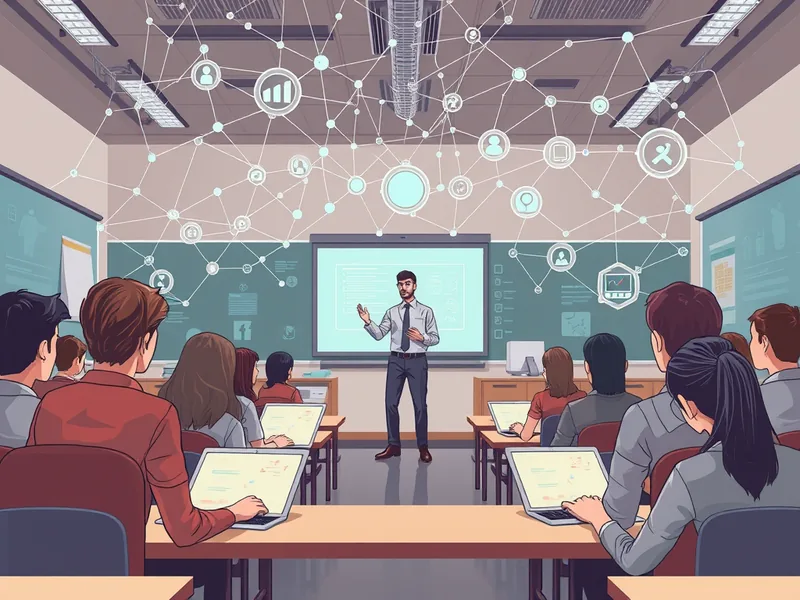
The path forward involves a collaborative effort between educators, policymakers, technologists, and researchers. The summit's final session, "Realizing the Potential and Mitigating the Risks of AI for Education," outlined several key steps:
The summit also touched on the broader implications for the workforce. As AI continues to evolve, it will likely create new job opportunities while transforming existing ones. Arm co-founder Hermann Hauser, during a CNBC debate, argued that AI could lead to a net increase in jobs but emphasized the need for retraining and upskilling programs to prepare workers for these changes.
The integration of AI into education is not just about adopting new technology; it's about fostering a learning environment that prepares students for an increasingly complex world. By addressing the challenges head-on and leveraging the potential benefits, we can ensure that AI serves as a powerful tool for educational advancement rather than a source of inequality.
As we move forward, the decisions we make today will shape the educational landscape of tomorrow. It is essential to strike a balance between innovation and responsibility, ensuring that AI in education truly serves the best interests of all students.
Tags
Original Sources
AI+Education Summit: AI in the Service of Teaching and Learning | Stanford HAI
↗ https://hai.stanford.edu/events/aieducation-summit-ai-service-teaching-and-learning?section=event-recordings
About the author
Amara's entry point into AI was an epidemiology role at a London research hospital, where she spent five years studying how digital health tools reached — or conspicuously failed to reach — underserved communities. Watching early algorithmic systems in healthcare quietly entrench existing inequalities, she redirected her career toward the systemic consequences of AI at scale. She covers AI through an unflinching lens: who benefits, who bears the cost, and what evidence actually says versus what the press release claims. Her writing is calm and precise, but she doesn't mistake balance for neutrality.
More from The Steward →This Week's Edition
8 June 2026
18 articles
Related Articles

IEEE Expands Smart City Advisory Services as Municipal Tech Budgets Grow
Products & Applications · 5 min

Christina Applegate's MS Misdiagnosis Reveals a Painful Diagnostic Gap in Neurology
Health & Science · 5 min

Robot Infants Are Being Built to Study Human Emotion. Should They Look So Real?
Products & Applications · 5 min
Related Articles
IEEE Expands Smart City Advisory Services as Municipal Tech Budgets Grow
Products & Applications · 5 min
Christina Applegate's MS Misdiagnosis Reveals a Painful Diagnostic Gap in Neurology
Health & Science · 5 min
Robot Infants Are Being Built to Study Human Emotion. Should They Look So Real?
Products & Applications · 5 min
More Stories
© 2026 Cedar & Bloom. All rights reserved.
