The Drum · Weekly AI news, freeSubscribe →

Share
As healthcare organizations grapple with workforce shortages, AI is emerging as a crucial tool to support clinicians and improve patient care without sidelining human expertise.
Healthcare systems across the United States are facing a significant challenge: how to meet growing patient demands while addressing persistent workforce shortages. Dr. John Chelico, Chief Medical Information Officer at CommonSpirit Health, one of the largest nonprofit health systems in the country, believes that artificial intelligence (AI) can play a pivotal role in this effort. The key, according to Chelico, is integrating AI into clinical workflows in ways that enhance human capabilities rather than replace them.
CommonSpirit Health operates over 2,200 care sites and hospitals across 24 states, making it a critical player in the healthcare landscape. For Dr. Chelico, the central question isn't whether AI will become part of healthcare delivery but how to integrate it effectively. "The most important technology issue health IT faces today is how we integrate AI into the workflow in the workplace," he said.
One of the primary benefits of AI in healthcare is its ability to scale critical services like cancer screening. By identifying overlooked findings and reducing administrative burdens, AI can help clinicians focus more on patient care. For example, AI algorithms can analyze medical images faster and with greater accuracy than humans, flagging potential issues for further review by a radiologist. This not only speeds up the diagnostic process but also ensures that no critical findings are missed.
However, the integration of AI into healthcare is not without its challenges. There are concerns about job displacement and the ethical implications of relying on technology to make critical decisions. Dr. Chelico emphasizes that the goal should be to augment human capabilities, not replace them. "AI should be a tool that supports clinicians, not a replacement," he said. "It's crucial that we keep humans in the loop to ensure the best outcomes for patients."
Health leaders are still navigating how best to use AI to address shortages among physicians, nurses, and other caregivers. While some organizations have been cautious about adopting AI due to these concerns, others are seeing measurable results from targeted implementations. CommonSpirit Health, for instance, has successfully used AI to reduce the administrative burden on its staff, allowing them to focus more on patient care.
The importance of keeping humans in the loop is also a topic of broader discussion in the healthcare industry. According to a recent post on Healthcare IT News, digital tools and AI have the potential to revolutionize healthcare and transform the workforce of the future. However, these technologies should be seen as means to an end, not ends in themselves. Health leaders are urged to curb aggressive AI spending and focus on practical, evidence-driven solutions that truly benefit patients and providers.
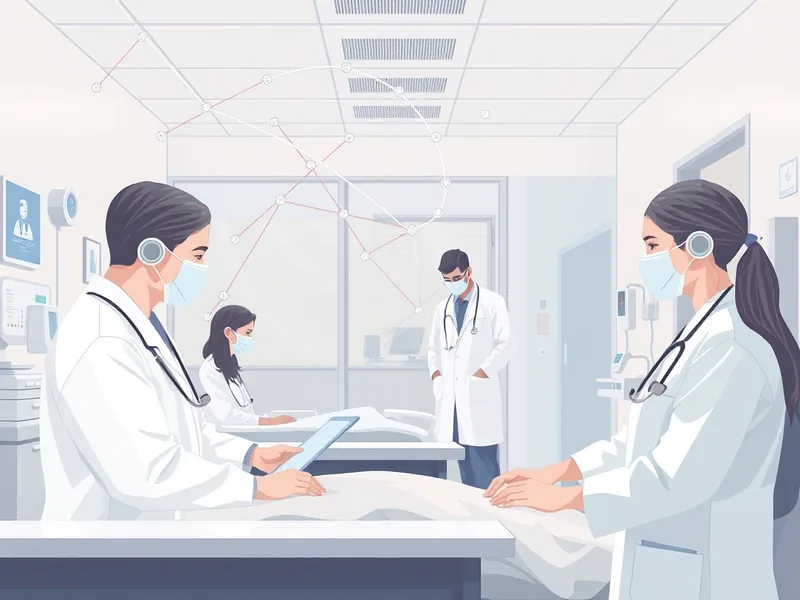
The integration of AI into healthcare is a delicate balance. On one hand, the technology offers significant potential to improve patient outcomes and streamline operations. On the other hand, there are valid concerns about job displacement and ethical considerations. Dr. Chelico's approach at CommonSpirit Health highlights the importance of maintaining human oversight in AI-driven processes.
For example, while AI can efficiently screen medical images for potential issues, it is essential that these findings are reviewed by a trained clinician. This ensures that any false positives or nuanced cases are correctly interpreted and managed. Keeping humans in the loop helps build trust among patients and healthcare providers, as it reassures them that critical decisions are still being made by experienced professionals.
Another area where AI can make a significant impact is in administrative tasks. By automating routine processes like data entry and scheduling, AI can free up valuable time for healthcare workers to focus on more complex and patient-centered activities. This not only improves job satisfaction but also helps address the growing demand for care without overburdening an already stretched workforce.
However, the success of these initiatives depends on careful implementation and ongoing evaluation. Health leaders must ensure that AI tools are user-friendly, reliable, and aligned with the needs of both patients and providers. Training and support are also crucial to help staff adapt to new technologies and workflows.
The integration of AI into healthcare is not just a technological issue; it's a human one. As Dr. Chelico and other health leaders emphasize, the goal should be to enhance the capabilities of healthcare professionals, not replace them. By keeping humans in the loop, we can ensure that AI serves as a powerful tool for improving patient care, reducing administrative burdens, and addressing workforce shortages.
Ultimately, the success of AI in healthcare will depend on how well it is integrated into existing workflows and how effectively it supports the human element. As the industry continues to evolve, it is crucial that we prioritize practical, evidence-driven solutions that benefit both patients and providers. The future of healthcare may be shaped by technology, but it must always be guided by human values and expertise.
Tags
Original Sources
AI can help close workforce gaps while keeping humans in the loop
↗ https://www.healthcareitnews.com/news/ai-can-help-close-workforce-gaps-while-keeping-humans-loop
About the author
Amara's entry point into AI was an epidemiology role at a London research hospital, where she spent five years studying how digital health tools reached — or conspicuously failed to reach — underserved communities. Watching early algorithmic systems in healthcare quietly entrench existing inequalities, she redirected her career toward the systemic consequences of AI at scale. She covers AI through an unflinching lens: who benefits, who bears the cost, and what evidence actually says versus what the press release claims. Her writing is calm and precise, but she doesn't mistake balance for neutrality.
More from The Steward →This Week's Edition
23 June 2026
25 articles
Related Articles

Global Survey: Most People Expect AI to Destroy More Jobs Than It Creates
Job Market & Society · 6 min

When Employees Let AI Say What They Can't: The Rise of "Safety by Proxy" at Work
Job Market & Society · 6 min

Edmonton Machine Shop Fined $217,000 After Worker's Fatal Entanglement in Lathe
Job Market & Society · 5 min
Related Articles
Global Survey: Most People Expect AI to Destroy More Jobs Than It Creates
Job Market & Society · 6 min
When Employees Let AI Say What They Can't: The Rise of "Safety by Proxy" at Work
Job Market & Society · 6 min
Edmonton Machine Shop Fined $217,000 After Worker's Fatal Entanglement in Lathe
Job Market & Society · 5 min
More Stories
© 2026 Cedar & Bloom. All rights reserved.
