The Drum · Weekly AI news, freeSubscribe →

Share
An advanced AI safety system prevented a potential tragedy when it halted a train in India to avoid hitting elephants crossing the tracks, showcasing the technology's ability to protect both wildlife and human lives.
In a remarkable demonstration of how technology can protect both human and animal lives, an advanced AI safety system recently stopped a train in its tracks after detecting elephants crossing the railway line. This incident highlights the potential of artificial intelligence (AI) to mitigate risks and enhance wildlife conservation efforts.
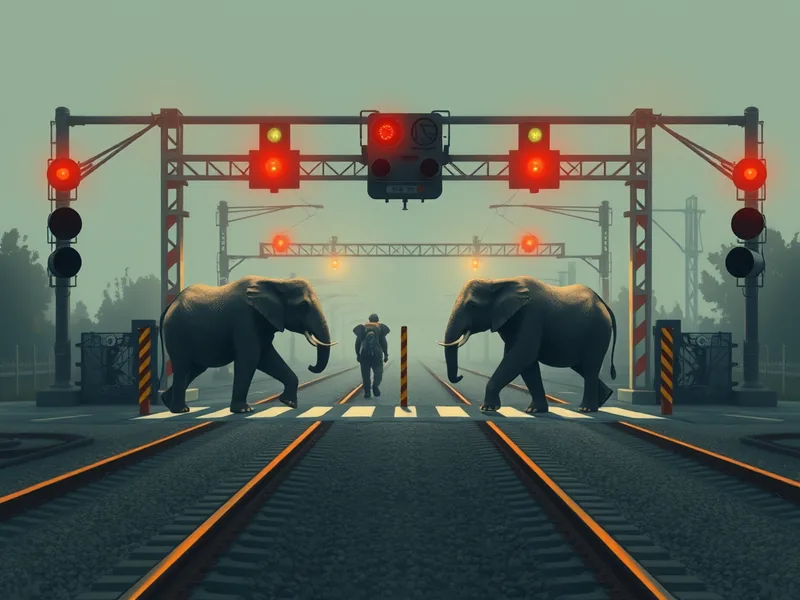
The event took place on a stretch of railway in India, where trains often share routes with migratory paths used by large animals like elephants. In this particular instance, an AI system equipped with cameras and sensors detected the presence of elephants attempting to cross the tracks. The system immediately triggered an emergency stop, preventing what could have been a tragic collision.
The AI safety system is designed to monitor railway lines continuously for any signs of potential hazards. It uses a combination of high-resolution cameras and machine learning algorithms to identify objects on or near the tracks. When it detects something unusual, such as animals or obstacles, it sends an alert to the train operator, who can then take appropriate action.
Think of this system like a highly advanced set of eyes and ears that never get tired. It’s always watching, analyzing, and ready to act at a moment's notice. This constant vigilance is crucial in areas where human oversight might be limited or impossible due to the vastness of the terrain.
The implementation of such AI systems offers significant benefits for both wildlife and human safety:
Wildlife Protection: Elephants, in particular, are at risk when they encounter trains. These large animals can suffer severe injuries or death, which has a profound impact on their populations. By preventing these collisions, the AI system helps conserve these majestic creatures.
Human Safety: Train accidents involving wildlife can also pose serious risks to passengers and railway staff. Stopping the train in time not only saves animal lives but also prevents potential derailments and other hazards that could harm humans.
While the technology is promising, it's important to acknowledge some of the challenges and considerations:
False Positives: AI systems can sometimes misidentify objects, leading to unnecessary stops. This can disrupt train schedules and inconvenience passengers. However, ongoing improvements in machine learning algorithms are reducing the frequency of these false positives.
Cost and Implementation: Deploying advanced AI systems across vast railway networks requires significant investment. Governments and private companies need to weigh the costs against the benefits of enhanced safety and conservation.
The successful deployment of this AI safety system in India could serve as a model for other regions facing similar challenges. As more countries adopt these technologies, we can expect to see a reduction in wildlife-vehicle collisions and improved safety on railways worldwide.
Moreover, the data collected by these systems can provide valuable insights into animal behavior and migration patterns. This information can be used to develop better conservation strategies and improve infrastructure planning to minimize conflicts between humans and wildlife.
The AI safety system that halted the train to prevent an elephant crossing tragedy is a testament to how technology can be harnessed for good. By balancing human needs with environmental stewardship, we can create safer, more sustainable transportation systems that benefit everyone.
Tags
Original Sources
About the author
Amara's entry point into AI was an epidemiology role at a London research hospital, where she spent five years studying how digital health tools reached — or conspicuously failed to reach — underserved communities. Watching early algorithmic systems in healthcare quietly entrench existing inequalities, she redirected her career toward the systemic consequences of AI at scale. She covers AI through an unflinching lens: who benefits, who bears the cost, and what evidence actually says versus what the press release claims. Her writing is calm and precise, but she doesn't mistake balance for neutrality.
More from The Steward →This Week's Edition
29 April 2026
29 articles
Related Articles

Seattle Children's Network Turns Data Trust Into Preventive Care Gains, With Lessons for Security Teams
Security & Risk · 6 min

Anthropic Gives Outside Safety Researchers the Same Access as Its Own Staff
Security & Risk · 5 min

Fitch Puts a Number on AI Risk: New Stress Test Flags Credit Exposure Across Four Sectors
Security & Risk · 5 min
Related Articles
Seattle Children's Network Turns Data Trust Into Preventive Care Gains, With Lessons for Security Teams
Security & Risk · 6 min
Anthropic Gives Outside Safety Researchers the Same Access as Its Own Staff
Security & Risk · 5 min
Fitch Puts a Number on AI Risk: New Stress Test Flags Credit Exposure Across Four Sectors
Security & Risk · 5 min
More Stories
© 2026 Cedar & Bloom. All rights reserved.
