The Drum · Weekly AI news, freeSubscribe →

Share
Lipstick and laptops once defined China's biggest shopping festival. This year, consumers bought two trillion AI tokens in a single livestream, a sign that compute itself is becoming a retail commodity.
China's Singles' Day shopping festival has sold plenty of strange things over the years. This year it sold compute.
Alongside the usual parade of cosmetics and home appliances, Alibaba and JD.com turned artificial intelligence tokens, the units that measure AI input and output processing, into a mainstream consumer product for the first time. The shift is notable not for novelty value but for what it implies about demand: Chinese consumers are now treating AI usage like a household utility, something to stock up on when the price is right.
The clearest evidence came from a single livestream. On November 2, popular streamer Austin Li, known in China as the "Lipstick King" for selling vast quantities of lip color to his followers, sold 100,000 monthly subscription plans for Alibaba's enterprise AI service QwenWork in under 30 minutes. Those plans represent roughly two trillion AI tokens. Alibaba vice president Chen Yusen, who also serves as QwenWork's chief executive, appeared alongside Li to pitch AI-powered laptops and enterprise hardware.
It was Li's first time selling an AI product on air. The pairing of a cosmetics salesman with an enterprise AI executive tells you something about where this market thinks its growth is coming from: not enterprise procurement departments, but ordinary consumers and small business owners who now treat token packages the way they once treated data plans.
The economics here are straightforward. Heavy AI users run out of their standard usage allowances and need more capacity. Buying in bulk during a sales event, when discounts are presumably on offer, is a rational way to secure that capacity ahead of need. Liang Jie Su, chief analyst at technology research firm Omdia, framed it plainly: Chinese consumers have grown comfortable using AI tools for productivity, and stockpiling tokens during a sale is "a very rational move" for anyone who regularly bumps against usage limits.
What's missing from the public record is pricing detail. Reuters' reporting does not specify how large a discount these token bundles carried relative to standard rates. That matters for anyone trying to assess whether this represents genuine incremental demand or simply pulled-forward purchases that would have happened anyway at full price, just spread across the following months.
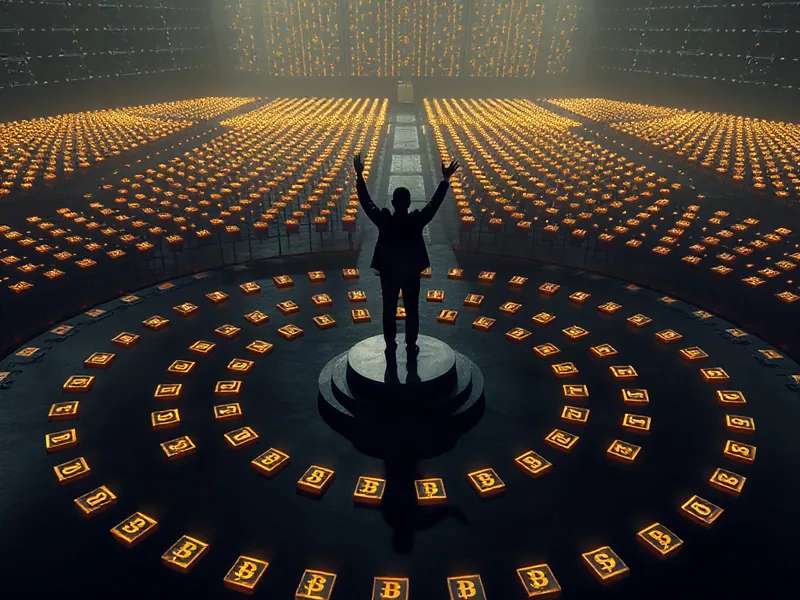
The scale of the broader category looks real regardless. Alibaba's Tmall platform launched a dedicated "AI Token Center" for the sale, hosting consumer token packages from Alibaba Cloud, MiniMax, Moonshot AI and Z.AI. JD.com ran its own AI token section featuring DeepSeek, Z.AI and ByteDance's Volcano Engine. Multiple AI developers competing for retail shelf space on China's two largest e-commerce platforms is itself a signal: these companies now see direct-to-consumer token sales as a meaningful channel, not an afterthought bolted onto enterprise contracts.
Alibaba reported that AI token plan sales rose 450% month over month between October 1 and 20. In the first hour after the sale's payment window opened, sales of AI-powered laptops jumped more than 300% year over year. Those are the kind of growth rates that get attention on an earnings call, though they also come off a small base, and percentage gains against a nascent category should be read with appropriate skepticism about durability.
Su offered a useful counterpoint on sustainability. Tokens tend to have relatively long validity periods, which encourages bulk buying. But AI services evolve quickly. A model or platform a consumer prepays for today could be superseded or discontinued before the tokens are used up. That risk, Su noted, may make some consumers cautious about paying upfront for a product category that changes faster than a bag of cosmetics or a kitchen appliance ever did.
This tension between convenience and obsolescence risk is worth watching as the category matures. Prepaid token bundles work well for stable, mature services. They work less well in a market where new models launch monthly and older ones get deprecated without much notice. Retailers and AI providers will need to figure out refund policies, transferability and expiration terms if they want recurring bulk purchases to become a durable habit rather than a one-off novelty tied to a single livestream event.
Singles' Day itself remains the backdrop against which all of this plays out. The festival has run since 2009 and has grown into the world's largest shopping event, traditionally held around November 11 though increasingly stretched across weeks of pre-sales and promotional windows. Data provider Syntun put total 2025 sales across all platforms at 1.7 trillion yuan, roughly 40.3 trillion yen. Against that backdrop, AI tokens are still a small slice of total volume. But their emergence as a standalone category, promoted with the same marketing machinery used for lipstick and laptops, marks a shift in how AI companies in China are choosing to reach consumers.
The headline numbers, a 450% month-over-month jump in token sales and two trillion tokens moved in a 30-minute livestream, are impressive but still early-stage signals rather than proof of a durable consumer category. The real test will be repeat purchase behavior once the discount cycle ends and consumers weigh prepayment against the risk that today's AI service is tomorrow's discontinued product. For investors watching Alibaba, JD.com and the Chinese AI developers now competing for retail shelf space, the metric to track isn't this quarter's sales spike but whether token bundles show up as a recurring line item in subsequent sales events, which would suggest genuine habit formation rather than a one-time promotional curiosity.
Tags
Original Sources
アングル:中国「独身の日」、世界最大級セールでAIトークンが新たな目玉に
↗ https://jp.mobile.reuters.com/jp/world/china/R7PSTXXQV5MIJGHR3G5K4VDVUY-2026-11-07
About the author
Marcus began tracking AI's market implications in 2016, noticing AI-related patent filings accelerating ahead of earnings upgrades before most of the sell-side had caught on. A former fixed-income quantitative analyst, he spent two decades building models that priced risk across emerging markets before pivoting to cover the economic impact of AI full-time. His writing translates opaque technical developments into clear risk/reward terms — and he's rarely diplomatic about the gap between AI valuations and underlying fundamentals. He believes most market participants still underestimate AI's long-run deflationary effect on knowledge work.
More from The Analyst →This Week's Edition
8 November 2026
12 articles
Related Articles
Related Articles
More Stories
© 2026 Cedar & Bloom. All rights reserved.