The Drum · Weekly AI news, freeSubscribe →

Share
Finding new sustainable ingredients used to mean years of guesswork in the lab. Leeds researchers built an AI model that flagged nearly 800 plant proteins worth testing, reshaping how food science hunts for greener alternatives.
Think about the last time you shook a bottle of salad dressing and watched the oil and vinegar separate again within seconds. Now think about mayonnaise, which stays creamy and stable for weeks in your fridge. That difference comes down to emulsifiers, the unsung ingredients that let oil and water coexist in thousands of everyday products, from ice cream to hand lotion to certain medications.
Most of the emulsifiers we rely on today come from animal sources, particularly milk proteins like casein and whey. As demand grows for plant-based, allergen-friendly, and more environmentally sustainable food ingredients, researchers have been searching for plant proteins that can do the same job. The problem is scale. There are millions of plant proteins that might work, and testing them one by one in a lab is slow, expensive, and mostly a game of trial and error.
Researchers at the University of Leeds' School of Food Science and Nutrition think they have found a faster way through that haystack. Led by Dr Simha Sridharan and Professor Anwesha Sarkar, working with the Sarkar Lab and machine learning expert Dr Rik Sarkar at the University of Edinburgh, the team built a computational approach that predicts which plant proteins are likely to behave as effective emulsifiers before anyone touches a test tube.
The team's method combines two very different scientific traditions. First, they used a simulation model grounded in statistical physics, the branch of science that describes how large numbers of particles behave collectively, to study how proteins interact at the boundary between oil and water. That boundary, called an interface, is where the real work of emulsification happens. A protein has to be able to sit at that interface and essentially referee the standoff between oil and water molecules, keeping them mixed instead of letting them drift apart.
Once the researchers understood the physics of that interaction, they layered machine learning on top. The algorithm searched for specific sections and structural traits within proteins that seemed to drive this interface-stabilizing behavior. Put simply, the physics model explained what makes a good emulsifier work, and the machine learning model learned to spot the telltale signs of that quality across a vast range of proteins.
The combination let the team screen an enormous field of candidates computationally, sorting out which plant proteins were most likely to mimic the emulsification properties of animal proteins. That is the equivalent of a hiring manager using a smart filter to narrow ten thousand resumes down to fifty strong candidates, rather than interviewing every single applicant.
The results were striking. The model flagged nearly 800 plant proteins with the potential to act as emulsifiers. Many of them had never been considered for this purpose before. That is not a small detail. It suggests there is a large, largely untapped pool of plant-based options sitting in existing crops and food sources, waiting to be recognized for a job we did not know they could do.
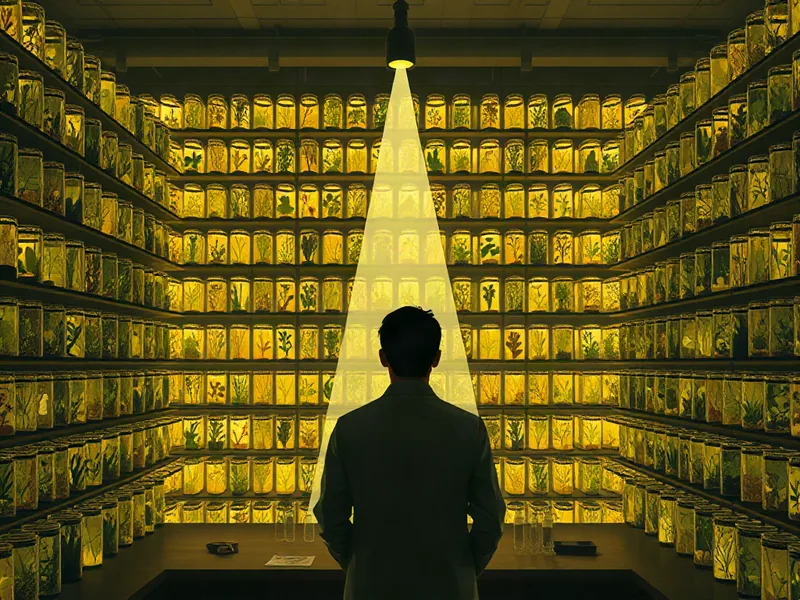
To check whether the predictions held up outside a computer simulation, the researchers tested several commercially available proteins in the lab. Pea and potato proteins, both already familiar in the plant-based food world, performed well as emulsifiers, matching what the model had predicted. That kind of validation matters. A predictive tool is only as useful as its track record, and this one held up when tested against real ingredients.
"The model identified nearly 800 plant proteins that could potentially act as emulsifiers, many of which had never previously been considered for this purpose," said Professor Anwesha Sarkar, NAPIC Co-Director at the University of Leeds. Her comment underscores what may be the study's most important contribution: not just a faster process, but a wider lens on what counts as a viable ingredient in the first place.
For an industry racing to find sustainable substitutes for animal-derived ingredients, this kind of tool could shave meaningful time off the front end of product development. Rather than spending years screening candidate proteins in the lab, companies could use a model like this to prioritize the handful most likely to succeed, then focus their experimental resources there. That does not eliminate lab testing. It reorders it, putting the most promising leads first instead of working through a list blindly.
The research also stands as an example of how disparate fields can be combined to answer questions that neither could crack alone. Food science brought the knowledge of what makes an ingredient functional. Protein chemistry supplied an understanding of molecular structure. Statistical physics offered a way to model interactions at a scale too complex for intuition alone. Artificial intelligence tied it together, finding patterns across data sets too large for humans to parse by hand. NAPIC, the National Alternative Protein Innovation Centre, points to this project as a template for the kind of interdisciplinary work needed to build the next generation of alternative protein technologies.
None of this guarantees that pea or potato protein emulsifiers will show up in your grocery store tomorrow, or that all 800 candidates identified by the model will pan out under further scrutiny. Computational predictions still need to be validated case by case, and scaling up production of any new ingredient brings its own set of challenges, from cost to taste to regulatory approval.
But the shift in approach matters. For decades, ingredient discovery in food science has leaned heavily on trial and error, a process that is slow by nature and expensive by necessity. A tool that can responsibly narrow the search field, and that has already shown some real-world accuracy with pea and potato proteins, offers a genuine shortcut toward more sustainable food systems. As pressure builds to reduce reliance on animal agriculture and its associated environmental costs, faster paths to viable plant-based alternatives are not just a scientific curiosity. They are a piece of the broader effort to feed people in ways that are kinder to the planet, without asking consumers to sacrifice the textures and stability they expect from their food.
Tags
Original Sources
AI Identifies Hundreds of Promising Plant Proteins for Sustainable Food Ingredients
↗ https://www.technologynetworks.com/applied-sciences/news/ai-identifies-hundreds-of-promising-plant-proteins-for-sustainable-food-ingredients-416310
About the author
Amara's entry point into AI was an epidemiology role at a London research hospital, where she spent five years studying how digital health tools reached — or conspicuously failed to reach — underserved communities. Watching early algorithmic systems in healthcare quietly entrench existing inequalities, she redirected her career toward the systemic consequences of AI at scale. She covers AI through an unflinching lens: who benefits, who bears the cost, and what evidence actually says versus what the press release claims. Her writing is calm and precise, but she doesn't mistake balance for neutrality.
More from The Steward →This Week's Edition
9 September 2026
29 articles
Related Articles

Dallas Conference Puts a Spotlight on Health Tech Innovations With Real Patient Stakes
Health & Science · 6 min

Why Programs Addressing Social Drivers of Health Keep Missing the Mark, and What Would Fix Them
Health & Science · 5 min

Minnesota's Rural Hospitals Warn They're Running Out of Road
Health & Science · 6 min
Related Articles
Dallas Conference Puts a Spotlight on Health Tech Innovations With Real Patient Stakes
Health & Science · 6 min
Why Programs Addressing Social Drivers of Health Keep Missing the Mark, and What Would Fix Them
Health & Science · 5 min
Minnesota's Rural Hospitals Warn They're Running Out of Road
Health & Science · 6 min
More Stories
© 2026 Cedar & Bloom. All rights reserved.
