The Drum · Weekly AI news, freeSubscribe →

Share
Shana Lynch challenges the notion of rapid AI-driven economic upheaval, suggesting a gradual shift over decades with substantial hurdles ahead, making her insights vital for investors and economists navigating future market trends.
The possibility that artificial intelligence (AI) will automate most cognitive labor is a serious concern. However, this transformation will likely unfold gradually over decades, according to Shana Lynch of Stanford University’s Human-Centered Artificial Intelligence (HAI) initiative. In her essay “AI as Normal Technology,” Lynch argues that the true bottlenecks lie downstream of capabilities, and there are significant gaps in our current evidence infrastructure.
Lynch's perspective is crucial for understanding how AI will impact the economy and markets. While breakthroughs in AI capabilities are undeniable, their real-world applications and economic implications require a more nuanced approach. The focus should shift from overemphasizing technical capabilities to addressing practical challenges and long-term integration.
The annual HAI report highlights that while AI is achieving remarkable milestones, it also raises urgent questions about environmental costs, transparency, and the distribution of benefits. For instance, training large language models consumes vast amounts of energy, contributing to carbon emissions. This environmental impact must be considered alongside the technological advancements.
The lack of transparency in AI systems can lead to biased outcomes and ethical concerns. Ensuring that AI is developed and deployed responsibly requires robust frameworks for governance and regulation. The report emphasizes that stakeholders across various sectors-education, finance, healthcare, and workforce-must collaborate to address these challenges.
In education, there is a growing need for skills development to prepare the workforce for an AI-driven economy. In finance, the integration of AI can enhance risk management and investment strategies but also introduces new risks. The healthcare sector stands to benefit from AI in diagnostics and personalized medicine, provided that patient data privacy is protected. Each of these areas presents unique opportunities and challenges that must be carefully managed.
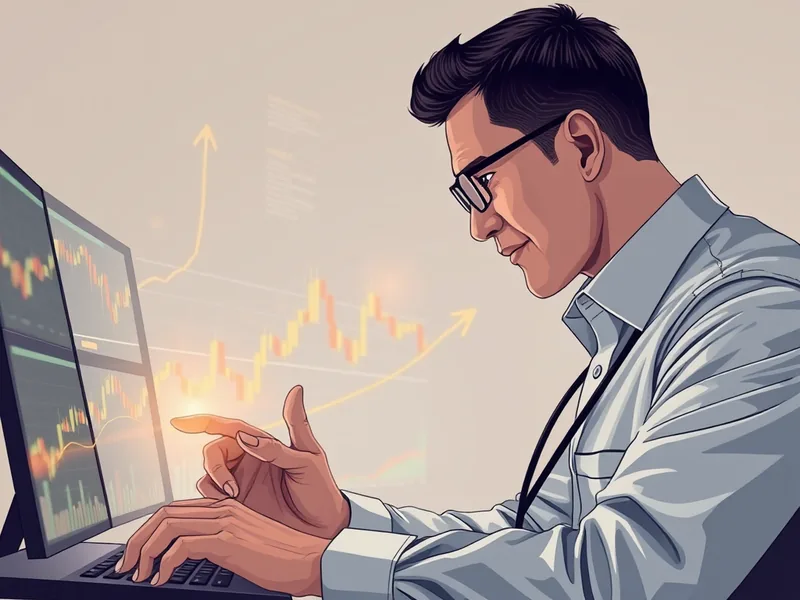
For investors, the gradual nature of AI's economic impact offers both risks and rewards. Early investment in AI technologies can yield significant returns as these innovations find practical applications. However, it is essential to differentiate between hype and genuine progress. Companies that demonstrate a clear path to commercialization and address the downstream bottlenecks are more likely to succeed.
The environmental costs of AI should also be factored into investment decisions. Investors can support companies that prioritize sustainable practices and innovative solutions to reduce energy consumption. Transparency in AI development can enhance trust and mitigate ethical risks, making it a valuable consideration for long-term investments.
In the financial sector, AI-driven tools can improve portfolio management by providing more accurate risk assessments and predictive analytics. However, these tools must be rigorously tested to ensure they do not introduce new systemic risks. The regulatory environment will play a crucial role in shaping the adoption of AI in finance, and investors should stay informed about policy developments.
As AI continues to evolve, investors should monitor several key areas:
By focusing on these areas, investors can navigate the complex landscape of AI's economic impact and capitalize on emerging opportunities while managing risks effectively. The gradual integration of AI into various sectors presents a compelling investment thesis, but it requires a balanced approach that considers both technological potential and practical challenges.
Tags
Original Sources
Economy, Markets | Stanford HAI
↗ https://hai.stanford.edu/topics/economy-markets
Operationalizing Real-Time Monitoring of Clinical AI | Stanford HAI
↗ https://hai.stanford.edu/policy/operationalizing-real-time-monitoring-of-clinical-ai
About the author
Marcus began tracking AI's market implications in 2016, noticing AI-related patent filings accelerating ahead of earnings upgrades before most of the sell-side had caught on. A former fixed-income quantitative analyst, he spent two decades building models that priced risk across emerging markets before pivoting to cover the economic impact of AI full-time. His writing translates opaque technical developments into clear risk/reward terms — and he's rarely diplomatic about the gap between AI valuations and underlying fundamentals. He believes most market participants still underestimate AI's long-run deflationary effect on knowledge work.
More from The Analyst →This Week's Edition
14 May 2026
29 articles
Related Articles
Related Articles
More Stories
© 2026 Cedar & Bloom. All rights reserved.