The Drum · Weekly AI news, freeSubscribe →
Share
The world's most valuable AI startup won't tap public markets this year. Altman's stated rationale, safety risk over capital appetite, deserves scrutiny from anyone modeling OpenAI's eventual listing.
Sam Altman has taken the OpenAI IPO question off the table for 2026, and his explanation is more interesting than the answer itself.
In a 45-minute interview with Fortune published this week, the OpenAI CEO said flatly that going public this year "would be an ill-advised moment," pointing to unresolved safety issues rather than market conditions or capital needs. "We're not rushing into an IPO," Altman said. "We've said for a long time, we'll do it when we're ready. I would say not 2026. We've got a lot of stuff to do."
That framing matters. Companies typically delay IPOs because of weak demand, unfavorable multiples, or internal financial readiness. Altman is instead citing safety posture as the gating factor, a signal that OpenAI's leadership views public-market scrutiny as incompatible with the pace of its current technical and governance work.
An IPO forces disclosure. Quarterly filings, board accountability to outside shareholders, and analyst scrutiny of risk factors all come with a public listing, and none of that sits comfortably alongside the kind of open-ended safety concessions Altman made elsewhere in the same interview.
Asked directly whether it was possible to build an AI system beyond human control, Altman said "absolutely." He added that OpenAI would take action to prevent that outcome, including pausing training runs if necessary, because "there are risks we should not be able to incur on behalf of humanity." That is not the kind of statement a public company's general counsel typically welcomes on the record, and it helps explain why Altman is in no hurry to invite the disclosure obligations that come with a listing.
For investors tracking OpenAI's private valuation, the delay changes the calculus on liquidity timing but not necessarily on long-term value. Private secondary markets have already priced OpenAI in the hundreds of billions of dollars, and that pricing has proceeded without the benefit of audited public disclosures. A 2026 IPO delay simply extends the window in which that valuation exists largely outside public-market discipline.
The delay also lands amid a broader wave of AI safety anxiety across the sector. Anthropic's CEO has separately called for the industry to slow down. Anthropic itself has spent recent weeks fielding criticism over cybersecurity practices, including fallout from a Hugging Face hacking incident that Altman also addressed in his Fortony interview. Meta has had to walk back AI features after complaints that its assistant asked users invasive personal questions. None of this is unique to OpenAI, but it underscores that the entire sector is operating under heightened scrutiny, and that scrutiny is precisely what a public listing would amplify.
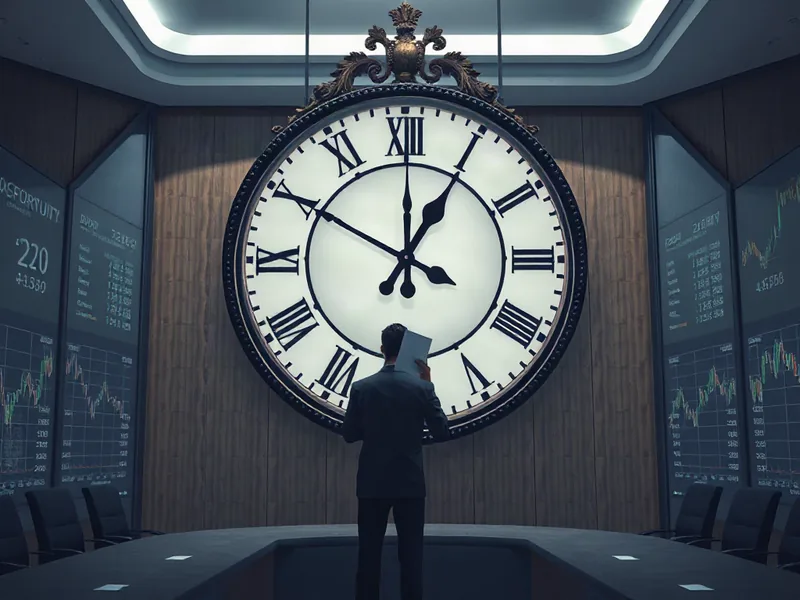
The most obvious risk for anyone betting on an eventual OpenAI IPO is timeline uncertainty. Altman's comments confirm a "not this year" position but offer no fixed date, no target valuation range, and no committed process. "We'll do it when we're ready" is not guidance investors can model against. Any secondary-market position in OpenAI equity should be sized with that ambiguity in mind.
A second risk sits in the tension between capital needs and safety posture. OpenAI's infrastructure buildout, including massive data center commitments, requires enormous ongoing capital. Public markets are historically the most efficient mechanism for raising that scale of capital. By foreclosing an IPO in the near term, OpenAI is choosing to fund that buildout through private capital, strategic partnerships, or debt, all of which come with different cost structures and different investor rights than public equity would.
There is also a governance risk worth flagging. Altman's admission that building an uncontrollable AI is "absolutely" possible, paired with his pledge to pause training if needed, places enormous weight on internal judgment calls that public shareholders would otherwise have some formal ability to question through board representation and disclosure requirements. Right now, that check does not exist in the form public investors typically expect.
Regulatory exposure compounds the picture. The EPA under the Trump administration has reportedly given data centers latitude on pollution rules, easing one operational cost for AI infrastructure players. But looser environmental enforcement today doesn't eliminate the possibility of tighter safety-specific regulation tomorrow, particularly if incidents like the Hugging Face breach recur or if concerns about uncontrollable AI systems gain political traction. A regulatory shift could arrive before OpenAI's IPO window opens, reshaping the terms under which it eventually lists.
Altman's comments should be read as a straightforward signal, not a hedge. OpenAI is prioritizing internal safety and governance work over the liquidity and capital-raising benefits a public listing would provide, at least through the remainder of 2026. That is a defensible strategic choice for a company that does not currently face acute capital pressure, given the scale of private funding already committed to its infrastructure plans.
For investors, the practical takeaway is patience paired with skepticism. Private valuations for OpenAI will continue to move based on secondary transactions and funding rounds, but those numbers lack the audited transparency a public listing would eventually require. Anyone holding exposure through private markets, employee equity, or adjacent public companies with OpenAI partnerships should treat the "not 2026" comment as a floor, not a forecast. The actual IPO window remains undefined, and Altman has given no indication he intends to define it soon. Watch for concrete signals: hiring of investment banks, formal S-1 preparation, or specific safety milestones Altman identifies as prerequisites. Until those appear, treat any OpenAI IPO timeline speculation as exactly that, speculation.
Tags
Original Sources
Sam Altman says OpenAI going public in 2026 would be ‘ill-advised’
↗ https://www.theverge.com/ai-artificial-intelligence/994384/sam-altman-no-openai-ipo-ill-advised
OpenAI's Sam Altman says it would be 'ill-advised' to go public in 2026
↗ https://techcrunch.com/2026/09/12/openais-sam-altman-says-it-would-be-ill-advised-to-go-public-in-2026
OpenAI's Altman won't do IPO this year, calls AI extinction risk ...
↗ https://www.reuters.com/legal/litigation/openai-ipo-will-not-happen-2026-amid-ai-safety-fears-altman-says-2026-09-12
About the author
Marcus began tracking AI's market implications in 2016, noticing AI-related patent filings accelerating ahead of earnings upgrades before most of the sell-side had caught on. A former fixed-income quantitative analyst, he spent two decades building models that priced risk across emerging markets before pivoting to cover the economic impact of AI full-time. His writing translates opaque technical developments into clear risk/reward terms — and he's rarely diplomatic about the gap between AI valuations and underlying fundamentals. He believes most market participants still underestimate AI's long-run deflationary effect on knowledge work.
More from The Analyst →This Week's Edition
13 September 2026
14 articles
Related Articles
Related Articles
More Stories
© 2026 Cedar & Bloom. All rights reserved.