The Drum · Weekly AI news, freeSubscribe →

Share
As rare diseases continue to challenge medical science, a new partnership between biotech and artificial intelligence is bringing hope to patients and researchers alike.
For millions of people living with rare diseases, the road to effective treatment can feel like an endless journey. These conditions, often affecting fewer than 200,000 individuals in the United States, are notoriously difficult to diagnose and treat due to their complexity and rarity. However, a recent development in the biotech industry is offering new hope: Anthropic, a leading AI company, has deepened its collaboration with pharmaceutical firms to accelerate drug discovery for rare diseases.
Anthropic's expanded work in this area marks a significant step forward in leveraging artificial intelligence to tackle some of the most challenging medical problems. The company, known for its advanced language models and ethical approach to AI development, is now applying its expertise to help identify potential therapies for conditions that have long been neglected by traditional drug discovery processes.
The partnership between Anthropic and biotech companies is part of a broader trend in the medical research community. By integrating AI into the early stages of drug development, researchers can analyze vast amounts of data more efficiently and identify promising compounds with greater precision. This not only speeds up the discovery process but also reduces the financial burden on pharmaceutical firms, making it more feasible to invest in rare disease research.
One of the key benefits of using AI in this context is its ability to simulate complex biological interactions at a scale that would be impossible for human researchers alone. For instance, Anthropic's models can predict how different molecules will interact with specific proteins or cellular pathways, helping scientists narrow down their search for effective treatments. This predictive power is especially valuable when dealing with rare diseases, where the limited number of patients and lack of historical data often hinder traditional research methods.
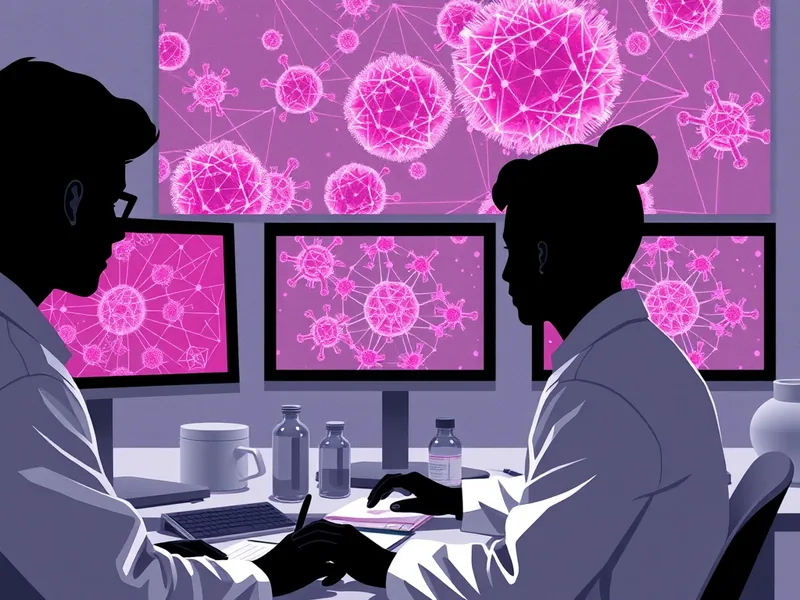
However, the use of AI in drug discovery also comes with its own set of challenges. One major concern is ensuring that the algorithms used are transparent and explainable. In a field where patient safety is paramount, it's crucial that researchers can understand why an AI system has made certain predictions or recommendations. Anthropic is committed to developing models that not only perform well but also provide clear insights into their decision-making processes.
The impact of this collaboration extends far beyond the laboratory. For patients and families affected by rare diseases, the promise of faster and more effective treatments could mean the difference between living with chronic symptoms and achieving a better quality of life. Rare diseases often have a significant emotional and financial toll on those who suffer from them, as well as their caregivers and communities. By accelerating the discovery of new therapies, AI has the potential to alleviate some of this burden and bring hope to millions.
The success of these efforts could have broader implications for the pharmaceutical industry. If AI proves effective in drug discovery for rare diseases, it may also be applied to more common conditions, potentially leading to breakthroughs that benefit a wider population. The collaboration between Anthropic and biotech firms serves as a model for how public and private sectors can work together to advance medical research and improve patient outcomes.
As the field of AI continues to evolve, the integration of these technologies into healthcare is likely to become more widespread. For now, the focus remains on rare diseases, where the need for innovation is most urgent. With each new discovery, we move one step closer to a future where no disease is too rare to be treated effectively.
Tags
Original Sources
Anthropic deepens work with rare disease drugs
↗ https://www.statnews.com/2026/07/21/biotech-news-anthropic-deepens-work-with-rare-disease-drugs
About the author
Amara's entry point into AI was an epidemiology role at a London research hospital, where she spent five years studying how digital health tools reached — or conspicuously failed to reach — underserved communities. Watching early algorithmic systems in healthcare quietly entrench existing inequalities, she redirected her career toward the systemic consequences of AI at scale. She covers AI through an unflinching lens: who benefits, who bears the cost, and what evidence actually says versus what the press release claims. Her writing is calm and precise, but she doesn't mistake balance for neutrality.
More from The Steward →This Week's Edition
27 July 2026
23 articles
Related Articles
A High-Profile JAMA Study on OpenEvidence Leaves Key Clinical Questions Unanswered
Health & Science · 5 min

Cell and Gene Therapies Can Cure Disease. Can We Afford to Pay for Them?
Health & Science · 6 min
FDA Clears Jemperli for Rectal Cancer, Offering Some Patients a Path Without Surgery
Health & Science · 6 min
Related Articles
A High-Profile JAMA Study on OpenEvidence Leaves Key Clinical Questions Unanswered
Health & Science · 5 min
Cell and Gene Therapies Can Cure Disease. Can We Afford to Pay for Them?
Health & Science · 6 min
FDA Clears Jemperli for Rectal Cancer, Offering Some Patients a Path Without Surgery
Health & Science · 6 min
More Stories
© 2026 Cedar & Bloom. All rights reserved.
