The Drum · Weekly AI news, freeSubscribe →

Share
Anthropic exposes massive fraud by competitors DeepSeek, Moonshot, and MiniMax, revealing they used 16 million interactions across 24,000 fake accounts to steal Claude’s capabilities through unauthorized distillation techniques.
Anthropic, a leading AI research laboratory, has uncovered industrial-scale campaigns by three other AI labs-DeepSeek, Moonshot, and MiniMax-to illicitly extract capabilities from its model, Claude. These campaigns involved over 16 million exchanges through approximately 24,000 fraudulent accounts, violating Anthropic’s terms of service and regional access restrictions.
The use of distillation-a technique where a less capable model is trained on the outputs of a more powerful one-can be both legitimate and illicit. While frontier AI labs often use distillation to create smaller, cheaper versions of their models for customers, it can also be exploited by competitors to acquire advanced capabilities at a fraction of the development time and cost. This illicit activity poses significant risks to national security and global stability.
Illicitly distilled models lack the necessary safeguards that are built into legitimate AI systems. Anthropic and other U.S. companies implement robust measures to prevent state and non-state actors from using AI for malicious purposes, such as developing bioweapons or conducting cyber attacks. However, models created through illicit distillation are unlikely to retain these protections, leading to the proliferation of dangerous capabilities.
Foreign labs that successfully distill American models can integrate these unprotected capabilities into military, intelligence, and surveillance systems. Authoritarian governments could then deploy frontier AI for offensive cyber operations, disinformation campaigns, and mass surveillance. If distilled models are open-sourced, the risk multiplies as these capabilities spread freely beyond any single government's control.
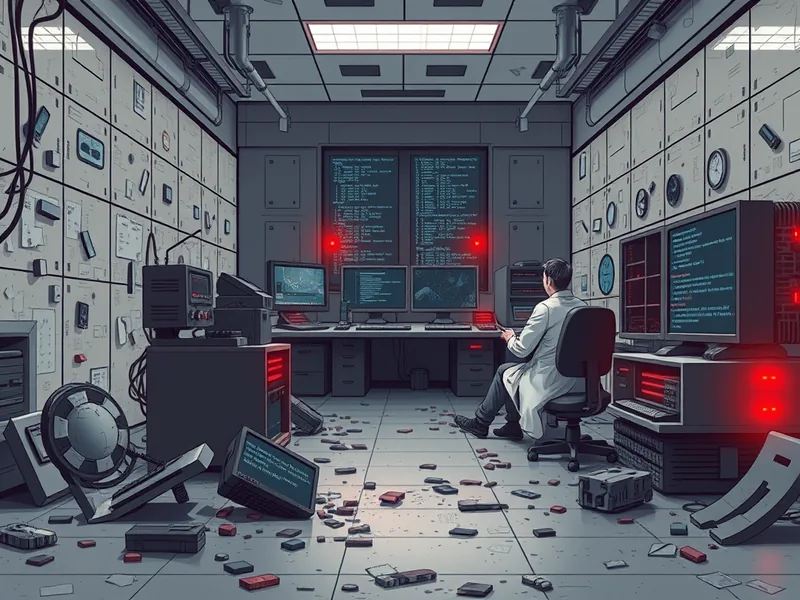
Addressing the threat of distillation attacks requires rapid, coordinated action among industry players, policymakers, and the global AI community. Anthropic has consistently supported export controls to maintain America’s lead in AI development. These controls are designed to prevent foreign labs, particularly those under the influence of the Chinese Communist Party, from closing the competitive gap through illicit means.
However, without visibility into these attacks, the apparent rapid advancements by foreign labs may be misinterpreted as evidence that export controls are ineffective. In reality, much of this progress depends on capabilities extracted from American models. By identifying and countering distillation attacks, the industry can better protect intellectual property and maintain a strategic advantage.
The threat of industrial-scale distillation attacks is real and growing. Anthropic’s discovery underscores the need for immediate and coordinated action to safeguard AI technology and prevent its misuse. The global AI community must work together to implement robust defenses and ensure that the benefits of AI are realized while minimizing the risks.
Tags
Original Sources
About the author
Marcus began tracking AI's market implications in 2016, noticing AI-related patent filings accelerating ahead of earnings upgrades before most of the sell-side had caught on. A former fixed-income quantitative analyst, he spent two decades building models that priced risk across emerging markets before pivoting to cover the economic impact of AI full-time. His writing translates opaque technical developments into clear risk/reward terms — and he's rarely diplomatic about the gap between AI valuations and underlying fundamentals. He believes most market participants still underestimate AI's long-run deflationary effect on knowledge work.
More from The Analyst →This Week's Edition
24 February 2026
29 articles
Related Articles

Seattle Children's Network Turns Data Trust Into Preventive Care Gains, With Lessons for Security Teams
Security & Risk · 6 min

Anthropic Gives Outside Safety Researchers the Same Access as Its Own Staff
Security & Risk · 5 min

Fitch Puts a Number on AI Risk: New Stress Test Flags Credit Exposure Across Four Sectors
Security & Risk · 5 min
Related Articles
Seattle Children's Network Turns Data Trust Into Preventive Care Gains, With Lessons for Security Teams
Security & Risk · 6 min
Anthropic Gives Outside Safety Researchers the Same Access as Its Own Staff
Security & Risk · 5 min
Fitch Puts a Number on AI Risk: New Stress Test Flags Credit Exposure Across Four Sectors
Security & Risk · 5 min
More Stories
© 2026 Cedar & Bloom. All rights reserved.
