The Drum · Weekly AI news, freeSubscribe →

Share
As AI outputs get spoofed, swapped, and misattributed, Anthropic's open-source FlashProve project wants to let anyone cryptographically verify which model actually generated a response, even against the lab that built it.
Anthropic published research on Tuesday describing a system designed to answer a surprisingly hard question: how do you actually know which model produced a given output? The project, called FlashProve, aims to give users a cryptographic guarantee, not just a vendor's word, that a response really came from the model it claims to be from.
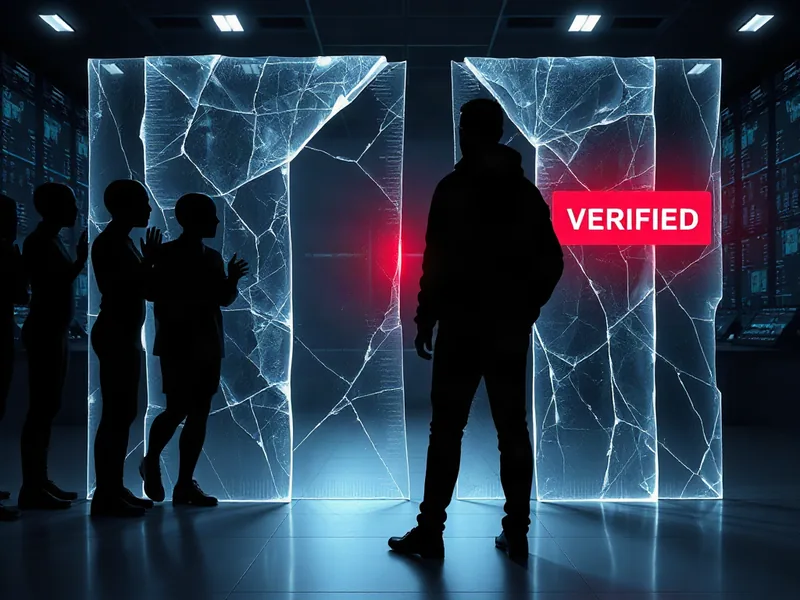
The core idea is "provable inference." Think of it as a mathematical proof attached to a model's output, similar in spirit to how DKIM signatures let email clients verify a message really came from the domain it claims to be from. The difference here is the threat model. FlashProve is designed to be robust even when the entity trying to spoof the identity is the lab running the model itself.
That's the detail that makes this interesting from a security standpoint. Most verification schemes assume the service provider is a trusted party and the risk comes from outside attackers. Anthropic's researchers flip that assumption. Their stated goal is to prevent a lab from secretly substituting a cheaper, weaker model to cut inference costs, or swapping in a more expensive model temporarily to inflate benchmark results. In other words, the system treats the AI company itself as a potential adversary to the user's trust.
That's a notable admission from inside the industry. It implicitly acknowledges a real incentive problem: labs run on thin compute margins, APIs are black boxes, and nothing stops a provider from quietly routing a request to whatever model is cheapest at that moment. Users have no reliable way to catch it today.
FlashProve has a second use case beyond catching dishonest labs: third-party attestation. The researchers give a concrete example in their write-up: a developer claims their code library was scanned for vulnerabilities by a frontier cybersecurity model, or a company claims its business plan got sign-off from a specific advanced model. Right now, there's no way for an outside party to check that claim. FlashProve is meant to close that gap too.
Mechanically, the system works like this:
That weights-privacy piece is what makes this commercially viable rather than purely academic. A verification scheme that required labs to expose their model internals would be dead on arrival for any closed-model provider. By keeping the fingerprint separate from the weights, Anthropic's design at least tries to let commercial labs participate without giving up their most valuable asset.
Anthropic released a full technical specification along with working code for parts of the system, all under an open source license on GitHub. That's worth flagging on its own: this isn't a marketing announcement with a vague promise of "safety research coming soon." There's an actual spec and actual code for other researchers to poke at, extend, or break.
And to be clear about where this stands: it's early. Anthropic says explicitly that there are no plans to deploy FlashProve at Anthropic or any other lab right now. The framing from the researchers is blunt about this being unfinished work. "This research post is meant to share intermediate progress, and not a completed research agenda," they write, adding that the goal is for others to "take it, and improve it."
The timing here isn't incidental. Anthropic is mid-IPO process, and its recent S-1 filings have shown compute costs eating an increasing share of revenue, up to 58% of revenue last quarter from 48% the quarter before. When margins on compute are under pressure, the temptation to quietly serve a cheaper model under a premium label gets stronger, not weaker. A verification system like FlashProve, even in its current unfinished state, is partly a bet that trust infrastructure will matter more as the economics of running frontier models get tighter.
Beyond Anthropic's own incentives, there's a broader provenance problem this points at. As AI-generated content, code, and decisions propagate through systems that other systems and humans rely on, the question of "which model actually did this" stops being academic. Insurance claims, security audits, financial compliance checks, all of these could eventually hinge on being able to prove an AI output came from a specific, known model rather than some unverified substitute.
Whether FlashProve or something like it becomes standard practice depends on a few unresolved things. Adoption requires labs to actually publish fingerprints, which means buying into a system that can be used to catch them cheating. It also requires the cryptography to hold up under adversarial pressure once people start actively trying to break it, not just read the spec. And it requires someone, likely not Anthropic alone, to build out the infrastructure that makes checking a fingerprint as routine as checking a TLS certificate.
For now, this is a research drop, not a product. But it's a useful signal of where the industry's thinking is headed: toward treating model identity and provenance as a security primitive that needs its own cryptographic plumbing, rather than something users just have to take on faith.
Tags
Original Sources
Anthropic is working on a system to prove AI models' identity | TechCrunch
↗ https://techcrunch.com/2026/11/03/anthropic-is-working-on-a-system-to-prove-ai-models-identity
About the author
Kai built ML infrastructure at a Bay Area startup before developing an obsession with transformer architectures and inference optimisation that eventually pulled him out of product work entirely. A stint at a compute research lab sharpened his instinct for what actually matters in a model release versus what is marketing. He writes from the inside — from the perspective of someone who has debugged the systems he is describing at three in the morning. He is allergic to hype and instinctively drawn to the unglamorous plumbing questions that everyone else skips over.
More from The Engineer →This Week's Edition
4 November 2026
32 articles
Related Articles
CMS Picks Six Tech Firms to Run AI-Powered Medicare Prior Authorization Pilot
Policy & Regulation · 5 min

FDA and CMS Signal Joint Push to Work With States on AI Health Tech Oversight
Policy & Regulation · 5 min
Can AI Catch What Human Supervisors Miss on Suicide Crisis Lines?
Products & Applications · 5 min
Related Articles
CMS Picks Six Tech Firms to Run AI-Powered Medicare Prior Authorization Pilot
Policy & Regulation · 5 min
FDA and CMS Signal Joint Push to Work With States on AI Health Tech Oversight
Policy & Regulation · 5 min
Can AI Catch What Human Supervisors Miss on Suicide Crisis Lines?
Products & Applications · 5 min
More Stories
© 2026 Cedar & Bloom. All rights reserved.
