The Drum · Weekly AI news, freeSubscribe →

Share
Apple’s decision to produce the Baltra AI ASIC internally marks a pivotal shift towards greater control over its technology stack, potentially reshaping industry dynamics and reinforcing its competitive edge in AI.
Apple, known for its tightly controlled ecosystem and strategic secrecy, has revealed plans to move the production of its upcoming Baltra ASIC in-house. This decision comes as part of a broader strategy to enhance vertical integration and optimize its AI infrastructure. According to a South Korean publication, Samsung Electro-Mechanics (SEMCO) has provided samples of its T-glass substrate to both Broadcom and Apple, signaling significant developments in the tech giant's supply chain.
Apple's move to in-house production for the Baltra ASIC is a strategic play aimed at reducing dependency on external suppliers and gaining greater control over its AI hardware. The company has been facing issues with underutilization of its current AI infrastructure, with reports suggesting that a significant portion of its existing AI servers are not being fully utilized. By bringing the production of this critical component in-house, Apple aims to streamline its operations and potentially accelerate product development cycles.
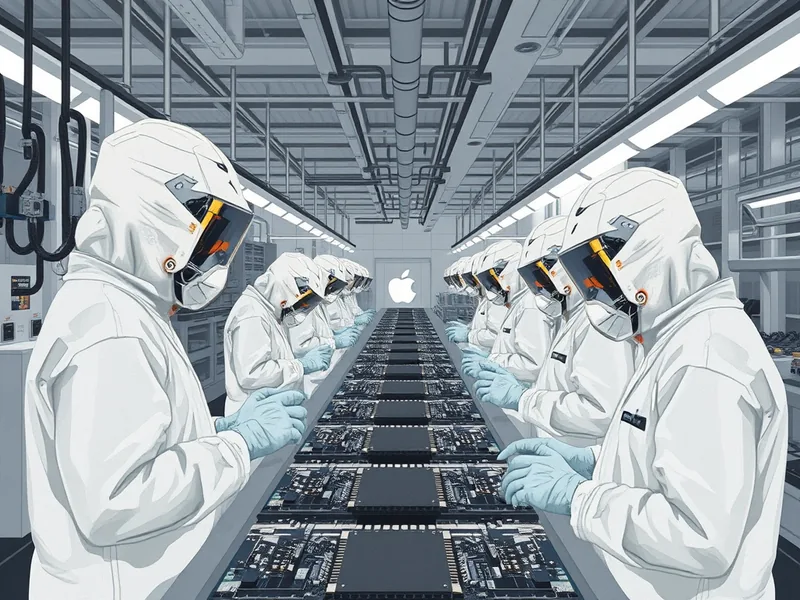
Broadcom, a leading designer of AI-geared ASICs, is also collaborating with Apple to develop the Baltra chip. This partnership underscores the importance of custom-designed hardware in the rapidly evolving AI landscape. The use of T-glass substrates, which offer better thermal stability and higher reliability compared to conventional materials, further highlights Apple's commitment to pushing the boundaries of technology.
Apple's decision to move the production of its Baltra ASIC in-house is a significant step toward greater vertical integration and control over its AI infrastructure. While this strategy comes with risks, the potential benefits in terms of enhanced control, cost efficiency, and strategic differentiation make it a compelling move for the tech giant. As Apple continues to navigate the complexities of AI hardware development, the success of this initiative will be closely watched by industry analysts and investors alike.
Tags
Original Sources
About the author
Marcus began tracking AI's market implications in 2016, noticing AI-related patent filings accelerating ahead of earnings upgrades before most of the sell-side had caught on. A former fixed-income quantitative analyst, he spent two decades building models that priced risk across emerging markets before pivoting to cover the economic impact of AI full-time. His writing translates opaque technical developments into clear risk/reward terms — and he's rarely diplomatic about the gap between AI valuations and underlying fundamentals. He believes most market participants still underestimate AI's long-run deflationary effect on knowledge work.
More from The Analyst →This Week's Edition
9 April 2026
29 articles
Related Articles
Related Articles
More Stories
© 2026 Cedar & Bloom. All rights reserved.