The Drum · Weekly AI news, freeSubscribe →
Share
As AI companies face lawsuits over their use of copyrighted material, early victories are setting a precedent that could reshape how these systems are trained and regulated.
When Kirk Wallace Johnson discovered his books in a searchable dataset used to train AI models, he felt a mix of emotions. Anger at the brazenness of the theft, worry about the future of writing, and a strong desire for justice against the corporations involved. His works, like The Feather Thief and The Fishermen and the Dragon, which took years of research and effort, had been pirated and fed into chatbots without his consent.
Johnson is not alone in this fight. A growing number of artists-illustrators, authors, and musicians-are taking legal action against major AI companies like Google, Meta, and Anthropic. These lawsuits are not just about individual grievances; they represent a broader struggle over the rights and protections for creative content in the digital age.
The core issue is straightforward: AI models require vast amounts of data to learn and generate new content. This data often includes copyrighted material, such as books, music, and artwork. While some argue that this use falls under fair use or transformative use, many artists believe their rights are being violated without adequate compensation or recognition.
One of the most significant legal victories came earlier this year when a federal court ruled in favor of a group of artists suing Google. The court found that Google had used copyrighted works to train its AI models without proper authorization, setting a precedent that could have far-reaching implications for the industry. Similar cases against Meta and Anthropic are also making progress, with some early rulings in favor of the plaintiffs.
The legal battles over AI training data highlight a critical intersection between technology and copyright law. Traditionally, fair use has allowed certain uses of copyrighted material without permission, such as for criticism, comment, news reporting, teaching, scholarship, or research. However, the application of these principles to AI is far from clear.
In one notable case, a group of musicians sued an AI company for using their songs to train music-generating models. The court ruled that while the use of copyrighted material in training could be transformative, it did not automatically qualify as fair use without considering other factors like market impact and the nature of the work.
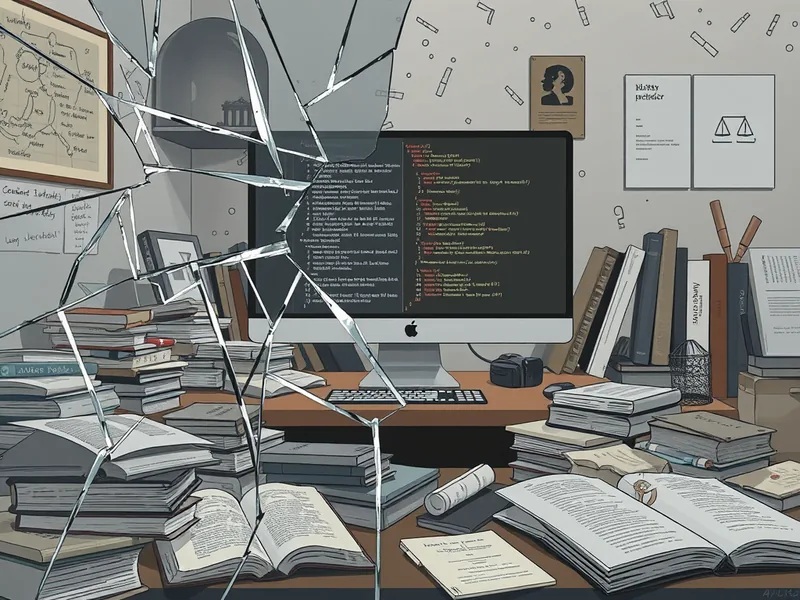
The legal landscape is further complicated by the international nature of these cases. Different countries have varying interpretations of copyright law, which can lead to inconsistent rulings and jurisdictional challenges. For example, a lawsuit in the United States might be treated differently than one in Europe, where data privacy laws are more stringent.
The outcomes of these lawsuits could have profound implications for both artists and AI companies. If courts consistently rule against the use of copyrighted material without permission, it could force AI developers to seek alternative sources of training data or negotiate licensing agreements with rights holders. This would likely increase the cost and complexity of developing AI models but could also provide a more sustainable and ethical framework for content creation.
For artists, these legal battles are about more than just financial compensation. They are fighting to protect their creative integrity and ensure that their work is not used without their consent. As Johnson puts it, "It's about respect. These companies need to recognize the value of our labor and the time we invest in creating something original."
The broader impact extends beyond individual artists. The way AI models are trained can influence the quality and diversity of content they produce. If AI is primarily trained on a narrow set of copyrighted works, it could lead to homogenized output that lacks the richness and variety found in human-created content. By addressing these issues, we can help ensure that AI technologies contribute positively to society rather than undermining the very creativity they aim to enhance.
As the legal battles continue, the tech industry is also starting to take notice. Some companies are exploring ways to compensate artists for their contributions, while others are developing new methods of training models that do not rely on copyrighted material. The future of AI and its relationship with creative content remains uncertain, but one thing is clear: the voices of artists are being heard, and they are demanding change.
Tags
Original Sources
Artists are lawyering up against AI slop, and some are even winning
↗ https://www.theverge.com/ai-artificial-intelligence/971059/ai-artists-lawsuit-google-meta-anthropic
About the author
Amara's entry point into AI was an epidemiology role at a London research hospital, where she spent five years studying how digital health tools reached — or conspicuously failed to reach — underserved communities. Watching early algorithmic systems in healthcare quietly entrench existing inequalities, she redirected her career toward the systemic consequences of AI at scale. She covers AI through an unflinching lens: who benefits, who bears the cost, and what evidence actually says versus what the press release claims. Her writing is calm and precise, but she doesn't mistake balance for neutrality.
More from The Steward →This Week's Edition
6 August 2026
25 articles
Related Articles

Medicare's AI Push Meets a Discovery Problem for Health Chatbots
Products & Applications · 5 min
Microsoft's Internal AI Rollout Offers a Data Point on Enterprise Transformation Economics
Finance & Markets · 5 min
Kennedy Reshapes Key Preventive Health Panel With Specialist-Heavy Appointments
Policy & Regulation · 5 min
Related Articles
Medicare's AI Push Meets a Discovery Problem for Health Chatbots
Products & Applications · 5 min
Microsoft's Internal AI Rollout Offers a Data Point on Enterprise Transformation Economics
Finance & Markets · 5 min
Kennedy Reshapes Key Preventive Health Panel With Specialist-Heavy Appointments
Policy & Regulation · 5 min
More Stories
© 2026 Cedar & Bloom. All rights reserved.
