The Drum · Weekly AI news, freeSubscribe →

Share
Stanford researchers warn that "world models," AI systems built to predict and act in real environments, demand governance rules that current language-focused AI policy simply was not designed to handle.
Think about the difference between reading a recipe and actually cooking dinner. Reading requires understanding words and sequences. Cooking requires understanding heat, timing, texture, and how ingredients change when you act on them. That gap captures something important about where artificial intelligence is headed next.
For the past several years, most public debate about AI has centered on language: chatbots that write essays, summarize documents, or answer questions. But researchers at Stanford's Institute for Human-Centered Artificial Intelligence are pointing to a different kind of system now taking shape, one built not to talk about the world but to understand and predict it. They call these systems world models, and they represent a shift with consequences that reach far beyond the classroom or the office.
A world model is an AI system that builds and maintains an internal representation of a real environment, then uses that representation to predict how the environment will change when something acts on it. Picture a mental map that updates itself in real time: if a robot moves a box, a world model anticipates what happens to the space around it. If a chemical mixture is disturbed, it predicts the reaction. If a city's infrastructure is stressed by a flood, it models how water, traffic, and power systems might respond.
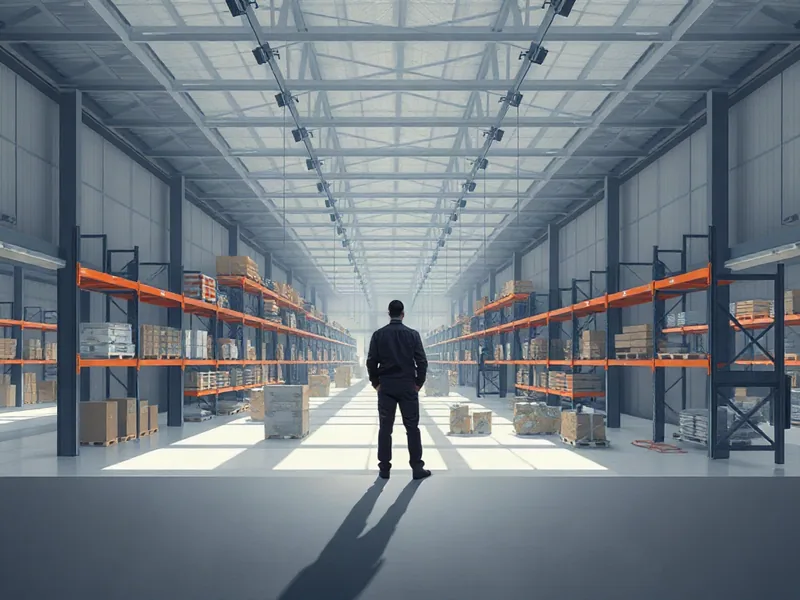
This is not a small technical tweak. It is a move from AI that processes symbols to AI that grapples with physics, geometry, and cause and effect in three-dimensional space. That capability is what makes embodied AI, systems that can perceive and act in the physical world, actually possible. Robots that navigate warehouses, drones that respond to disasters, and scientific tools that run virtual experiments all depend on some version of this technology.
Here is the problem. Almost every AI policy framework built over the past decade, from disclosure requirements to bias audits to content moderation rules, was designed with language models in mind. Those frameworks ask questions like: did the model generate false information? Did it produce harmful text? Did it reflect biased training data? These are legitimate concerns, but they assume the AI's output is words on a screen.
World models produce something different. Their output is a prediction about how physical reality will unfold, and that prediction can directly shape decisions about infrastructure planning, emergency response, or scientific experimentation. A flawed world model used in crisis response is not just a bad paragraph. It could be a miscalculated evacuation route or a mismanaged resource allocation during a disaster. A flawed world model guiding a warehouse robot is not a hallucinated fact. It could be a collision.
Building on a recent Stanford HAI policy brief, a Stanford seminar scheduled for September 2026 is set to tackle exactly this mismatch. The session brings together Daniel Zhang, HAI's chief of staff, Caroline Meinhardt, the institute's policy research manager, Jiajun Wu, an assistant professor of computer science at Stanford, and Russell Wald, HAI's executive director. Their focus is described plainly in the event's framing: examining how world models could transform infrastructure planning, crisis response, scientific experimentation, and embodied AI, while confronting governance challenges that today's language-focused AI policy fails to address.
That framing matters because it names the gap honestly rather than assuming existing rules will simply stretch to cover new technology. Spatial intelligence, the ability of a system to understand and reason about physical space, is not a feature you can bolt onto language-model oversight. It requires its own vocabulary of risk, its own testing standards, and arguably its own accountability structures for when predictions go wrong in ways that affect real bodies and real infrastructure, not just information ecosystems.
There is a reasonable comparison to be made with how safety regulation evolved for other physical technologies. Aviation safety rules did not emerge from communications law. Medical device regulation did not borrow wholesale from publishing standards. Each domain needed rules calibrated to its actual failure modes. World models, precisely because they touch physical systems like transportation networks, disaster response, and embodied robotics, may need a similarly tailored approach rather than an extension of existing AI transparency and content rules.
The stakes here are not abstract. Infrastructure planning affects whether communities have reliable water, power, and transit. Crisis response affects whether people get help fast enough during floods, fires, or earthquakes. Scientific experimentation increasingly relies on simulated environments to test ideas before they reach real labs, real patients, or real ecosystems. If world models become embedded in these processes, and the trajectory suggests they will, the quality and oversight of their predictions becomes a public safety issue, not just a technical curiosity.
There is real promise here too. Better world models could mean faster, more accurate disaster response, more efficient infrastructure design, and scientific breakthroughs that happen in simulation before they ever touch a physical lab. The upside is genuine. But promise and risk tend to travel together in emerging technology, and pretending otherwise does no one any favors.
What Stanford's researchers are essentially arguing is that policymakers have a narrow window to get ahead of this shift rather than reacting to it after deployment scales up. Language model governance took years to mature, and even now remains contested and incomplete. Spatial and embodied AI systems are moving into infrastructure, emergency management, and physical robotics faster than comparable oversight structures are being built.
Getting this right will require humility from technologists and urgency from regulators, a combination that has proven difficult to sustain in past waves of AI policy. But the alternative, waiting until a world model's flawed prediction causes real-world harm before building the rules to prevent it, is a far costlier way to learn the same lesson.
Tags
Original Sources
Daniel Zhang, Caroline Meinhardt, Jiajun Wu, and Russell Wald | The World Model and Spatial Intelligence Era: Governing AI Beyond Language | Stanford HAI
↗ https://hai.stanford.edu/events/world-model-and-spatial-intelligence-era
About the author
Amara's entry point into AI was an epidemiology role at a London research hospital, where she spent five years studying how digital health tools reached — or conspicuously failed to reach — underserved communities. Watching early algorithmic systems in healthcare quietly entrench existing inequalities, she redirected her career toward the systemic consequences of AI at scale. She covers AI through an unflinching lens: who benefits, who bears the cost, and what evidence actually says versus what the press release claims. Her writing is calm and precise, but she doesn't mistake balance for neutrality.
More from The Steward →This Week's Edition
6 September 2026
24 articles
Related Articles

German Bishops Back Child-Friendly AI Standards, Citing Papal Call on Human Dignity
Policy & Regulation · 5 min

Meta Walks Back Terms That Seemed to Permit AI Scraping of Business Websites
Policy & Regulation · 5 min

AI Is Reshaping Climate Risk and Opportunity, But the UN's Main Climate Treaty Hasn't Caught Up Yet
Policy & Regulation · 5 min
Related Articles
German Bishops Back Child-Friendly AI Standards, Citing Papal Call on Human Dignity
Policy & Regulation · 5 min
Meta Walks Back Terms That Seemed to Permit AI Scraping of Business Websites
Policy & Regulation · 5 min
AI Is Reshaping Climate Risk and Opportunity, But the UN's Main Climate Treaty Hasn't Caught Up Yet
Policy & Regulation · 5 min
More Stories
© 2026 Cedar & Bloom. All rights reserved.
