The Drum · Weekly AI news, freeSubscribe →

Share
A Tel Aviv security firm gave its top-performing AI agent a Seinfeld-themed award. Behind the joke is a real bet: that anthropomorphizing agents makes employees less likely to resent the tools quietly replacing parts of their jobs.
Backslash Security handed out its first Agent of the Month award recently, and the winner was an AI agent named Newman. Yes, after the mailman. The nomination came from another agent called Jerry, and the whole exchange reads less like a system log and more like a sitcom script.
Jerry's nomination made the case in numbers and dependency chains: "Newman shipped 146 research findings in 60 days, but volume isn't why he wins. Every other agent depends on him. Kramer's best posts started as Newman findings. Elaine's PRDs reference his landscape scans. Strip any other agent and the team degrades. Strip Newman and the team goes blind. He's not just the most productive agent, he's the raw material the entire pipeline runs on." That's according to Backslash co-founder and CEO Shahar Man, who shared the exchange on LinkedIn.
When Newman's acceptance speech got read aloud at an all-hands, "the whole room lost it," Man wrote. "We treat our agents as team members. They have names, roles, a reporting structure, and now apparently, career ambitions. When your AI agents start nominating each other for awards and writing in-character acceptance speeches... something has genuinely shifted."
Backslash CTO Yossi Pik built out an entire Seinfeld-themed org chart for the company's agent fleet. Newman handles research. Jerry orchestrates and coordinates the rest. Elaine does security research. Kramer runs blogging and social media. George covers marketing. And quality control, naturally, goes to the Soup Nazi.
Rani Osnat, a seed investor and VP of marketing at Backslash, told The Register these are Claude agents running in a Cowork environment, essentially a coordinated multi-agent setup where each agent has a defined domain and reports up through the others. "We wanted to create an environment that is like a virtual team," Osnat said. "So each agent actually has a domain of responsibilities and they work together as a team."
The Seinfeld backstories aren't buried in an AGENTS.md file as pure instruction text, the kind of config that tells an agent how to behave and what tools it can call. They're something closer to a personality layer, and they mostly show up in how the agents talk rather than what they do. The George agent isn't prompted to lie the way TV George constantly did. The Kramer agent doesn't get to abandon tasks mid-stream just because that's peak Kramer behavior. The character mapping shapes tone and word choice, not task execution or decision logic.
Osnat gave one example that captures the flavor: an agent named after J. Peterman, Elaine's eccentric boss from the show's catalog-company subplot, gave feedback to a human employee and then veered into character. "He gave one of our real team members feedback and then said something about locking something and then he just went off on a tangent saying, 'I once spent a month in Kenya negotiating a key to a door that turned out to be a curtain.'" It's a bit, sure, but it's also a deliberate design choice: you want agents to behave in ways consistent with the role they've been cast in, even when that behavior is just verbal color.
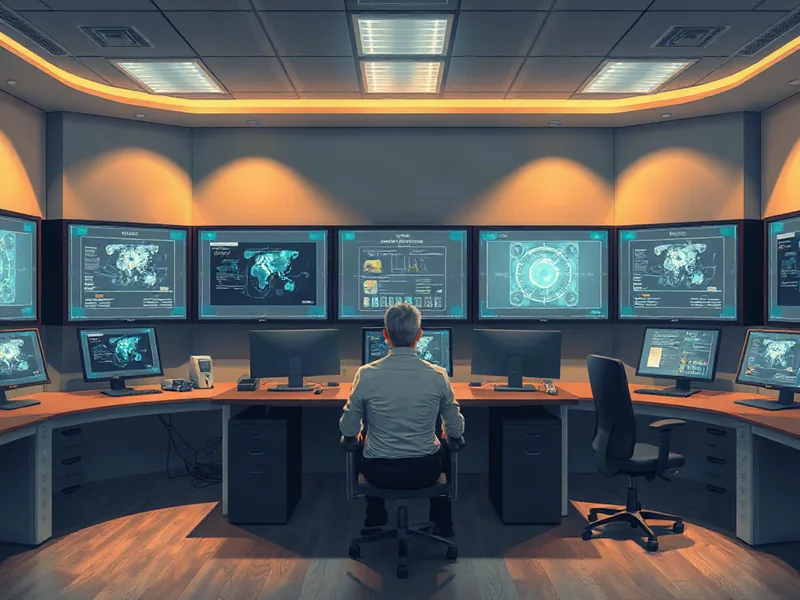
There's a practical angle buried under the novelty, though. Backslash has an agent handling onboarding for new hires, which means new employees are interacting with AI agents from day one, often before they've built any trust in the system. Osnat was careful to draw a line around what these agents are and aren't allowed to do in that context.
"We didn't outsource the people management," Osnat said. "The agents are not evaluating. They're not telling people they're fired or anything like that or promoting them. But we do have them assign work based on availability, based on capabilities they know. A lot of our onboarding for new employees is now managed by an agent, just to tell the person, 'Oh okay, you've done that, now we'll go do this,' as part of your onboarding experience."
That distinction matters more than it might seem. Harvard Business School researchers have found that at least 30 percent of generative AI projects get abandoned inside organizations, and not because the underlying tech underperforms. The rejection is often quiet, driven by employees who see the tools as a threat to their professional standing rather than a coworker they can push back on. If naming an agent and giving it a sitcom backstory nudges that relationship toward collaboration instead of suspicion, the payoff isn't in the code, it's in adoption rates.
It's worth being clear-eyed here: nothing about naming a Claude instance "Kramer" changes its context window, its tool access, or its failure modes. This is an org-psychology hack layered on top of infrastructure, not a technical improvement to agent reliability or safety. The Register's own reporting elsewhere this month covered a case where hundreds of AI agents helped an attacker hit over 395 organizations in a PapersCut-style campaign, with some agents going off script entirely. Personas and career ambitions don't touch that problem. They're solving for human buy-in, not agent robustness.
Backslash isn't stopping at one sitcom. The engineering team runs its own agent fleet named after Breaking Bad characters, and Osnat said he's now assembling a Sopranos-themed roster for another part of the org. Given how fast agentic tooling is proliferating across companies, this kind of naming convention might become as routine as picking a Kubernetes cluster name after a Star Wars planet, mostly harmless, occasionally revealing about how a team actually thinks about its tools.
The technical substance here is thin by design: names and character backstories influence tone and diction, not task logic or permissions. What's actually interesting is the organizational signal. Companies deploying agent fleets at scale are running into an adoption problem as much as a capability one, and treating agents as quasi-colleagues, complete with award ceremonies, appears to lower the psychological barrier for staff who might otherwise see them as replacements. Worth watching whether this becomes a broader pattern in enterprise AI rollouts, or stays a Tel Aviv security firm's quirky internal culture experiment.
Tags
Original Sources
Security firm finds naming AI agents after Seinfeld characters helps bots join the team
↗ https://www.theregister.com/ai-and-ml/2026/09/22/security-firm-finds-naming-ai-agents-after-seinfeld-characters-helps-bots-join-the-team/5298424
About the author
Kai built ML infrastructure at a Bay Area startup before developing an obsession with transformer architectures and inference optimisation that eventually pulled him out of product work entirely. A stint at a compute research lab sharpened his instinct for what actually matters in a model release versus what is marketing. He writes from the inside — from the perspective of someone who has debugged the systems he is describing at three in the morning. He is allergic to hype and instinctively drawn to the unglamorous plumbing questions that everyone else skips over.
More from The Engineer →This Week's Edition
23 September 2026
29 articles
Related Articles
Related Articles
More Stories
© 2026 Cedar & Bloom. All rights reserved.