The Drum · Weekly AI news, freeSubscribe →

Share
As leading AI researcher Yann LeCun points out, current models like ChatGPT excel in specific tasks but fall short in understanding the physical world. His new venture aims to change that.
Large Language Models (LLMs) have revolutionized natural language processing, coding, and mathematical problem-solving. However, they struggle with real-world tasks that require a deeper understanding of physical reality. Yann LeCun, one of the leading figures in AI, is on a mission to bridge this gap. After a decade at Meta as chief AI scientist, LeCun founded Advanced Machine Intelligence Labs (AMI Labs) in 2025 to develop a new type of artificial intelligence that can handle complex, real-world scenarios.
LeCun's goal is to move beyond the limitations of current LLMs like ChatGPT, Claude, and Gemini. While these models are incredibly useful for well-defined and predictable tasks, they lack the flexibility and understanding needed for more dynamic situations. "They're not a path towards human-level or even animal-like intelligence because they cannot deal with real-world data; they just are not built for that," LeCun explained during VivaTech, France's leading technology conference.
AMI Labs is developing a new architecture called Joint Embedding Predictive Architecture (JEPA). This approach aims to create AI systems that can reason about the physical world more effectively. LeCun illustrates this with a simple example: holding a pen upright and letting it go. A toddler would immediately know the pen will fall, but an LLM might try to generate a single prediction based on statistical patterns from its training data, which would almost certainly be wrong.
JEPA is designed to address these limitations by incorporating a more flexible and context-aware approach. Here are some key aspects of JEPA:
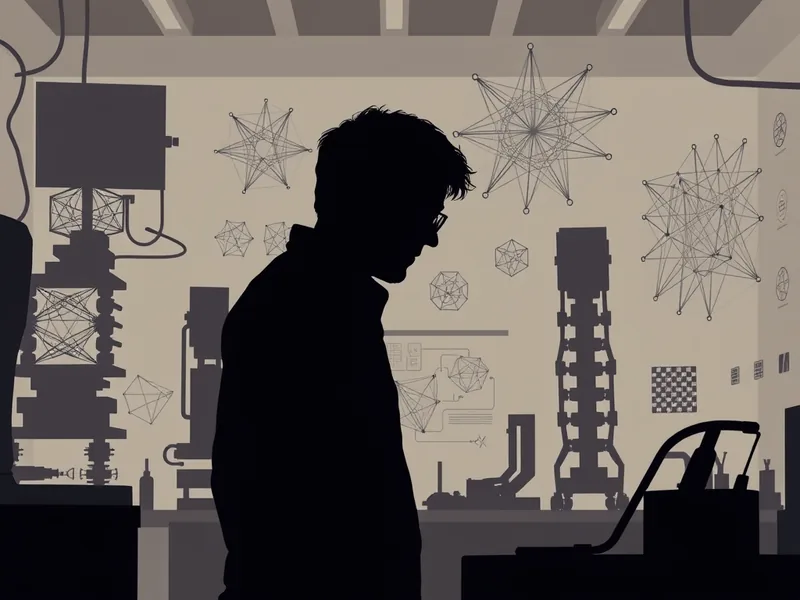
LeCun's vision is to create AI systems that can handle tasks like household chores, which require a deep understanding of the physical environment. This could have significant implications for robotics and automation in industries ranging from manufacturing to healthcare.
LeCun's new approach promises to push the boundaries of what AI can achieve in real-world applications. As research and development continue, the potential impact on industries that rely on automation and robotics is significant. Whether JEPA will live up to its promise remains to be seen, but the early investment and LeCun's track record suggest that this could be a major step forward in the evolution of artificial intelligence.
Tags
Original Sources
AI is 'not smart' so what's next in artificial intelligence?
↗ https://www.msn.com/en-us/technology/artificial-intelligence/ai-is-not-smart-so-what-s-next-in-artificial-intelligence/ar-AA2765MU
About the author
Kai built ML infrastructure at a Bay Area startup before developing an obsession with transformer architectures and inference optimisation that eventually pulled him out of product work entirely. A stint at a compute research lab sharpened his instinct for what actually matters in a model release versus what is marketing. He writes from the inside — from the perspective of someone who has debugged the systems he is describing at three in the morning. He is allergic to hype and instinctively drawn to the unglamorous plumbing questions that everyone else skips over.
More from The Engineer →This Week's Edition
24 August 2026
25 articles
Related Articles

Stanford Convenes Researchers to Rethink Empirical Methods for the AI Era
Models & Research · 5 min

A Stochastic Parrots Author Clarifies: The Paper Was About LLMs, Not All of AI
Models & Research · 5 min

DARPA's RSGS Program Aims to Put a Repair Robot in Geosynchronous Orbit
Products & Applications · 5 min
Related Articles
Stanford Convenes Researchers to Rethink Empirical Methods for the AI Era
Models & Research · 5 min
A Stochastic Parrots Author Clarifies: The Paper Was About LLMs, Not All of AI
Models & Research · 5 min
DARPA's RSGS Program Aims to Put a Repair Robot in Geosynchronous Orbit
Products & Applications · 5 min
More Stories
© 2026 Cedar & Bloom. All rights reserved.
