The Drum · Weekly AI news, freeSubscribe →

Share
This July 2025 snapshot reveals how one developer transformed their workflow by constructing a personal AI factory with tools like Claude Code and Sonnet, prioritizing refined inputs over constant output tweaking.
In the rapidly evolving world of AI-driven development, building a personal AI factory can significantly streamline your workflow. This July 2025 snapshot provides insights into how I've set up my own AI factory using tools like Claude Code, Sonnet, and O3 to handle planning, execution, verification, and continuous improvement.
The core principle of this setup is to focus on improving the inputs rather than patching the outputs. When something goes wrong, I don't manually fix the generated code or argue with Claude. Instead, I adjust the plan, prompts, or agent mix to ensure that subsequent runs are correct by construction. This approach is akin to building a self-improving factory in Factorio-a game where you set up automated systems to produce and improve themselves.
My primary interface for this setup is Claude Code, which has become my go-to tool for all development tasks. I also use a local Management Control Program (MCP) that runs Goose and O3. Goose is integrated with our Azure OpenAI subscription, making it easy to access the necessary models.
<task>-plan.md file that includes both my original request and the implementation plan. This document serves as a reference and ensures clarity.The execution phase involves several steps to ensure that the generated code meets the specified requirements.
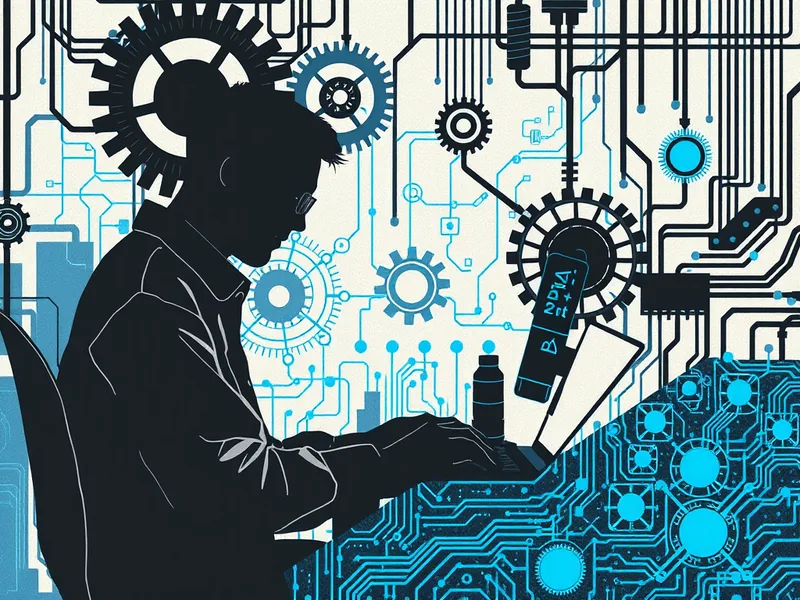
After the code is generated, it undergoes a rigorous verification process to ensure quality and alignment with the original plan and ask.
Any issues identified during these verification steps are fed back into the plan template, not fixed inline. This ensures that future runs are more accurate and efficient.
Git worktrees allow me to open multiple instances of Claude Code, each working on a different feature or task. This setup enables concurrent development without conflicts. While I still manually merge changes, the process is much smoother and more organized.
Building a personal AI factory using tools like Claude Code, Sonnet, and O3 can significantly enhance your productivity and code quality. By focusing on improving inputs rather than patching outputs, you create a self-improving system that grows and adapts over time. This setup is not just about automating tasks but about creating a sustainable development environment.
Tags
Original Sources
About the author
Kai built ML infrastructure at a Bay Area startup before developing an obsession with transformer architectures and inference optimisation that eventually pulled him out of product work entirely. A stint at a compute research lab sharpened his instinct for what actually matters in a model release versus what is marketing. He writes from the inside — from the perspective of someone who has debugged the systems he is describing at three in the morning. He is allergic to hype and instinctively drawn to the unglamorous plumbing questions that everyone else skips over.
More from The Engineer →This Week's Edition
2 July 2025
29 articles
Related Articles
Related Articles
More Stories
© 2026 Cedar & Bloom. All rights reserved.