The Drum · Weekly AI news, freeSubscribe →

Share
As new funding and policy changes come into effect, rural healthcare systems face a critical juncture. Will they buckle under the strain or rise to meet the challenges with coordinated innovation?
Across rural America, healthcare providers are grappling with a stark reality: doing more with less. Care teams are stretched thin, patients travel long distances for basic services, and unmet needs like transportation, housing, and follow-up care can quickly escalate into medical crises or financial instability. The stakes are high, and the consequences of missed connections can be severe.
Now, as H.R. 1, the "One Big Beautiful Bill Act," transitions from policy to practice, the pressure on rural healthcare systems is intensifying. New funding through the Rural Health Transformation (RHT) program and Medicaid requirements for community engagement and improved outcomes are arriving at facilities already operating at their limits.
For rural America, this is not just another policy shift; it is a critical test of how care can be organized, delivered, and sustained in some of the most challenging environments. The choice facing state and local leaders is clear: treat these new requirements as an administrative burden or use them to build the real coordination, visibility, and infrastructure that rural providers have long needed.
In many rural communities, a wide array of organizations-Medicaid agencies, hospitals, nonprofits, workforce programs, and housing services-are all serving the same people but operating in siloed systems. They rarely share data or collaborate effectively, leading to duplicated work, missed interventions, and critical gaps in care that only become apparent when someone ends up in crisis.
This is not a problem of effort; it is a systemic issue. In rural areas where distance, workforce shortages, and limited access are already significant challenges, fragmentation can be especially costly. Every missed referral matters more, and every delay can have severe consequences.
Technology, particularly AI and telemedicine, offers promising solutions to these systemic issues. For instance, studies have shown that denial rates for insurance claims in rural healthcare settings can approach 18%, compared to around 10% in urban hospitals. This discrepancy highlights the financial strain on rural providers, which is further exacerbated by inefficient systems.
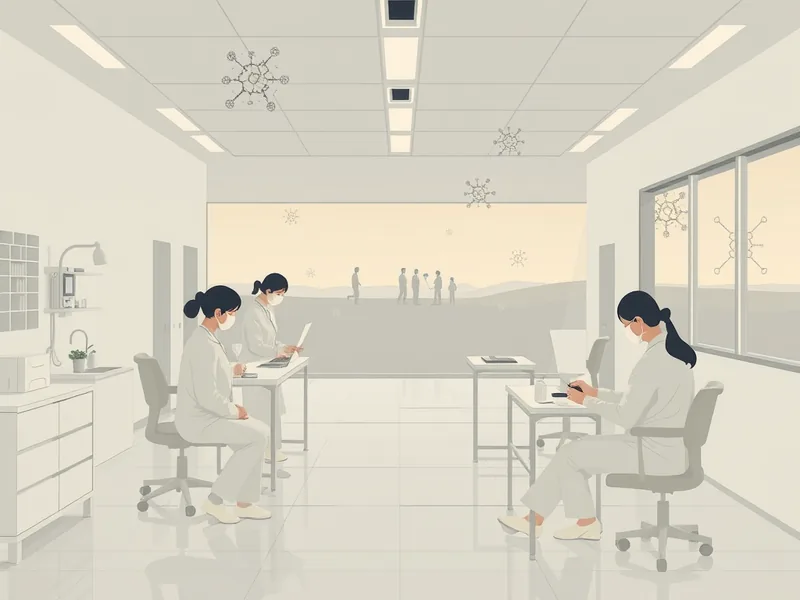
AI-powered tools can help streamline administrative processes, reduce claim denials, and improve care coordination. Telemedicine platforms are also making a significant impact by bringing specialized care directly to patients' homes, reducing the need for long travel times and improving access to essential services.
The path forward for rural healthcare is one of innovation and collaboration. State and local leaders must seize this moment to build more resilient and coordinated systems that truly meet the needs of their communities. This involves:
The success of these efforts will not only improve health outcomes but also contribute to the overall well-being and economic stability of rural communities. By building a more resilient and coordinated healthcare system, we can ensure that every person has access to the care they need, when and where they need it.
As new funding and policies come into effect, the choices made today will shape the future of rural health for years to come. It is a moment of both challenge and opportunity-a chance to build a backbone that supports not just healthcare but the very fabric of these communities.
Tags
Original Sources
Building the Backbone of Rural Health: Meeting the Reality on the Ground - MedCity News
↗ https://medcitynews.com/2026/06/building-the-backbone-of-rural-health-meeting-the-reality-on-the-ground
About the author
Amara's entry point into AI was an epidemiology role at a London research hospital, where she spent five years studying how digital health tools reached — or conspicuously failed to reach — underserved communities. Watching early algorithmic systems in healthcare quietly entrench existing inequalities, she redirected her career toward the systemic consequences of AI at scale. She covers AI through an unflinching lens: who benefits, who bears the cost, and what evidence actually says versus what the press release claims. Her writing is calm and precise, but she doesn't mistake balance for neutrality.
More from The Steward →This Week's Edition
8 June 2026
18 articles
Related Articles

Christina Applegate's MS Misdiagnosis Reveals a Painful Diagnostic Gap in Neurology
Health & Science · 5 min

IEEE Expands Smart City Advisory Services as Municipal Tech Budgets Grow
Products & Applications · 5 min

Robot Infants Are Being Built to Study Human Emotion. Should They Look So Real?
Products & Applications · 5 min
Related Articles
Christina Applegate's MS Misdiagnosis Reveals a Painful Diagnostic Gap in Neurology
Health & Science · 5 min
IEEE Expands Smart City Advisory Services as Municipal Tech Budgets Grow
Products & Applications · 5 min
Robot Infants Are Being Built to Study Human Emotion. Should They Look So Real?
Products & Applications · 5 min
More Stories
© 2026 Cedar & Bloom. All rights reserved.
