The Drum · Weekly AI news, freeSubscribe →

Share
The Codex App Server acts as a universal translator, connecting OpenAI’s coding assistant to diverse development environments through a consistent JSON-RPC interface, ensuring smooth integration无论使用还是翻译时,请注意保留内容的专业性和准确性。以上文字为示例,实际应用中请根据具体需求调整。
By Celia Chen, Member of the Technical Staff
When it comes to integrating AI-powered coding assistants into various development environments, consistency is key. At OpenAI, we’ve built Codex to be accessible across multiple surfaces-web app, CLI, IDE extensions, and even a dedicated macOS app. Under the hood, all these interfaces rely on the same Codex harness, which manages the agent loop and core logic. The linchpin of this system is the Codex App Server, a client-friendly JSON-RPC API that ensures a seamless experience across different platforms.
The journey of the Codex App Server began as a pragmatic solution to a common problem: how to reuse the Codex harness without duplicating effort. Initially, Codex was accessed via a terminal user interface (TUI), where developers interacted with it through command-line commands. However, when we developed the VS Code extension, we needed a way to leverage the same harness in an IDE-friendly manner.
This initial implementation became the unofficial first version of the App Server. Initially, it wasn’t designed as a stable API, but as Codex gained traction, both internal teams and external partners wanted to embed the same harness in their products to enhance user workflows.
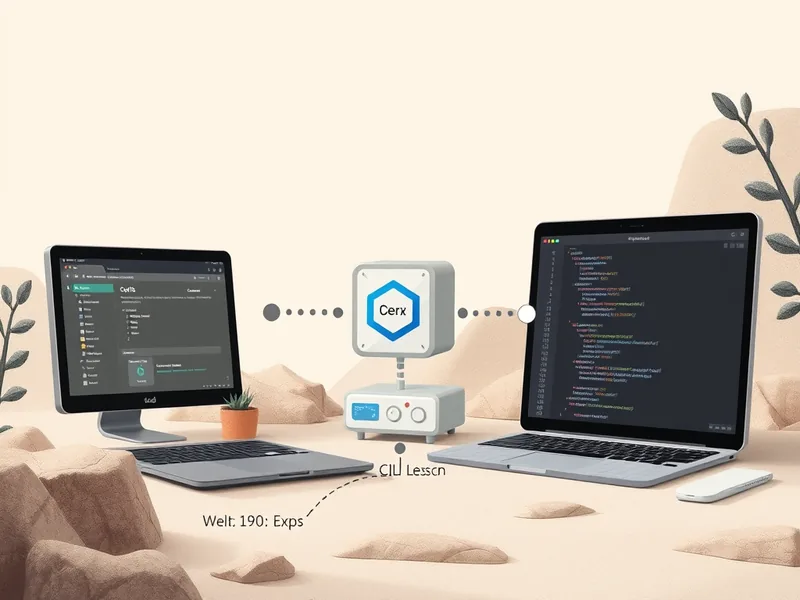
The Codex App Server is built around a JSON-RPC 2.0 protocol, which provides a lightweight, bidirectional communication layer between clients and the server. Here’s a breakdown of its architecture:
Rich Interactions: Beyond simple request-response patterns, the App Server supports:
Client-Friendly API: The JSON-RPC protocol is designed to be easy for developers to integrate into their applications. It supports both synchronous and asynchronous calls, making it flexible for different use cases.
The App Server’s flexibility allows it to power various Codex experiences:
Whether you want to turn Codex into a code reviewer, an SRE (Site Reliability Engineering) agent, or a coding assistant, here are some tips to get started:
The
Tags
Original Sources
About the author
Kai built ML infrastructure at a Bay Area startup before developing an obsession with transformer architectures and inference optimisation that eventually pulled him out of product work entirely. A stint at a compute research lab sharpened his instinct for what actually matters in a model release versus what is marketing. He writes from the inside — from the perspective of someone who has debugged the systems he is describing at three in the morning. He is allergic to hype and instinctively drawn to the unglamorous plumbing questions that everyone else skips over.
More from The Engineer →This Week's Edition
5 February 2026
29 articles
Related Articles
Related Articles
More Stories
© 2026 Cedar & Bloom. All rights reserved.