The Drum · Weekly AI news, freeSubscribe →
Share
As the debate over heart disease prevention tools heats up, new studies suggest that calcium scans can be a valuable tiebreaker for patients on the fence about starting statins.
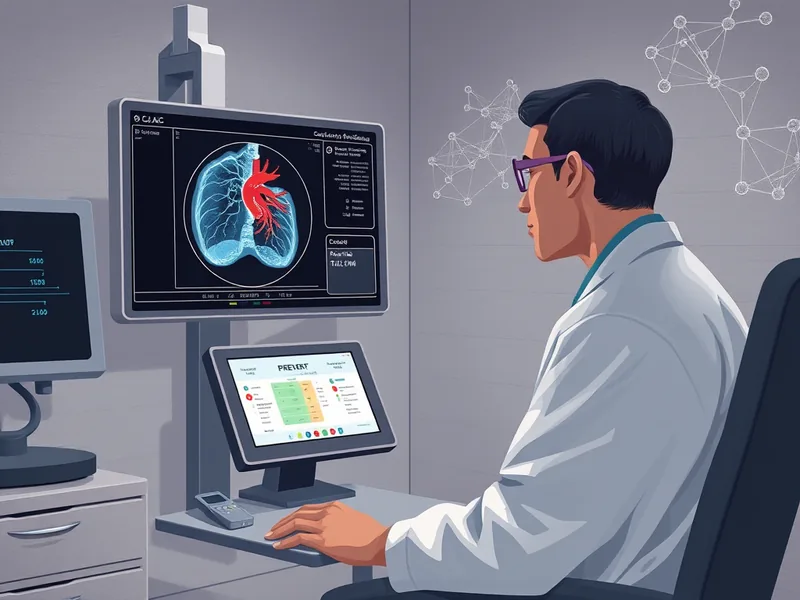
When it comes to preventing heart attacks and strokes, the choices we make today can have life-saving consequences tomorrow. For many, this means deciding whether to take cholesterol-lowering drugs called statins. But how do doctors determine who really needs them? Two new trials offer insights into the role of coronary artery calcium (CAC) scans and a risk calculator known as PREVENT.
The studies, which build on previous research, suggest that while CAC scans can be useful in borderline cases, they are not necessary for everyone. This is important because these tests are becoming increasingly popular as personalized measures of wellness, but their overuse could lead to unnecessary medical interventions and costs.
To understand how these tools fit into heart disease prevention, let’s break them down. The PREVENT calculator is a digital tool that assesses an individual's risk of developing serious cardiovascular events over the next decade. It considers factors like age, blood pressure, cholesterol levels, smoking history, and family health background.
On the other hand, a CAC scan uses CT imaging to detect calcium deposits in the coronary arteries. These deposits are a sign of atherosclerosis, or hardening of the arteries, which is a major risk factor for heart attacks and strokes. The scan provides a score that reflects the amount of calcium present.
Both tools aim to help doctors make more informed decisions about prescribing statins, which can significantly reduce cholesterol levels and lower the risk of cardiovascular events. However, they are not always used together, and their combined use has been a topic of debate among medical professionals.
The stakes are high when it comes to heart disease prevention. According to the American Heart Association, cardiovascular diseases are the leading cause of death globally, responsible for more than 17 million deaths each year. Statins have been shown to be highly effective in reducing this risk, but they also come with potential side effects and costs.
For patients on the fence about starting statins, a CAC scan can provide valuable additional information. If the scan shows significant calcium deposits, it may tip the scales in favor of prescribing statins. However, for many people, the PREVENT calculator alone is sufficient to guide treatment decisions.
The key takeaway is that while these tools are powerful, they should be used judiciously. Overuse of CAC scans can lead to unnecessary radiation exposure and additional medical costs, without necessarily improving outcomes for all patients. Dr. John Smith, a cardiologist at Harvard Medical School, emphasizes this point: "We need to balance the benefits of early detection with the risks of overtesting."
In the end, the best approach is a personalized one that takes into account each patient's unique health profile and risk factors. By using these tools thoughtfully, doctors can help more people avoid heart attacks and strokes while minimizing unnecessary interventions.
As medical technology continues to advance, it’s crucial for both patients and healthcare providers to stay informed about the latest research and guidelines. The goal is to make decisions that not only protect individual health but also contribute to a healthier society as a whole.
Tags
Original Sources
On the fence about a statin? In borderline cases, calcium scans could be a tiebreaker
↗ https://www.statnews.com/2026/08/26/cac-scans-statin-use-prevent-calculator-heart-disease-risk
About the author
Amara's entry point into AI was an epidemiology role at a London research hospital, where she spent five years studying how digital health tools reached — or conspicuously failed to reach — underserved communities. Watching early algorithmic systems in healthcare quietly entrench existing inequalities, she redirected her career toward the systemic consequences of AI at scale. She covers AI through an unflinching lens: who benefits, who bears the cost, and what evidence actually says versus what the press release claims. Her writing is calm and precise, but she doesn't mistake balance for neutrality.
More from The Steward →This Week's Edition
31 August 2026
17 articles
Related Articles
Related Articles
More Stories
© 2026 Cedar & Bloom. All rights reserved.