The Drum · Weekly AI news, freeSubscribe →
Share
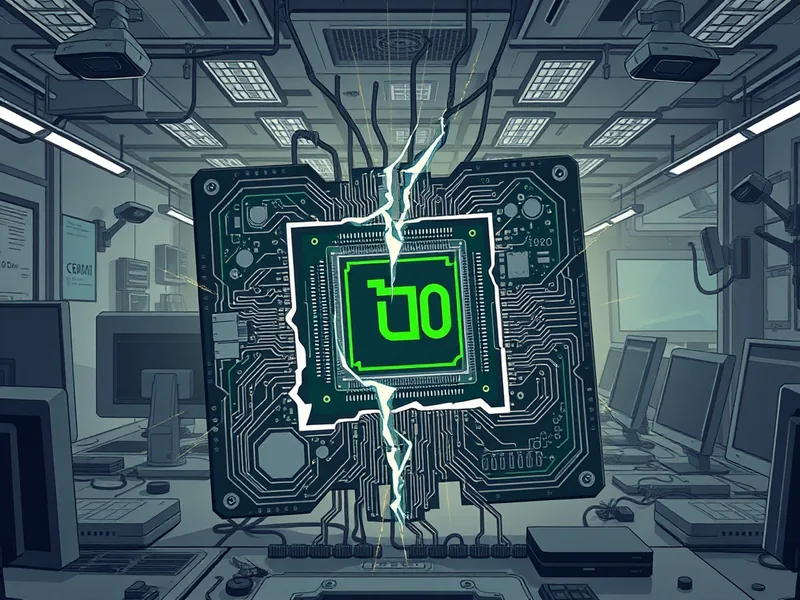
Chinese authorities accuse Nvidia of embedding a backdoor in its H20 chip, raising fears of remote control and surveillance, as the country intensifies scrutiny over foreign tech security risks.
China Alleges Backdoor in Nvidia's H20 Chip
Beijing has summoned Nvidia over alleged security issues with its H20 chip, a move that could complicate the US company’s efforts to revitalize its sales in China. The Cyberspace Administration of China (CAC) held a meeting with Nvidia on Thursday, citing “serious security issues” with the company’s artificial intelligence chips. According to the CAC, US AI experts have claimed that Nvidia's computing chips are capable of location tracking and can be remotely shut down.
Why it Matters
This development is significant for several reasons:
Key Risks
The Opportunity
Expert Reactions
Paul Triolo, a China tech expert and partner at DGA-Albright Stonebridge Group, expressed skepticism about the claims. "I am skeptical about the claims of a deliberate back door being built into Nvidia hardware, given the lack of detailed evidence provided by the CAC," he said. The CAC did not specify which experts had found the alleged backdoor or whether any tests in China had confirmed these findings.
Background on H20 Chip
The H20 chip was designed for the Chinese market to comply with US export restrictions, which were recently lifted. Nvidia CEO Jensen Huang visited Beijing earlier this month to meet with officials and customers, emphasizing the company’s commitment to the Chinese market. He also introduced a new graphics processing unit based on the latest Blackwell series, tailored to align with existing US export controls.
Chinese Government Response
In response to these developments, Beijing has issued informal guidance to major Chinese tech groups to increase purchases of domestic AI chips. This push aims to reduce reliance on foreign suppliers like Nvidia and support the development of a rival domestic chip ecosystem. Chinese tech giants such as Huawei, Biren, and Cambricon have already benefited from this localization drive.
Industry Uncertainty
Despite the US lifting the ban on H20 sales, there is considerable uncertainty among Chinese customers about whether they will be able to take delivery of any orders if the US reverses its decision. Nvidia estimates that it will take nine months from restarting manufacturing to shipping the H20 chip to clients.
Conclusion
The allegations of a backdoor in Nvidia’s H20 chip highlight the complex and evolving landscape of international technology trade. As both the US and China continue to navigate these challenges, Nvidia must address the CAC’s concerns promptly and transparently to protect its market position and reputation.
Tags
Original Sources
About the author
Marcus began tracking AI's market implications in 2016, noticing AI-related patent filings accelerating ahead of earnings upgrades before most of the sell-side had caught on. A former fixed-income quantitative analyst, he spent two decades building models that priced risk across emerging markets before pivoting to cover the economic impact of AI full-time. His writing translates opaque technical developments into clear risk/reward terms — and he's rarely diplomatic about the gap between AI valuations and underlying fundamentals. He believes most market participants still underestimate AI's long-run deflationary effect on knowledge work.
More from The Analyst →This Week's Edition
1 August 2025
29 articles
Related Articles
Seattle Children's Network Turns Data Trust Into Preventive Care Gains, With Lessons for Security Teams
Security & Risk · 6 min

Anthropic Gives Outside Safety Researchers the Same Access as Its Own Staff
Security & Risk · 5 min

Fitch Puts a Number on AI Risk: New Stress Test Flags Credit Exposure Across Four Sectors
Security & Risk · 5 min
Related Articles
Seattle Children's Network Turns Data Trust Into Preventive Care Gains, With Lessons for Security Teams
Security & Risk · 6 min
Anthropic Gives Outside Safety Researchers the Same Access as Its Own Staff
Security & Risk · 5 min
Fitch Puts a Number on AI Risk: New Stress Test Flags Credit Exposure Across Four Sectors
Security & Risk · 5 min
More Stories
© 2026 Cedar & Bloom. All rights reserved.
