The Drum · Weekly AI news, freeSubscribe →
Share
Paid tours of Chinese robotics plants and EV factories are booming as Western investors and executives scramble to assess whether Beijing has taken the lead in advanced manufacturing and AI hardware.
A new form of due diligence has emerged in global tech investing: paying thousands of dollars to walk a Chinese factory floor.
Humanoid robots on assembly lines, AI models matching Western rivals, and electric-vehicle plants producing cars at scale are pulling in a growing stream of foreign investors and entrepreneurs. The draw is not press access or diplomacy. It is commercial intelligence gathering, conducted in person, at a price.
Robert Wu, CEO of Shanghai-based data research firm Baiguan, has run two such tours for more than two dozen investors, entrepreneurs and executives, charging up to $15,000 for a five-day programme. Roughly half his clients came from Southeast Asia. "Right now, people are looking at China as an object of study and learning, a trend that barely existed just a few years ago," Wu says. He notes that visitors often arrive with faulty assumptions, such as believing China leads the U.S. in robotaxis, when domestic policy caution over job losses actually keeps the sector a step behind.
The underlying anxiety driving this tourism has a name: "China shock 2.0." Western boardrooms and capitals are grappling with the possibility that Chinese firms have seized the lead in advanced manufacturing and frontier technology. That fear has commercial weight. Known visitors to China's tech circuit include U.S. investment firms Dimension, Capital Group and Thrive Capital, along with tech podcaster Lex Fridman, though many participants avoid publicity altogether.
The numbers behind this trend are not trivial. China's industrial tourism sector generated $17.8 billion last year, according to state media, with projections putting it past 300 billion yuan, or $44.6 billion, by 2029. Shanghai-based agency Glopen reports inquiries jumped 50% in 2026, driven mostly by European and Singaporean clients, and now runs more than 100 single-day company tours monthly.
The itinerary has become standardized enough to resemble a product. Tours typically span Beijing, Shenzhen, Shanghai, Hangzhou and Hefei, the industrial centers driving China's EV, battery, AI and robotics sectors. Rui Ma, founder of Tech Buzz China, has organized 11 such tours since 2019 and frames the exercise in stark competitive terms: "Even if you're not actively investing in China, you're increasingly likely to encounter Chinese companies as competitors, partners, suppliers, or investments in markets around the world."
Bertrand Chen, CEO of the Global Shipping Business Network, joined one of Ma's April tours covering robotics and emerging tech across three cities. His takeaway was blunt: "You cannot grasp the true scale, speed, and physicality of Chinese innovation without standing on the factory floor."
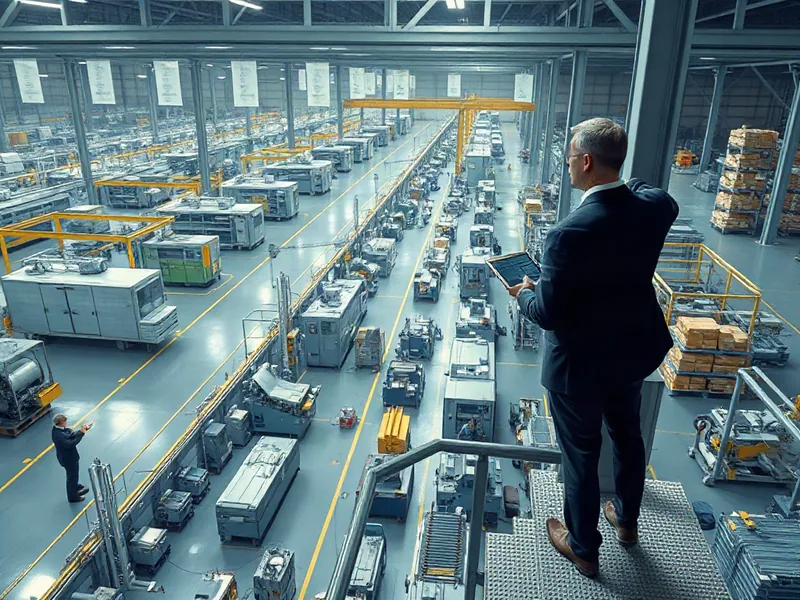
Beijing has noticed the demand and is actively cultivating it. The government has pledged to "vigorously promote" industrial tourism and designated more than 140 official demonstration sites, with factories charging around $60 per visit. Xiaomi's EV factory alone has welcomed over 250,000 visitors since March 2024, and demand is intense enough that lottery-awarded entry slots resell online for up to 2,000 yuan, or $300. Xiaomi told Reuters that eligibility runs through an online lottery and tickets cannot be transferred. World leaders have made the same pilgrimage: German Chancellor Friedrich Merz was filmed watching Unitree's dancing humanoid robots in Hangzhou, a moment that became a high-profile showcase of China's technological ascent.
For European executives, the stakes feel particularly acute. Alex Shengyun Lu, a Shanghai-based AI consultant at Praxis Advisory, has led seven delegations of up to 50 corporate visitors since late 2025. "The smartest people in Europe are acutely aware of the situation. The insecurity is palpable," he says. Visitors typically want to understand two things: what they can learn from Chinese companies, and how China's state-backed investment model achieves scale. Lu describes the mood as one of "genuine mindset of humility and learning," with particular interest in how Beijing coordinates AI deployment across provinces.
Not everyone is convinced the alarm is proportionate. Ma, despite organizing the tours, offers a counterweight: "Non-Chinese tech companies still have most of the global market share, the most advanced IP, and the biggest profits." That caveat matters for investors trying to separate genuine technological shift from narrative momentum.
American visitors keep coming too, despite escalating U.S.-China tech tensions, including reported plans for a ban on new Chinese robots and inverters in the U.S. AI buildout. Joshua Woodard, a U.S. manufacturing consultant based in Shenzhen, dismisses the political noise for practitioners on the ground: "U.S. robotics companies still heavily source components and hardware from China. We pretend we can do it all ourselves in America, but it is incredibly hard to completely decouple."
Shenzhen has become the epicenter of this activity, and the city is leaning into the role as it prepares to host November's Asia-Pacific Economic Cooperation forum. Foreign visitor numbers rose 70% last year and jumped over 30% in the first quarter, with more than 5 million entries recorded through August. Taxis now carry English-language announcements. Local firms have opened Silicon Valley-style "hacker houses" for visiting robotics and AI hardware founders. Woodard describes WeChat groups with 400 people "bouncing between Silicon Valley and Shenzhen, casually crowdsourcing battery or display factories," with founders using the 10-day visa-free entry policy to scout manufacturing partners on short notice.
Czech entrepreneur Jan Smejkal, who has lived in Shenzhen for 11 years, fields near-daily requests from foreign startup founders wanting to visit. His verdict on the city's pull: "There is no other place on earth that takes technology to its core and integrates it into daily life quite like Shenzhen."
The tour boom is a symptom, not a strategy. It signals that institutional capital views China's hardware and AI ecosystem as a source of competitive risk that can no longer be assessed from a distance. Investors should treat the trend as a leading indicator of capital reallocation toward supply chain diligence rather than a verdict on outcomes. Ma's caution about Western firms still holding most global market share and profit is the relevant counterweight: scale of production is not the same as scale of returns. The real signal to watch is whether tour-driven due diligence translates into capital commitments, joint ventures, or supply agreements over the next 12 to 18 months, rather than remaining a curiosity for well-heeled visitors.
Tags
Original Sources
Tech pilgrims flock to China as global innovation race heats up
↗ https://www.reuters.com/world/china/tech-pilgrims-flock-china-global-innovation-race-heats-up-2026-09-03
About the author
Marcus began tracking AI's market implications in 2016, noticing AI-related patent filings accelerating ahead of earnings upgrades before most of the sell-side had caught on. A former fixed-income quantitative analyst, he spent two decades building models that priced risk across emerging markets before pivoting to cover the economic impact of AI full-time. His writing translates opaque technical developments into clear risk/reward terms — and he's rarely diplomatic about the gap between AI valuations and underlying fundamentals. He believes most market participants still underestimate AI's long-run deflationary effect on knowledge work.
More from The Analyst →This Week's Edition
8 September 2026
23 articles
Related Articles

SpaceX's AI Unit Drives Return to Profitability, Overtakes Rocket Business
Finance & Markets · 5 min
Ex-OpenAI Research Chief Raises $230 Million for AI Manufacturing Startup Arda at $1.5 Billion Valuation
Finance & Markets · 6 min

Readily Raises $11M Series A to Automate Healthcare Compliance as Federal Fines Surge
Finance & Markets · 5 min
Related Articles
SpaceX's AI Unit Drives Return to Profitability, Overtakes Rocket Business
Finance & Markets · 5 min
Ex-OpenAI Research Chief Raises $230 Million for AI Manufacturing Startup Arda at $1.5 Billion Valuation
Finance & Markets · 6 min
Readily Raises $11M Series A to Automate Healthcare Compliance as Federal Fines Surge
Finance & Markets · 5 min
More Stories
© 2026 Cedar & Bloom. All rights reserved.
