The Drum · Weekly AI news, freeSubscribe →

Share
This article challenges the notion that developers will become obsolete due to AI, instead advocating for an approach where AI assists in routine tasks, enabling programmers to concentrate on high-value coding like skilled surgeons focusing on complex operations.
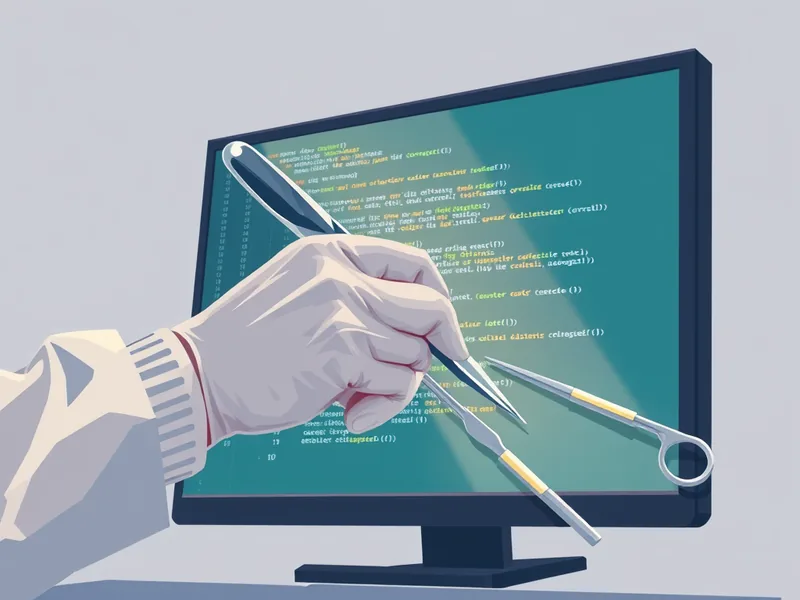
In the world of software development, the narrative around AI often positions it as a tool that will turn us all into managers or editors. However, this perspective is dangerously incomplete. Instead, I’m adopting a different mindset: coding like a surgeon.
A surgeon isn’t just a manager; they are deeply involved in the actual work. They leverage a support team for preparatory tasks, secondary responsibilities, and administrative duties, allowing them to focus on the critical aspects where their expertise is indispensable. Similarly, my goal with AI coding tools is to spend 100% of my time on high-impact tasks. For me, as a UI prototyper, this means tinkering with design concepts.
There are numerous secondary tasks that AI agents can handle effectively:
Running these tasks asynchronously in the background-while eating lunch or even overnight-ensures that everything is ready when I sit down to work. This approach mirrors a surgeon walking into a prepped operating room, where all the preparatory work has been done.
There’s a significant difference between how I use AI for primary versus secondary tasks:
These distinct work patterns align with Andrej Karpathy’s concept of the “autonomy slider.” It’s crucial not to conflate different parts of the autonomy spectrum because the tools and mindset required vary significantly.
The idea of a "software surgeon" is not new. Fred Brooks attributes it to Harlan Mills in his 1975 classic, “The Mythical Man-Month.” Mills proposed that each segment of a large job should be tackled by a team, but the critical work should be done by a single person-the software surgeon-supported by a team for preparatory tasks.
This concept is more relevant than ever in the age of AI. Just as a surgeon’s support team doesn’t need to worry about career trajectories, your AI agents don’t either. They are there to handle the secondary tasks efficiently, allowing you to focus on what truly matters.
By coding like a surgeon, you can maximize your productivity and leverage AI tools effectively. This approach ensures that you spend your time on high-impact tasks while offloading secondary responsibilities to AI agents. The key is to understand the autonomy slider and use the right tools for each type of task.
Tags
Original Sources
About the author
Kai built ML infrastructure at a Bay Area startup before developing an obsession with transformer architectures and inference optimisation that eventually pulled him out of product work entirely. A stint at a compute research lab sharpened his instinct for what actually matters in a model release versus what is marketing. He writes from the inside — from the perspective of someone who has debugged the systems he is describing at three in the morning. He is allergic to hype and instinctively drawn to the unglamorous plumbing questions that everyone else skips over.
More from The Engineer →This Week's Edition
27 October 2025
29 articles
Related Articles
Related Articles
More Stories
© 2026 Cedar & Bloom. All rights reserved.