The Drum · Weekly AI news, freeSubscribe →
Share
DeepSeek and FinRL are pushing boundaries by merging reinforcement learning with large language models to craft cutting-edge trading strategies from NASDAQ data, reshaping financial market analysis.
The integration of artificial intelligence (AI) into financial markets continues to evolve, with notable advancements in the application of reinforcement learning (RL) and large language models (LLMs). A recent collaboration between DeepSeek and FinRL highlights this trend, offering a sophisticated approach to trading strategies using NASDAQ data.
The financial industry is increasingly recognizing the potential of AI to enhance decision-making processes. By combining RL with LLMs, DeepSeek and FinRL aim to create more robust and adaptive trading models. This integration not only improves the accuracy of predictions but also enhances the ability to manage risk in volatile markets.
Despite the promising advancements, several risks must be considered:
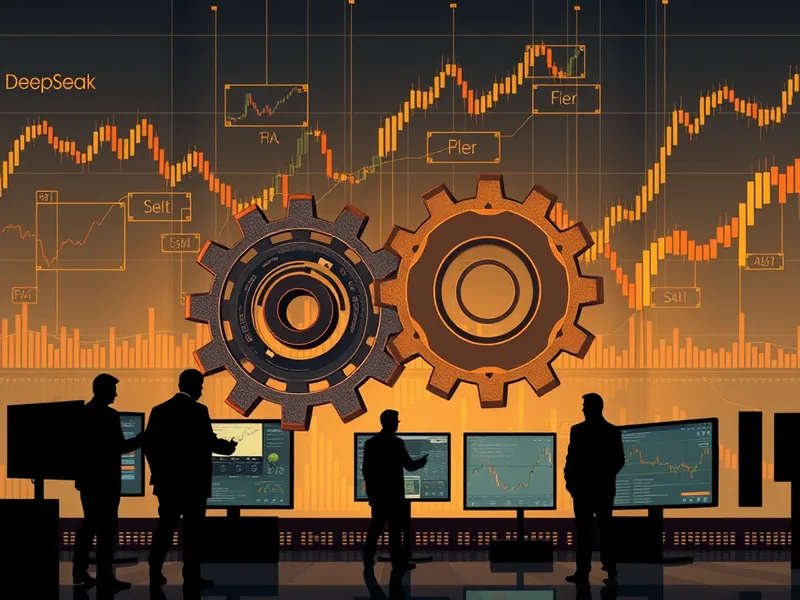
The collaboration between DeepSeek and FinRL presents a unique opportunity for financial institutions:
DeepSeek, known for its advanced LLM capabilities, has partnered with FinRL, a leading provider of financial reinforcement learning solutions. Together, they have developed a trading strategy that utilizes NASDAQ data to optimize portfolio management.
The integration of AI, specifically through the collaboration between DeepSeek and FinRL, represents a significant step forward in financial markets. While there are risks associated with data quality, model overfitting, and regulatory compliance, the potential benefits in terms of enhanced predictive capabilities, improved risk management, and increased efficiency make this an area worth exploring for financial institutions.
Tags
Original Sources
About the author
Marcus began tracking AI's market implications in 2016, noticing AI-related patent filings accelerating ahead of earnings upgrades before most of the sell-side had caught on. A former fixed-income quantitative analyst, he spent two decades building models that priced risk across emerging markets before pivoting to cover the economic impact of AI full-time. His writing translates opaque technical developments into clear risk/reward terms — and he's rarely diplomatic about the gap between AI valuations and underlying fundamentals. He believes most market participants still underestimate AI's long-run deflationary effect on knowledge work.
More from The Analyst →This Week's Edition
17 February 2025
24 articles
Related Articles
Related Articles
More Stories
© 2026 Cedar & Bloom. All rights reserved.