The Drum · Weekly AI news, freeSubscribe →

Share
Elon Musk's Terafab project aims to build the world's largest chip factory, investing $20 billion to ensure a steady supply of crucial components for his diverse tech ventures, from electric cars to rocket launches.
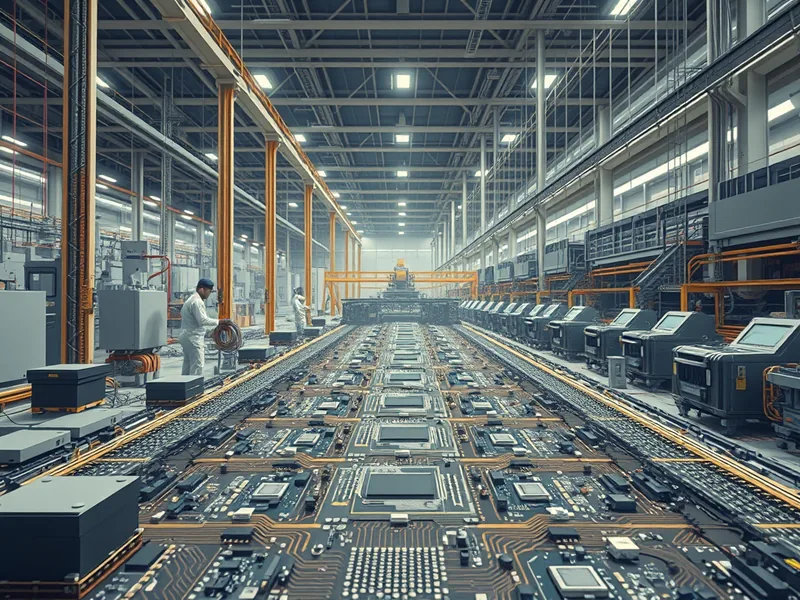
Elon Musk, CEO of Tesla, SpaceX, and xAI, has unveiled the Terafab project-a joint venture aimed at constructing what he claims will be the world's largest chip manufacturing facility. The ambitious initiative, announced in a recent livestream on X (formerly Twitter), is designed to meet the growing demand for advanced computing power across Musk’s companies.
The Terafab project represents a significant strategic move by Musk to secure a stable and scalable supply of chips, which are critical components for various applications ranging from autonomous vehicles to space exploration. The facility aims to produce a terawatt of computing power annually, addressing the current shortfall in chip manufacturing capacity that meets Tesla and SpaceX's future needs.
Musk emphasized during the livestream that existing supply chain partners like Samsung, TSMC, and Micron are only capable of meeting about two percent of the companies' projected demand. "We either build the Terafab or we don't have the chips," Musk stated. "And we need the chips so we're going to build the Terafab."
The Terafab project, estimated to cost at least $20 billion, is not without its risks. Musk has a history of making grandiose claims that often fail to materialize as promised. Notable examples include the Hyperloop, which has yet to become a viable transportation solution, and the $40,000 Cybertruck, whose production timeline and cost have been subject to numerous delays. Additionally, Tesla's Full Self-Driving (FSD) feature has faced regulatory scrutiny and recalls due to safety concerns.
Financially, the project's massive upfront investment could strain resources, especially if it fails to deliver on its ambitious goals. The semiconductor industry is also highly competitive, with established players like Intel and AMD continuously innovating and expanding their capacities. Terafab will need to demonstrate significant technological advancements and operational efficiency to justify its existence in this crowded market.
Despite the risks, the potential rewards of the Terafab project are substantial. By vertically integrating chip production, Tesla and SpaceX can gain greater control over their supply chains, reducing dependency on external suppliers and potentially lowering costs. This could be particularly beneficial for projects like the Optimus robot and SpaceX's plans to launch a million satellites to create an orbital data center.
The ability to produce specialized chips tailored to specific applications-such as those required for space missions or autonomous vehicles-could provide a competitive edge in both terrestrial and extraterrestrial markets. Moreover, the project aligns with Musk’s broader vision of creating a "galactic civilization," leveraging advanced computing power to drive innovation across multiple industries.
The Terafab project is a bold and ambitious undertaking that could significantly impact the semiconductor industry and the future of technology-driven enterprises. While it carries substantial risks, the potential benefits in terms of supply chain control, cost reduction, and technological leadership make it a compelling strategic move for Musk's companies. Investors and market analysts will be closely watching the progress of this initiative to gauge its long-term viability and impact.
Tags
Original Sources
About the author
Marcus began tracking AI's market implications in 2016, noticing AI-related patent filings accelerating ahead of earnings upgrades before most of the sell-side had caught on. A former fixed-income quantitative analyst, he spent two decades building models that priced risk across emerging markets before pivoting to cover the economic impact of AI full-time. His writing translates opaque technical developments into clear risk/reward terms — and he's rarely diplomatic about the gap between AI valuations and underlying fundamentals. He believes most market participants still underestimate AI's long-run deflationary effect on knowledge work.
More from The Analyst →This Week's Edition
23 March 2026
29 articles
Related Articles
Related Articles
More Stories
© 2026 Cedar & Bloom. All rights reserved.