The Drum · Weekly AI news, freeSubscribe →

Share
In a world where clinical trial failures often spell disaster, one biotech company found a silver lining by harnessing artificial intelligence to transform its setback into a groundbreaking health tech solution.
In the high-stakes world of drug development, failure can be devastating. When a promising drug fails in clinical trials, it often means years of work and millions of dollars down the drain. But for one biotech startup, a disappointing trial outcome became an unexpected catalyst for innovation. By leveraging artificial intelligence (AI), they turned what could have been a career-ending setback into a powerful tool for advancing health tech.
The company, known as BioSolutions Inc., was on the verge of bringing a new cancer treatment to market when their phase III clinical trials failed to meet key endpoints. The drug, designed to target specific genetic mutations in tumors, showed promise in earlier stages but faltered when tested on a larger patient population. This failure not only dealt a significant blow to BioSolutions' financial prospects but also raised questions about the future of their research.
However, instead of giving up, the company's leadership saw an opportunity. They realized that the vast amount of data collected during the trial could be valuable if analyzed through a different lens. Enter AI. By partnering with leading AI experts, BioSolutions developed a sophisticated model capable of sifting through the complex data to identify patterns and insights that human researchers might have missed.
The AI model they created was designed to analyze the trial data in unprecedented detail. It considered factors such as genetic profiles, patient demographics, and treatment responses, providing a comprehensive view of why the drug failed. More importantly, it offered new hypotheses about how similar drugs could be more effective in future trials.
One of the key insights from the AI model was the identification of specific subgroups within the trial population that showed better responses to the treatment. This finding suggested that the drug might still have potential if targeted more precisely. The company is now using this information to design a new, more focused clinical trial aimed at these subgroups.
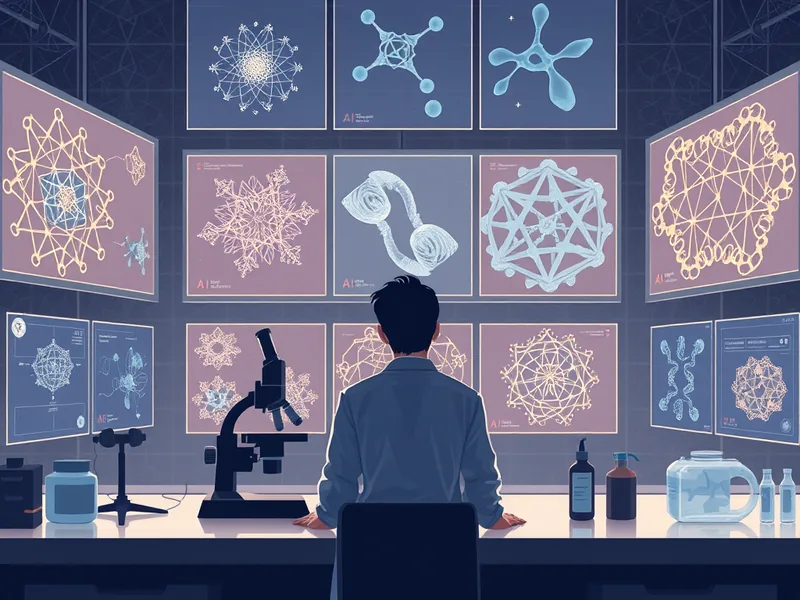
The success of BioSolutions' AI model has not gone unnoticed. Other biotech and pharmaceutical companies are taking notice and beginning to explore similar approaches. This shift towards data-driven, AI-assisted drug development could have far-reaching implications for the industry, potentially reducing the time and cost associated with bringing new treatments to market.
The story of BioSolutions is more than just a tale of resilience; it highlights the transformative potential of AI in healthcare. By turning failure into innovation, they have demonstrated that even setbacks can lead to significant advances when approached with the right tools and mindset. This approach not only benefits the company but also has the potential to improve patient outcomes by accelerating the development of more effective treatments.
The use of AI in analyzing clinical trial data could help address one of the biggest challenges in drug development: the high rate of trial failures. By identifying promising subgroups and optimizing treatment protocols, AI can increase the likelihood of success in future trials, ultimately leading to better healthcare solutions for patients around the world.
The journey from failure to innovation is a testament to the power of perseverance and technological advancement. As more companies follow BioSolutions' lead, the landscape of drug development may be forever changed, bringing us closer to a future where precision medicine and AI-driven insights are the norm rather than the exception.
Tags
Original Sources
How a biotech turned a trial failure into an AI model
↗ https://www.statnews.com/2026/06/16/how-biotech-turned-trial-failure-ai-model-health-tech
About the author
Amara's entry point into AI was an epidemiology role at a London research hospital, where she spent five years studying how digital health tools reached — or conspicuously failed to reach — underserved communities. Watching early algorithmic systems in healthcare quietly entrench existing inequalities, she redirected her career toward the systemic consequences of AI at scale. She covers AI through an unflinching lens: who benefits, who bears the cost, and what evidence actually says versus what the press release claims. Her writing is calm and precise, but she doesn't mistake balance for neutrality.
More from The Steward →This Week's Edition
23 June 2026
25 articles
Related Articles

Study Finds Pharmacy Care Coordination Cuts Hospitalizations for Cancer Patients
Health & Science · 5 min

A Decade-Late Diagnosis Sparked a New Model for Funding Precision Health
Health & Science · 5 min

Stanford Scientists Grow Mice With Nearly Half-Human Brains, Reviving Old Ethical Questions
Health & Science · 5 min
Related Articles
Study Finds Pharmacy Care Coordination Cuts Hospitalizations for Cancer Patients
Health & Science · 5 min
A Decade-Late Diagnosis Sparked a New Model for Funding Precision Health
Health & Science · 5 min
Stanford Scientists Grow Mice With Nearly Half-Human Brains, Reviving Old Ethical Questions
Health & Science · 5 min
More Stories
© 2026 Cedar & Bloom. All rights reserved.
