The Drum · Weekly AI news, freeSubscribe →

Share
Federal regulators say patients deserve to know what care costs before they get the bill. Twenty-four unnamed healthcare giants just got a letter reminding them that federal law, not just CMS rules, demands it.
Imagine scheduling a surgery, showing up for care, and only learning the real cost weeks later when the bill arrives, stacked with facility fees and physician charges nobody mentioned upfront. For millions of Americans, that scenario isn't hypothetical. It's a recurring source of financial anxiety that can follow a family for years.
The Federal Trade Commission is trying to do something about it. The agency sent warning letters to 24 of the nation's largest healthcare services companies, telling them their pricing disclosures may not meet federal legal standards. The FTC hasn't named names. But the message is unmistakable: hiding the true cost of care, even unintentionally, can amount to deception under federal law.
FTC Chairman Andrew N. Ferguson signed the letters himself. In them, he points to the FTC Act, a law that broadly prohibits unfair or deceptive business practices across industries. The letters state plainly that healthcare organizations must give patients "timely, accurate, and complete pricing for healthcare services," particularly for non-emergency procedures scheduled ahead of time. These aren't surprise ER visits. These are appointments people plan for, often weeks in advance, which makes the lack of upfront pricing even harder to justify.
Ferguson urged the recipients to audit their own pricing practices and fix anything that falls short. The letters stop short of accusing anyone of wrongdoing. Think of it less as a citation and more as a formal heads-up: get your house in order before this becomes a bigger problem.
Here's where it gets interesting for anyone who's tried to navigate a hospital bill. Most people assume that if a hospital complies with federal price transparency rules, it's in the clear. That assumption may be wrong.
The Centers for Medicare and Medicaid Services already requires hospitals to post pricing information in machine-readable files and in consumer-friendly formats. Hospitals must also give uninsured and self-pay patients good-faith estimates before scheduled procedures. These are real, enforceable requirements that have existed for several years now.
But the FTC is drawing a sharper line. Complying with CMS rules, the agency says, doesn't automatically mean a provider is meeting its obligations under the FTC Act. Think of CMS requirements as the floor, a baseline for disclosure. The FTC Act, by contrast, functions more like a general honesty standard that applies across nearly every industry in the country, from grocery delivery to hotel bookings to rental housing. Healthcare isn't exempt just because it has its own separate transparency framework.
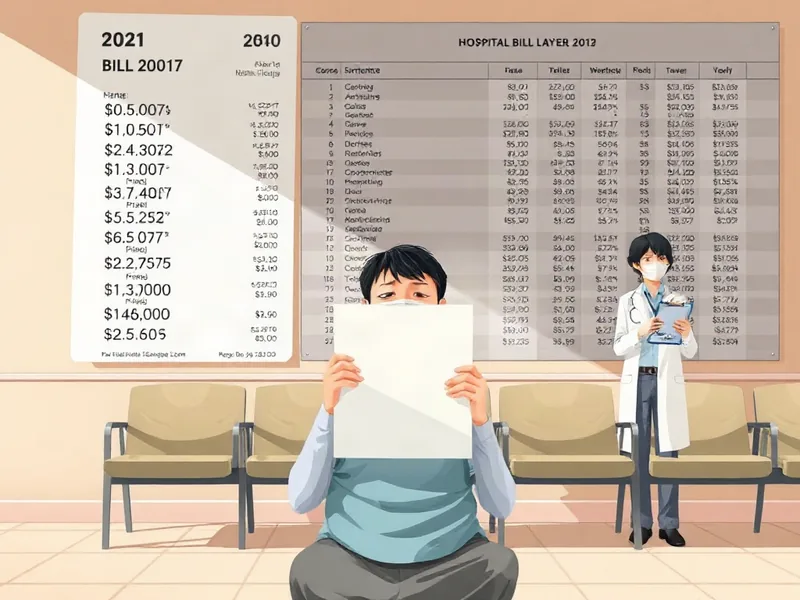
That distinction matters because it closes a potential loophole. A hospital could technically satisfy CMS's posting requirements while still misleading patients in practice, say, by burying critical costs in hard-to-parse files or omitting fees that patients would reasonably expect to see. The FTC's letter specifically calls out this kind of partial disclosure. Leaving out physician fees or facility charges, even while technically disclosing some portion of the cost, can still count as deceptive if a reasonable consumer would believe they were seeing the full picture.
Ferguson's language in the letter is notably direct about why healthcare deserves this heightened scrutiny. Medical costs rank among the largest financial burdens most consumers face, often requiring significant time and travel just to receive in-person care. Unlike comparison shopping for a flight or a hotel room, patients frequently commit to a provider before they ever learn the full price. And identical procedures can carry wildly different price tags depending on which facility performs them, a reality that leaves patients exposed to cost swings they never saw coming.
The FTC frames this as a matter of "material terms." In consumer protection law, a material term is information significant enough that it could change someone's decision if they knew it. Price almost always qualifies. When that information is hidden, incomplete, or confusing, the agency argues, it violates the basic promise of fair dealing that the FTC Act is built to protect.
This enforcement action doesn't exist in a vacuum. Price transparency has become a consistent theme for the FTC under Ferguson's leadership, spanning sectors as varied as rental housing and grocery delivery apps. Healthcare, though, carries higher stakes than most. A hidden resort fee is an annoyance. A hidden hospital fee can mean a family skipping a mortgage payment or delaying care altogether out of fear of the bill.
The letters also land at a moment when healthcare pricing has become tangled up with newer technologies. Many large health systems now use automated tools and AI-driven systems to generate cost estimates, manage billing codes, and determine what patients owe before and after treatment. When those systems produce incomplete or inconsistent estimates, the burden still falls on the patient to sort out the discrepancy, often after the care has already been delivered. Regulators haven't singled out AI tools in this round of letters, but the broader conversation about accountability in automated pricing and billing systems is likely to keep intersecting with these transparency rules going forward.
For now, the FTC is giving these 24 companies a chance to self-correct. No fines, no lawsuits, no public naming. That approach reflects a fairly common regulatory pattern: warn first, enforce later if nothing changes. Companies that take the warning seriously and conduct honest internal reviews may avoid tougher scrutiny down the road. Those that treat it as a formality probably won't be so lucky.
What happens next depends largely on how seriously these organizations take the warning, and whether the FTC follows up with actual enforcement if gaps remain. Patients, meanwhile, are left hoping that the next time they schedule a procedure, the price they're quoted bears some resemblance to the bill that eventually shows up in the mail.
Tags
Original Sources
FTC Sends Warning Letters to 24 Healthcare Organizations Over Price Transparency - MedCity News
↗ https://medcitynews.com/2026/10/ftc-sends-warning-letters-to-24-healthcare-organizations-over-price-transparency
About the author
Amara's entry point into AI was an epidemiology role at a London research hospital, where she spent five years studying how digital health tools reached — or conspicuously failed to reach — underserved communities. Watching early algorithmic systems in healthcare quietly entrench existing inequalities, she redirected her career toward the systemic consequences of AI at scale. She covers AI through an unflinching lens: who benefits, who bears the cost, and what evidence actually says versus what the press release claims. Her writing is calm and precise, but she doesn't mistake balance for neutrality.
More from The Steward →This Week's Edition
7 October 2026
34 articles
Related Articles

The 2026 Nobel Prizes, and the Persistent Gap Science Still Hasn't Closed
Policy & Regulation · 5 min

Trump Declares Anyone Who Says "AI" Instead Of "Super Intelligence" An Enemy
Policy & Regulation · 5 min

Canada Commits $200 Million to Bring AI Out of the Lab and Into Atlantic Businesses
Policy & Regulation · 5 min
Related Articles
The 2026 Nobel Prizes, and the Persistent Gap Science Still Hasn't Closed
Policy & Regulation · 5 min
Trump Declares Anyone Who Says "AI" Instead Of "Super Intelligence" An Enemy
Policy & Regulation · 5 min
Canada Commits $200 Million to Bring AI Out of the Lab and Into Atlantic Businesses
Policy & Regulation · 5 min
More Stories
© 2026 Cedar & Bloom. All rights reserved.
