The Drum · Weekly AI news, freeSubscribe →

Share
GenEx empowers AI agents to mentally traverse and understand vast environments by generating virtual worlds, allowing them to make smarter decisions without physically exploring every角落。
Planning with partial observation is a fundamental challenge in embodied AI. Traditional approaches often involve agents physically exploring their environment to update their beliefs about the world state. However, humans can mentally explore unseen parts of the world and revise their beliefs based on imagined observations. This ability allows them to make more informed decisions without having to physically navigate first. To bridge this gap, we introduce the Generative World Explorer (GenEx), a video generation model that enables AI agents to mentally explore large-scale 3D environments and acquire imagined observations.
To support mental exploration, GenEx is designed as a variant of a video generation model. Specifically, it is defined as ( f_\theta: \mathbb{R}^{H \times W} \rightarrow \mathbb{R}^{T \times H \times W} ), where the input is an image with height ( H ) and width ( W ), and the output is a sequence of ( T ) images representing a predicted video. The goal is to generate realistic 360-degree panoramic video sequences that simulate forward movement through any environment.
Once trained, the diffuser acts as a world explorer, supporting navigation in an imagined environment. We use large language models (LLMs) like GPT-4 to control the agent's movements through an egocentric view. The agent can move forward or change direction:
The agent can perform unlimited actions, making our diffuser a generative world explorer that can navigate complex 3D environments without physical constraints.
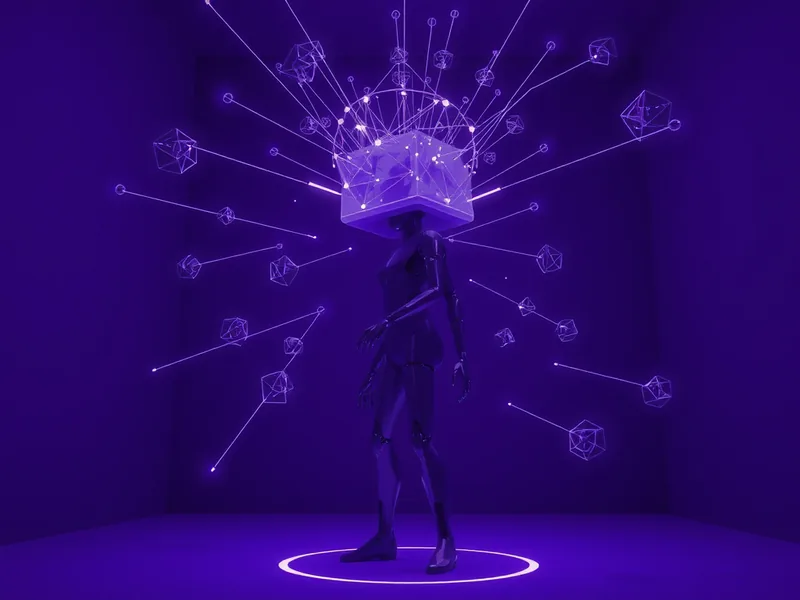
To ensure high-quality generation and navigational consistency, GenEx employs navigational cycle consistency. This involves navigating a randomly sampled closed path and returning to the origin. In optimal scenarios, the start and end views are identical, ensuring that the world model remains consistent.
GenEx significantly enhances the intelligence of embodied AI agents by enabling them to make more informed decisions through mental exploration. Here are a few practical examples:
To experience the capabilities of GenEx firsthand, check out our interactive demo:
<Your browser does not support the video tag>Instructions:
Tags
Original Sources
↗ https://generative-world-explorer.github.io/?utm_source=tldrai
About the author
Kai built ML infrastructure at a Bay Area startup before developing an obsession with transformer architectures and inference optimisation that eventually pulled him out of product work entirely. A stint at a compute research lab sharpened his instinct for what actually matters in a model release versus what is marketing. He writes from the inside — from the perspective of someone who has debugged the systems he is describing at three in the morning. He is allergic to hype and instinctively drawn to the unglamorous plumbing questions that everyone else skips over.
More from The Engineer →This Week's Edition
20 November 2024
29 articles
Related Articles

Wharton's Fourth Annual AI Survey: Most Companies See Returns, Few See Big Ones
Models & Research · 6 min
Tensormesh Launches Enterprise KV Cache Platform to Cut Redundant LLM Compute
Models & Research · 6 min

Iambic Therapeutics Raises $150 Million in IPO to Fund AI-Designed Cancer Drugs
Finance & Markets · 5 min
Related Articles
Wharton's Fourth Annual AI Survey: Most Companies See Returns, Few See Big Ones
Models & Research · 6 min
Tensormesh Launches Enterprise KV Cache Platform to Cut Redundant LLM Compute
Models & Research · 6 min
Iambic Therapeutics Raises $150 Million in IPO to Fund AI-Designed Cancer Drugs
Finance & Markets · 5 min
More Stories
© 2026 Cedar & Bloom. All rights reserved.
