The Drum · Weekly AI news, freeSubscribe →
Share
At the Venice Film Festival, the actor accepted a lifetime achievement award and used the spotlight to raise alarms about deepfakes, media consolidation, and whether anyone will still trust what they see and read.
Imagine a world where a genuine photograph and a fabricated one look exactly the same to the naked eye. Now imagine that world isn't hypothetical anymore. That's the warning George Clooney delivered this week, and it deserves attention well beyond the film industry.
Speaking to reporters in Venice on Wednesday, where he received the festival's Golden Lion for Lifetime Achievement, Clooney said advances in artificial intelligence are making it harder for anyone, journalists, governments, ordinary citizens, to tell what's real. "It's getting harder and harder for us to discern the truth," he said. That sentence, coming from a two-time Oscar winner known for his political engagement, lands as more than celebrity commentary. It's a snapshot of a problem researchers and regulators have been sounding alarms about for years.
Clooney's core concern isn't just that AI can generate convincing fakes. It's what he called "poisoning the well." Once people know fabricated images and videos exist, they can dismiss real evidence as fake too. "Then when you see real things that are really true, people are able to say, 'Well, that's fake,'" he said. Think of it like a town where a few counterfeit bills start circulating. Eventually, people stop trusting any cash at all, even the real notes. That's the trust deficit Clooney fears is building around information itself.
This isn't an abstract worry for Clooney. He said he has recently met with leading AI developers, the people building the very tools capable of generating deepfakes, and came away unconvinced that current protections are keeping pace. "Everybody's working furiously at it, and I haven't seen any great strides yet in success," he said.
That gap between ambition and actual safeguards is exactly what policy researchers have flagged in debates over AI regulation. Detection tools exist, but they lag behind generation tools. It's a bit like building better locks after burglars have already learned to pick them, except in this case the burglars are getting faster upgrades than the locksmiths. Clooney even joked about his own mortality intersecting with the technology, saying he'd rather not have his likeness resurrected for a commercial decades after he's gone. "I would like to avoid being in a tampon commercial 20 years after I'm dead," he said. The joke lands lightly, but it points to a real and growing legal question: who controls a person's digital likeness once AI can recreate it convincingly, indefinitely, without consent.
Clooney widened the lens beyond deepfakes to journalism's structural health. He pointed to the concentration of media ownership among a small number of extremely wealthy individuals, naming Jeff Bezos, owner of the Washington Post, and Elon Musk, owner of Twitter, as examples. "The richest people in the world right now are owning the Washington Post and Twitter and most of the places we get our information, and that is a concern," he said.
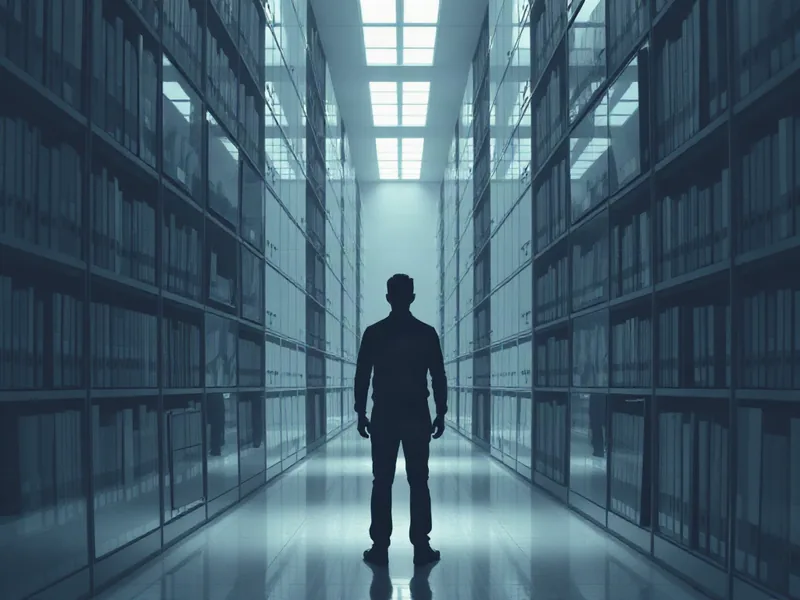
It's worth sitting with why that matters alongside the AI warning. If the tools for detecting manipulated content are underdeveloped, and the institutions meant to verify and report the truth are increasingly controlled by a handful of individuals with their own interests, the checks that normally catch and correct misinformation weaken from two directions at once. Clooney didn't frame it as a coordinated threat, but the timing of his comments, delivered together, suggests he sees them as connected pressures on the same fragile system.
Despite the bleak diagnosis, Clooney wasn't entirely pessimistic. "The state of journalism is always in flux, always challenged," he said. "But I do believe that information will find its way out." That's a meaningful distinction. He's not arguing that truth is doomed, only that the path to it is getting rockier, and that institutions, technology companies, and the public all have work to do to keep that path open.
Clooney also weighed in on a separate but related business story dominating entertainment headlines: Paramount's proposed acquisition of Warner Bros. He expressed skepticism that the deal makes financial sense, tying his doubts to a broader pattern he's seen in media consolidation. "I don't see how it financially ends up making sense," he said, adding that such mergers often come with job losses and rarely go as smoothly as promised. It's a smaller-scale version of the same worry: when media companies consolidate, fewer independent voices remain to check each other's work, and fewer newsroom jobs remain to do that checking in the first place.
Clooney's appearance in Venice carried its own symbolism. He's been a regular presence at the festival for nearly thirty years, since the premiere of "Out of Sight" in 1998. Receiving the top career honor at 65 prompted a moment of reflection that was equal parts humor and honesty. "Everything is melancholy," he said. "You brush your teeth and think: 'My teeth used to be so much nicer.'"
Clooney is not an AI researcher or a policy expert, and he'd probably be the first to say so. But his comments capture something that technical reports on AI safety often struggle to convey: the human stakes of losing a shared sense of what's real. When trust in evidence erodes, it doesn't just make life harder for journalists chasing a story. It makes it harder for courts to weigh evidence, for voters to evaluate claims, and for communities to agree on basic facts during moments of crisis. The technology enabling deepfakes will keep improving. Whether the safeguards, legal, technical, and institutional, improve fast enough alongside it may determine whether that shared sense of reality survives intact.
Tags
Original Sources
Clooney tells Venice festival that AI threatens film and journalism
↗ https://www.reuters.com/business/media-telecom/clooney-tells-venice-festival-that-ai-threatens-film-journalism-2026-09-02
About the author
Amara's entry point into AI was an epidemiology role at a London research hospital, where she spent five years studying how digital health tools reached — or conspicuously failed to reach — underserved communities. Watching early algorithmic systems in healthcare quietly entrench existing inequalities, she redirected her career toward the systemic consequences of AI at scale. She covers AI through an unflinching lens: who benefits, who bears the cost, and what evidence actually says versus what the press release claims. Her writing is calm and precise, but she doesn't mistake balance for neutrality.
More from The Steward →This Week's Edition
7 September 2026
23 articles
Related Articles
AI Giants Move to Govern Themselves, and Decide Who Gets the Winnings
Policy & Regulation · 5 min
FDA Weighs Treating Generative AI Medical Tools Like Physicians, Not Devices
Policy & Regulation · 5 min
Ottawa Expands AI Funding for B.C. Businesses Under $700-Million National Strategy
Policy & Regulation · 5 min
Related Articles
AI Giants Move to Govern Themselves, and Decide Who Gets the Winnings
Policy & Regulation · 5 min
FDA Weighs Treating Generative AI Medical Tools Like Physicians, Not Devices
Policy & Regulation · 5 min
Ottawa Expands AI Funding for B.C. Businesses Under $700-Million National Strategy
Policy & Regulation · 5 min
More Stories
© 2026 Cedar & Bloom. All rights reserved.
