The Drum · Weekly AI news, freeSubscribe →
Share
Kingsley Fregene's cutting-edge AI technology is pushing UAVs towards unprecedented levels of safety and efficiency, transforming how these vehicles navigate challenging environments across diverse industries.
Lockheed Martin researcher Kingsley Fregene has been at the forefront of developing advanced unmanned aerial vehicles (UAVs) that are not only more efficient but also significantly safer. His work, which integrates cutting-edge machine learning techniques with robust control systems, has the potential to revolutionize various industries, from military operations to disaster response.
Fregene's research focuses on enhancing UAV autonomy and reliability through sophisticated algorithms and real-time data processing. The goal is to create UAVs that can operate in complex environments with minimal human intervention, thereby reducing operational risks and costs. This article delves into the technical details of Fregene's innovations and why they matter to practitioners in the field.
One of the core aspects of Fregene's work is the development of machine learning models that enable UAVs to make autonomous decisions. These models are trained on large datasets of environmental conditions, flight patterns, and sensor data. Here are some key points:
Fregene's work also involves developing robust control systems that can handle the dynamic nature of UAV operations. These systems must be able to adapt to changing conditions and maintain stability under various environmental stresses. Key features include:
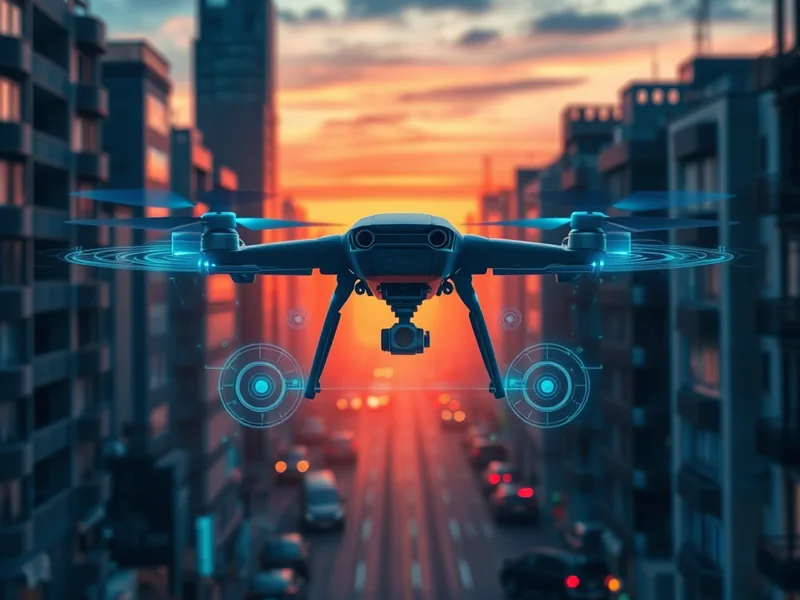
Fregene's research has practical applications in various domains:
In military contexts, autonomous UAVs can perform dangerous missions with reduced risk to human operators. For example, UAVs equipped with Fregene's technology can conduct reconnaissance, surveillance, and target acquisition tasks more efficiently and safely.
During natural disasters, such as earthquakes or floods, autonomous UAVs can provide critical support. They can quickly assess damage, locate survivors, and deliver supplies to remote areas.
The commercial sector is also benefiting from Fregene's innovations. Autonomous UAVs are being used for tasks such as crop monitoring, infrastructure inspection, and package delivery.
Fregene's work is a prime example of how AI and machine learning can be applied to solve real-world problems. By enhancing the autonomy and reliability of UAVs, he is not only advancing the state of the art in robotics but also contributing to safer and more efficient operations across multiple industries.
Tags
Original Sources
Kingsley Fregene
↗ https://spectrum.ieee.org/lockheed-martin-researcher-uavs/kingsley-fregene
About the author
Kai built ML infrastructure at a Bay Area startup before developing an obsession with transformer architectures and inference optimisation that eventually pulled him out of product work entirely. A stint at a compute research lab sharpened his instinct for what actually matters in a model release versus what is marketing. He writes from the inside — from the perspective of someone who has debugged the systems he is describing at three in the morning. He is allergic to hype and instinctively drawn to the unglamorous plumbing questions that everyone else skips over.
More from The Engineer →This Week's Edition
7 May 2026
29 articles
Related Articles
Related Articles
More Stories
© 2026 Cedar & Bloom. All rights reserved.