The Drum · Weekly AI news, freeSubscribe →

Share
When brain scans and symptoms point in three different directions, doctors need more than a hunch. A new tool called StateViewer is helping Mayo Clinic neurologists sort through conflicting dementia diagnoses in real time.
Imagine sitting in an exam room, watching a patient struggle to describe symptoms that could mean one of several life-altering diagnoses. That's the position Nathan Young, a community neurologist at the Mayo Clinic, found himself in recently. His patient's symptoms suggested Parkinson's disease. But something nagged at him: the possibility of progressive supranuclear palsy, or PSP, a rare and much faster-progressing neurological disorder.
Young did what any careful clinician would do. He ordered a PET scan to get more clarity. Instead, the scan muddied the waters further. The radiology report pointed toward a third possibility entirely: Alzheimer's disease.
"I opened a can of worms," Young said of the moment the scan results came back. For many patients and families, this kind of diagnostic uncertainty is more than an inconvenience. It can mean months of delay before starting the right treatment, or worse, starting the wrong one. Dementia isn't a single disease. It's a category that includes Alzheimer's, Parkinson's-related disorders, PSP, and others, each with different progressions and different care needs. Getting the diagnosis wrong doesn't just waste time. It can mean a patient misses a treatment window, or a family makes life decisions based on a false picture of what's ahead.
Normally, a case this tangled would mean calling in reinforcements. Mayo Clinic is home to some of the most respected dementia specialists in the country, and Young would typically loop them into a case like this one. This time, though, he had a new resource at his fingertips: an AI tool called StateViewer, built by Mayo's own Neurology AI program.
StateViewer represents a different approach to a persistent problem in neurology: brain scans are data-rich, but interpreting them accurately, especially when symptoms overlap between diseases, requires rare expertise that most community hospitals simply don't have on staff. David Jones, who leads Mayo's Neurology AI program, has been developing the tool as a way to put some of that specialized pattern-recognition capability into the hands of general neurologists like Young, not just the subspecialists at major academic medical centers.
Think of it less like a replacement for a radiologist and more like a second set of eyes trained specifically on the subtle visual fingerprints that distinguish one neurodegenerative disease from another. A PET scan can look ambiguous to a human reader, especially when a patient's disease presentation doesn't fit neatly into a textbook pattern. AI tools like StateViewer are designed to sift through imaging data for patterns that correlate with specific diagnoses, patterns that might be too subtle or too statistically complex for even experienced clinicians to catch reliably every time.
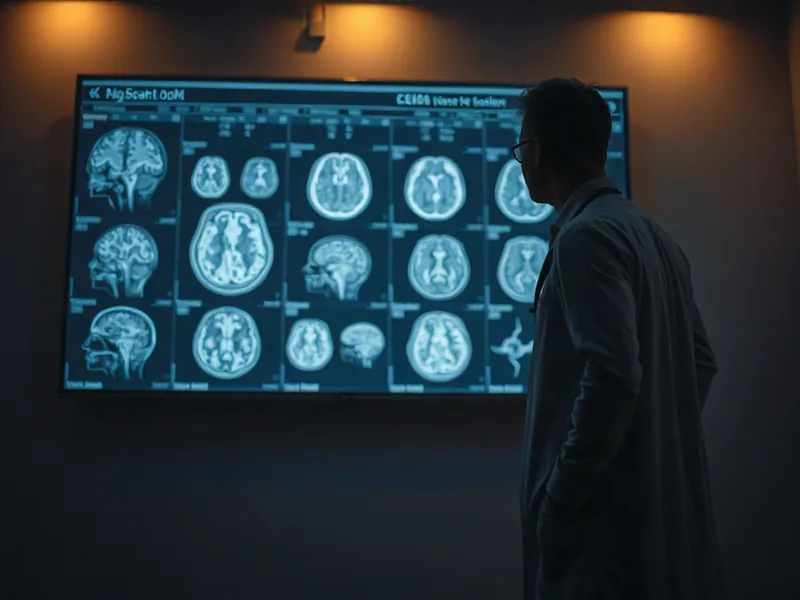
This matters because the stakes of a wrong diagnosis in dementia care are genuinely high. Alzheimer's, Parkinson's-related disorders, and PSP are managed differently, and some of the newer Alzheimer's treatments are only appropriate for patients at specific disease stages confirmed through imaging biomarkers. A misdiagnosis doesn't just delay the right care. It can expose a patient to treatments that won't help them, or deny them options that could.
For a community neurologist like Young, who doesn't have a team of dementia subspecialists down the hall, the ability to get an AI-assisted second opinion inside the same clinical workflow is meaningful. It doesn't eliminate the need for expert judgment. Young still had to weigh the AI's input against his own clinical assessment and the patient's history and symptoms. But it gave him another data point at a moment when the existing evidence, the radiology report pointing toward Alzheimer's, didn't match his clinical instinct about PSP.
Mayo Clinic's decision to build and deploy its own AI tool, rather than relying solely on scans and specialist referrals, also reflects a broader shift happening across health systems. Hospitals are increasingly looking to AI not to replace physicians but to extend the reach of specialized expertise into settings where it's historically been scarce. Rural hospitals, community clinics, and general neurology practices rarely have a PSP expert on call. Tools like StateViewer are part of an effort to close that gap, bringing a version of subspecialist-level pattern recognition to frontline clinicians who are making real-time decisions about real patients.
That said, deploying AI diagnostic tools in dementia care raises questions that the field is still working through. How should clinicians weigh an AI's output against their own judgment when the two disagree? What happens when the AI is wrong, and who is accountable for that error? These aren't hypothetical concerns. Dementia diagnoses carry enormous emotional and financial weight for patients and families, and a tool that's wrong with confidence could do real harm. Mayo's approach, built and tested within its own health system before deployment, is one way of trying to manage that risk, but it's not a universal solution, and other health systems adopting similar tools will need their own validation processes.
Stories like Young's patient aren't rare. Diagnostic uncertainty in dementia care is common, and it's getting more common as the population ages and the range of treatable conditions expands. Every delayed or incorrect diagnosis has a human cost: a family planning for the wrong trajectory, a patient missing a treatment window, a clinician making high-stakes decisions without enough information.
Tools like StateViewer won't resolve every hard case, and they shouldn't be treated as a final word over a clinician's judgment. But for patients whose symptoms don't fit a clean diagnostic box, having an additional, carefully validated source of insight could mean the difference between months of uncertainty and a faster path to the right care. As more health systems weigh whether to adopt similar AI tools, the central question will be whether they can deliver that kind of clarity reliably, and whether clinicians, patients, and regulators can trust the answers they provide.
Tags
Original Sources
An AI tool to help diagnose dementia leverages the Mayo Clinic’s expertise — and its data
↗ https://www.statnews.com/2025/08/05/mayo-clinic-ai-tool-stateviewer-dementia-scans
About the author
Amara's entry point into AI was an epidemiology role at a London research hospital, where she spent five years studying how digital health tools reached — or conspicuously failed to reach — underserved communities. Watching early algorithmic systems in healthcare quietly entrench existing inequalities, she redirected her career toward the systemic consequences of AI at scale. She covers AI through an unflinching lens: who benefits, who bears the cost, and what evidence actually says versus what the press release claims. Her writing is calm and precise, but she doesn't mistake balance for neutrality.
More from The Steward →This Week's Edition
4 November 2026
32 articles
Related Articles
Related Articles
More Stories
© 2026 Cedar & Bloom. All rights reserved.