The Drum · Weekly AI news, freeSubscribe →

Share
Berlin's investment summit produced headline-grabbing pledges from Amazon and Nvidia, but the real story is a structural bet on defence, semiconductors and AI capacity that will take years to validate.
Germany's pitch to global capital is getting more specific. Chancellor Friedrich Merz used Tuesday's Invest in Germany Summit in Berlin to frame defence, semiconductors and artificial intelligence as the pillars of a longer-term bet on economic sovereignty, not just a response to short-term growth jitters.
The numbers attached to the event are substantial. The economy ministry said companies including Amazon and Nvidia pledged more than €225 billion ($252 billion) during the summit. That sits alongside the existing Made for Germany initiative, under which domestic firms have already committed to invest over €800 billion ($898.4 billion) by 2028. Separately, the government has floated projections of up to €4.6 trillion in investment potential by 2035, a figure that deserves more scrutiny than headline treatment.
Merz told investors Berlin's job is to "create the best possible parameters for you," pointing to plans to cut red tape, speed up permitting and modernize infrastructure. Those are the standard promises any government makes to capital. What's less standard is the specificity of the industrial targets attached to them.
Merz said Germany aims to quadruple its AI computing capacity by 2030. That's a concrete, measurable target, which makes it easier to track than most political rhetoric around tech competitiveness. It also signals where Berlin thinks the real race is being run: not in consumer AI products, but in the underlying compute infrastructure that everything else depends on.
This matters because Germany's traditional industrial base, autos, chemicals, machinery, is struggling. A government ministry report last week pointed to a sluggish third quarter. High energy costs and bureaucratic friction have been eating into competitiveness for years. Pivoting toward defence, chips and AI isn't abandoning the old economy so much as trying to build a new growth engine alongside it, before the old one erodes further.
Defence and energy transition firms were visibly part of the room. Helsing, a German defence company, and Vulcan Energy, which works in lithium and renewables, both attended. Their presence underscores that Berlin's industrial strategy isn't siloed. AI compute, battery materials and defence manufacturing are being pitched as interlocking pieces of the same sovereignty argument, the idea that Germany, and by extension Europe, shouldn't be structurally dependent on outside suppliers for the technologies that will define the next decade of competitiveness and security.
Merz also used the summit to take a political jab, criticizing Elif Eralp, a far-left candidate for Berlin mayor who has pledged to expropriate corporate landlords. He said property rights "are not to be tampered with" and underpin Germany's economic order. It's a reminder that this investment push isn't happening in a political vacuum. Domestic politics around property, taxation and regulation will shape whether the pledges made this week actually convert into deployed capital.
On the regulatory front, Merz said he is personally "engaged on the European level" to ensure AI regulation "is opening the door and not closing the door." That's a direct nod to ongoing friction between Brussels' AI Act implementation timeline and industry complaints that European rules move slower than the technology itself. He also pushed for EU Inc., a harmonized European corporate framework, as a way to help companies tap the EU's single market more efficiently. Neither initiative has a firm delivery date, which is worth flagging for anyone modeling near-term catalysts.
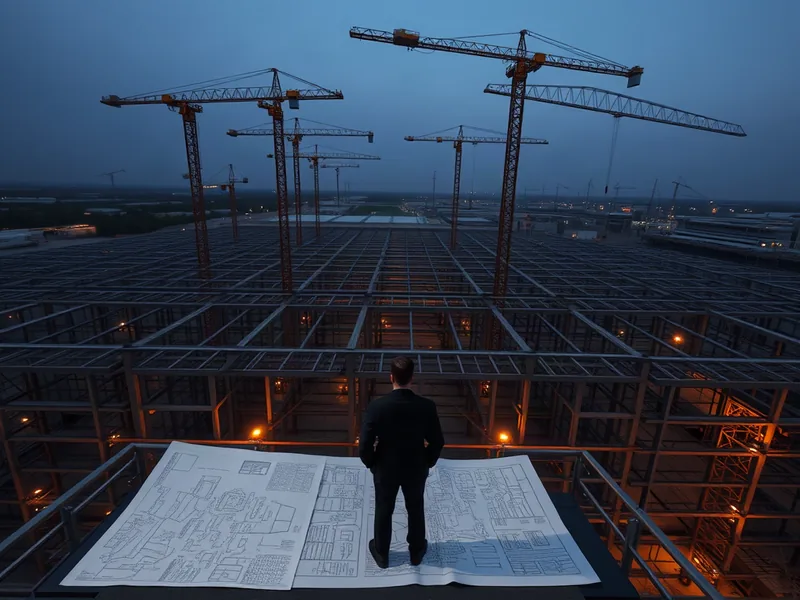
Pledges made at investment summits are not the same as capital deployed. The €225 billion figure attached to this event, and the €800 billion Made for Germany commitment, are multi-year aspirations announced by companies and tallied by a government ministry with an obvious incentive to present a strong headline number. Some of that spending may have happened regardless of the summit; some of it may slip, shrink or get reallocated as market conditions change.
That said, the direction of travel is clear enough to take seriously. Germany is explicitly trying to position itself as a landing spot for AI infrastructure spending at a moment when Nvidia and Amazon are both expanding compute capacity globally. A government willing to quadruple domestic AI computing capacity by 2030 is signaling it wants a meaningful share of that global infrastructure buildout, not just a participant role.
Foreign direct investment and startup formation are both reportedly ticking up, according to Merz, who cited these as early evidence the government's approach is working. Independent verification of those trends would strengthen the case. For now, treat them as directional claims from an official with a clear interest in validating his own policy.
The biggest risk is execution lag. Germany has a well-documented history of slow permitting, high energy costs and bureaucratic friction, the same problems Merz says he's addressing. Promising to cut red tape is easier than actually cutting it, and investors have heard similar commitments from previous German governments without always seeing them materialize on schedule.
There's also a currency and rate environment to consider. With euro-dollar conversions embedded in these figures (0.8905 euros to the dollar at time of reporting), any material shift in exchange rates or European interest rates could alter the real value and attractiveness of pledged investments over the multi-year horizons involved.
Political risk at the domestic level shouldn't be dismissed either. Merz's pointed remarks about property rights suggest the government is watching local political currents, including the Berlin mayoral race, as a potential threat to the investment climate it's trying to cultivate. If regulatory or political uncertainty resurfaces at the state or municipal level, it could complicate the clean sovereignty narrative Berlin is selling to global capital.
The AI computing capacity target is the most trackable metric here, and it deserves a place on any watchlist tied to European tech infrastructure plays. Progress toward quadrupling capacity by 2030 will be measurable in data center build-outs, chip procurement and energy allocation, giving investors something firmer than rhetoric to monitor.
Also worth tracking: whether EU Inc. actually gets introduced, and on what timeline, since a harmonized corporate framework could materially change the calculus for companies weighing EU-wide expansion versus fragmented national structures. The gap between pledged capital and deployed capital over the next 12 to 24 months will be the real test of whether this week's summit produced substance or just a strong set of headlines.
Tags
Original Sources
Germany's Merz touts defence, AI and chip investment drive in pitch to investors
↗ https://www.reuters.com/business/germanys-merz-touts-defence-ai-chip-investment-drive-pitch-investors-2026-10-20
About the author
Marcus began tracking AI's market implications in 2016, noticing AI-related patent filings accelerating ahead of earnings upgrades before most of the sell-side had caught on. A former fixed-income quantitative analyst, he spent two decades building models that priced risk across emerging markets before pivoting to cover the economic impact of AI full-time. His writing translates opaque technical developments into clear risk/reward terms — and he's rarely diplomatic about the gap between AI valuations and underlying fundamentals. He believes most market participants still underestimate AI's long-run deflationary effect on knowledge work.
More from The Analyst →This Week's Edition
21 October 2026
23 articles
Related Articles

AI Giants Move to Govern Themselves, and Decide Who Gets the Winnings
Policy & Regulation · 5 min

FDA Weighs Treating Generative AI Medical Tools Like Physicians, Not Devices
Policy & Regulation · 5 min

Ottawa Expands AI Funding for B.C. Businesses Under $700-Million National Strategy
Policy & Regulation · 5 min
Related Articles
AI Giants Move to Govern Themselves, and Decide Who Gets the Winnings
Policy & Regulation · 5 min
FDA Weighs Treating Generative AI Medical Tools Like Physicians, Not Devices
Policy & Regulation · 5 min
Ottawa Expands AI Funding for B.C. Businesses Under $700-Million National Strategy
Policy & Regulation · 5 min
More Stories
© 2026 Cedar & Bloom. All rights reserved.
