The Drum · Weekly AI news, freeSubscribe →
Share
As Microsoft eyes cost efficiency and performance gains, its CTO plans a massive shift towards in-house Maia AI accelerators, signaling a potential shake-up in the GPU market dominated by Nvidia and AMD.
Microsoft, a giant in the tech industry, has long relied on GPUs from Nvidia and AMD for its AI workloads. However, the company is now looking to shift the majority of these tasks to its own custom silicon, specifically the next-generation Maia accelerators. This pivot is driven by a focus on performance per dollar, a critical metric for hyperscale cloud providers.
Microsoft's move into custom AI accelerators isn't new; they first unveiled their Maia 100 in late 2023. However, the company is now accelerating its efforts to transition away from third-party GPUs. During a fireside chat with CNBC, Microsoft CTO Kevin Scott emphasized that while Nvidia has offered the best price-performance ratio so far, he's open to exploring alternatives to meet growing demand.
The first iteration of Microsoft's in-house AI accelerator, the Maia 100, was a significant step but fell short of competing GPUs from Nvidia and AMD. Here are some key specs:
Despite these limitations, the Maia 100 helped Microsoft free up GPU capacity by handling OpenAI's GPT-3.5 workloads in 2023. This initial success laid the groundwork for more ambitious plans.
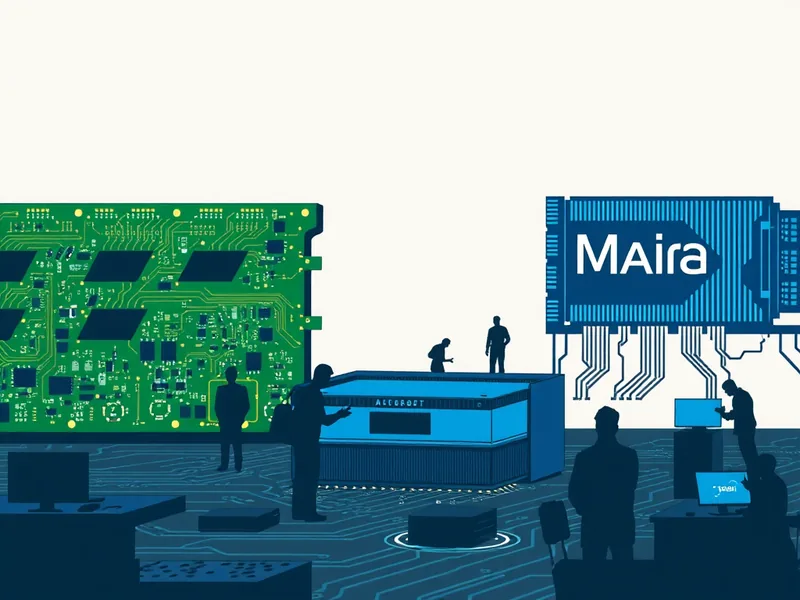
Scott's vision is clear: he wants to see primarily Microsoft silicon in the datacenter. Here are some key points from his CNBC interview:
While Microsoft is relatively late to the custom silicon party, other tech giants like Amazon and Google have been building their own CPUs and AI accelerators for years. This trend underscores a broader industry shift towards more specialized hardware tailored to specific workloads.
Microsoft's push towards custom AI accelerators is a strategic move aimed at optimizing performance and cost efficiency. The success of the next-generation Maia accelerators will be crucial in determining whether Microsoft can achieve its goal of running most of its datacenter workloads on its own silicon. As the industry continues to evolve, expect more companies to follow suit, driving innovation and competition in the AI hardware space.
Tags
Original Sources
About the author
Kai built ML infrastructure at a Bay Area startup before developing an obsession with transformer architectures and inference optimisation that eventually pulled him out of product work entirely. A stint at a compute research lab sharpened his instinct for what actually matters in a model release versus what is marketing. He writes from the inside — from the perspective of someone who has debugged the systems he is describing at three in the morning. He is allergic to hype and instinctively drawn to the unglamorous plumbing questions that everyone else skips over.
More from The Engineer →This Week's Edition
3 October 2025
29 articles
Related Articles
Related Articles
More Stories
© 2026 Cedar & Bloom. All rights reserved.