The Drum · Weekly AI news, freeSubscribe →

Share
A Boston University analysis warns that up to 10 million people could lose Medicaid not for lack of effort, but because retail shifts, childcare gaps and health struggles make hitting a strict monthly hours quota nearly impossible.
Picture a single mother working retail. Her manager sets her schedule two weeks out, and the hours shift depending on foot traffic, holiday demand, and who else calls in sick. She wants to work more. She often does work close to full time. But some months, the math doesn't add up to the government's number, and that could soon cost her health coverage.
That scenario sits at the heart of a new study published Friday in JAMA Health Forum, which finds that as many as 10 million people could lose Medicaid coverage once national work requirements take effect on January 1 under the One Big Beautiful Bill Act. Researchers at Boston University estimate that roughly 20% of Medicaid-eligible adults in expansion states are at risk of falling out of compliance, not because they refuse to work, but because their work doesn't fit neatly into the new rules.
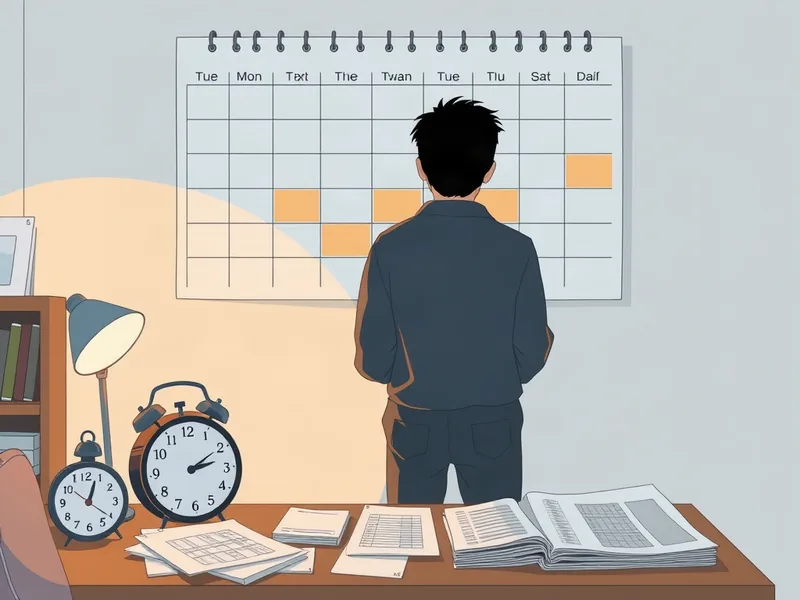
The requirement itself sounds simple on paper: work, volunteer, or attend school for at least 80 hours a month to keep your coverage. In practice, for millions of low-wage workers, that 80-hour threshold functions less like a floor and more like a moving target.
The Boston University team pulled data from the Current Population Survey covering 2023 through 2025, focusing on adults ages 18 to 65 who would fall under the new eligibility rules. What they found complicates the political narrative that's driven much of the debate over work requirements.
About two-thirds of applicable Medicaid recipients were already in the labor force. Of those working, 85% averaged more than 35 hours a week, hardly the picture of idleness that often accompanies arguments for these policies. The problem isn't effort. It's consistency.
Many of these workers hold jobs in retail, hospitality, food service, healthcare support, and agriculture, industries notorious for unpredictable scheduling. A restaurant server might get 32 hours one week and 18 the next, depending on the season or a manager's whim. Add in unreliable transportation, the scramble to find childcare, or a health condition that hasn't been formally diagnosed as a disability, and hitting a firm 80-hour monthly threshold becomes a matter of luck as much as effort.
The numbers break down further. Nearly 13.6% of eligible recipients in expansion states were close to the 80-hour line but sometimes fell short. Another 7.6% had work patterns so inconsistent that predicting compliance from month to month would be difficult even for the workers themselves.
"These results show that the ideological narrative of Medicaid recipients just needing to pull themselves up by their bootstraps does not consider the precarious employment and other real-world barriers that often prevent them from maintaining stable work over time," said Paul Shafer, the study's lead author and an associate professor of health law, policy and management, who also co-directs Boston University's Medicaid Policy Lab.
Shafer's point echoes something health policy researchers have long observed: stability and health are intertwined. Lose your coverage, and a manageable condition can spiral into an unmanageable one. Lose your health, and holding down a steady job gets even harder. It's a feedback loop, not a simple ledger of effort versus reward.
"These new work requirements are going to be tougher to fulfill for people with less education, part-time jobs or gig work, who have less control over their hours, and those who have substantial health concerns that may not rise to the level of a documentable disability," Shafer said. He added that stable Medicaid coverage often supports the very employment stability policymakers say they want to encourage. When people can manage chronic conditions through consistent care, they're better equipped to hold onto jobs, not the other way around.
The demographic breakdown adds another layer. Women faced a 22% higher risk of insufficient or inconsistent hours than men. Married individuals fared better than unmarried ones, with an 18% lower risk. Having a college degree lowered risk compared to holding only a high school diploma. Interestingly, white enrollees showed a higher risk of noncompliance than Black or Hispanic enrollees, a finding that cuts against some assumptions about who these policies will affect most.
Shafer flagged one group in particular: single mothers with children in high school. Their combination of caregiving responsibilities, scheduling constraints, and often lower-wage employment makes them especially vulnerable to falling through the cracks of a system built around a rigid hours count.
This research arrives alongside separate reporting on the administrative side of these requirements. Industry groups have already raised concerns that the final rule imposes a heavy documentation burden, one that risks disenrolling people who are actually eligible simply because the paperwork trail breaks down somewhere along the way. Between the burden of proving hours and the reality of unpredictable scheduling, the study suggests two distinct pathways toward the same outcome: eligible people losing coverage they qualify for and need.
Work requirements are often framed as a simple accountability measure, a way to ensure that public assistance goes toward people actively contributing to the workforce. But this study suggests the policy may end up penalizing the very instability that low-wage work creates in the first place. A retail employee whose hours get cut isn't choosing to work less. A home health aide juggling two part-time jobs isn't gaming the system by falling short of 80 hours in a slow month.
The stakes go beyond individual coverage. When people lose Medicaid, they don't stop needing care, they simply access it later and more expensively, often through emergency rooms rather than routine visits. Untreated chronic conditions become harder and costlier to manage. And for the workers this policy targets, many already living paycheck to paycheck, losing health coverage removes one of the few buffers that helps them stay employed at all. If the goal is truly to encourage work, the data suggests the current design of these requirements may undercut that goal rather than support it.
Tags
Original Sources
10M expansion state adults risk losing Medicaid coverage over inconsistent work hours
↗ https://www.fiercehealthcare.com/regulatory/20-medicaid-eligible-adults-risk-losing-coverage-due-inconsistent-work-hours
About the author
Amara's entry point into AI was an epidemiology role at a London research hospital, where she spent five years studying how digital health tools reached — or conspicuously failed to reach — underserved communities. Watching early algorithmic systems in healthcare quietly entrench existing inequalities, she redirected her career toward the systemic consequences of AI at scale. She covers AI through an unflinching lens: who benefits, who bears the cost, and what evidence actually says versus what the press release claims. Her writing is calm and precise, but she doesn't mistake balance for neutrality.
More from The Steward →This Week's Edition
1 September 2026
29 articles
Related Articles

Ottawa Expands AI Funding for Northern Ontario Businesses, Aims to Close the Regional Tech Gap
Job Market & Society · 6 min

AI Is Lowering the Cost of Starting a Business. It's Not Lowering the Cost of Running One.
Job Market & Society · 6 min

Iambic Therapeutics Raises $150 Million in IPO to Fund AI-Designed Cancer Drugs
Finance & Markets · 5 min
Related Articles
Ottawa Expands AI Funding for Northern Ontario Businesses, Aims to Close the Regional Tech Gap
Job Market & Society · 6 min
AI Is Lowering the Cost of Starting a Business. It's Not Lowering the Cost of Running One.
Job Market & Society · 6 min
Iambic Therapeutics Raises $150 Million in IPO to Fund AI-Designed Cancer Drugs
Finance & Markets · 5 min
More Stories
© 2026 Cedar & Bloom. All rights reserved.
