The Drum · Weekly AI news, freeSubscribe →

Share
Jennifer's discovery highlights the hidden trauma of nonconsensual deepfakes, where victims' identities are hijacked and their privacy shattered by AI-generated pornography.
When Jennifer, a 37-year-old psychotherapist in New York City, started her new job at a nonprofit in 2023, she decided to run her professional headshot through a facial recognition program. She wanted to ensure the tech wouldn’t link back to the adult content she had produced over a decade ago when she was in her early 20s. The results were alarming: not only did the search pull up some of her old videos, but it also revealed something new and disturbing-a video where someone else’s face was superimposed onto her body.
“It’s like I’m wearing somebody else’s face like a mask,” Jennifer says, using a pseudonym to protect her privacy. She recognized the garish background from one of her own shoots around 2013. It dawned on her that someone had used her in a deepfake.
Conversations about nonconsensual intimate imagery (NCII), particularly sexualized deepfakes, often focus on the faces featured in these videos-usually those of celebrities or public figures. These individuals are often the ones who draw media attention and spark legislative action. However, there is a critical part of this conversation that is often overlooked: the bodies onto which these faces are superimposed.
For years, the bodies used in deepfakes have predominantly belonged to adult content creators. When the term "deepfake" first emerged in November 2017, it was due to a Reddit user who posted videos with the faces of celebrities like Scarlett Johansson and Gal Gadot pasted onto the bodies of porn actors. According to Corey Silverstein, an attorney specializing in the adult industry, this nonconsensual use of performers' bodies happens all the time.
The rise of generative AI has only exacerbated the issue. With improved technology, creating deepfakes has become easier and more accessible. This has led to a broader range of targets, including more women and even youths, as recent cases have shown. Yet, the conversation often stops short of addressing the real human cost: the performers whose bodies are used without their consent.
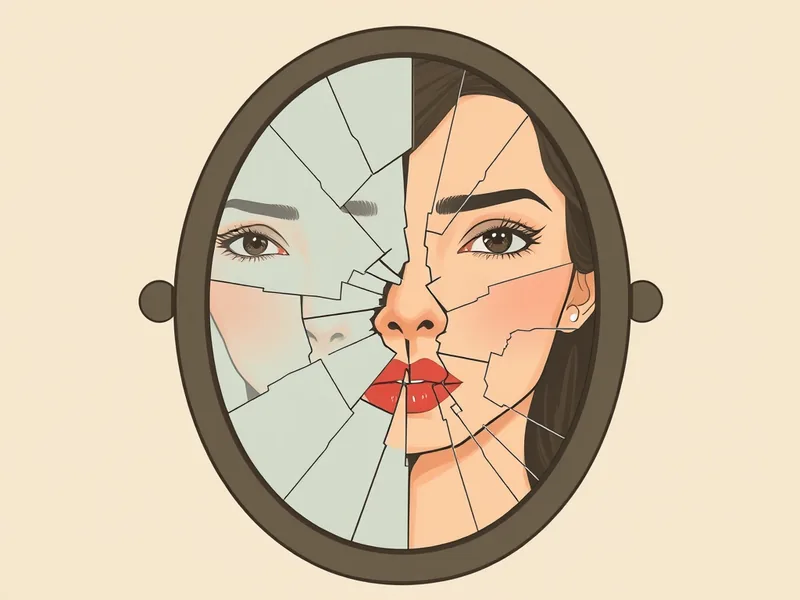
Jennifer’s experience highlights the emotional and psychological toll that nonconsensual deepfakes can take on both the faces and the bodies involved. For adult content creators, this misuse of their bodies can be a violation of their bodily integrity and professional reputation. It can also lead to significant distress and harm, particularly if the deepfake is distributed widely.
The legal landscape around NCII is evolving, but it often lags behind technological advancements. While some countries have started implementing laws to combat nonconsensual deepfakes, enforcement remains a challenge. The anonymity of the internet and the ease with which these videos can be shared make takedown efforts slow and sometimes ineffective.
For Jennifer, the discovery was a painful reminder of her past and a violation of her privacy. “There’s never any discussion about whose body is this?” she says, emphasizing the need for a more comprehensive approach to addressing the harms caused by deepfakes.
As technology continues to advance, it is crucial that we not only focus on the faces but also on the bodies involved in these nonconsensual creations. Addressing the full spectrum of harm-both to the individuals whose faces are used and those whose bodies are appropriated-is essential for developing effective policies and protections.
Tags
Original Sources
The shock of seeing your body used in deepfake porn
↗ https://www.technologyreview.com/2026/05/14/1137161/ai-porn-nonconsensual-deepfakes-takedown-piracy-copyright
The Download: deepfake porn’s stolen bodies and AI sharing private numbers
↗ https://www.technologyreview.com/2026/05/14/1137257/the-download-deepfake-porn-bodies-ai-exposing-phone-numbers
About the author
Amara's entry point into AI was an epidemiology role at a London research hospital, where she spent five years studying how digital health tools reached — or conspicuously failed to reach — underserved communities. Watching early algorithmic systems in healthcare quietly entrench existing inequalities, she redirected her career toward the systemic consequences of AI at scale. She covers AI through an unflinching lens: who benefits, who bears the cost, and what evidence actually says versus what the press release claims. Her writing is calm and precise, but she doesn't mistake balance for neutrality.
More from The Steward →This Week's Edition
14 May 2026
29 articles
Related Articles

Seattle Children's Network Turns Data Trust Into Preventive Care Gains, With Lessons for Security Teams
Security & Risk · 6 min

Anthropic Gives Outside Safety Researchers the Same Access as Its Own Staff
Security & Risk · 5 min

Fitch Puts a Number on AI Risk: New Stress Test Flags Credit Exposure Across Four Sectors
Security & Risk · 5 min
Related Articles
Seattle Children's Network Turns Data Trust Into Preventive Care Gains, With Lessons for Security Teams
Security & Risk · 6 min
Anthropic Gives Outside Safety Researchers the Same Access as Its Own Staff
Security & Risk · 5 min
Fitch Puts a Number on AI Risk: New Stress Test Flags Credit Exposure Across Four Sectors
Security & Risk · 5 min
More Stories
© 2026 Cedar & Bloom. All rights reserved.
