The Drum · Weekly AI news, freeSubscribe →
Share
Jensen Huang’s bold assertion that Nvidia has achieved artificial general intelligence (AGI) raises critical questions about the company's valuation and the practical implications for investors.
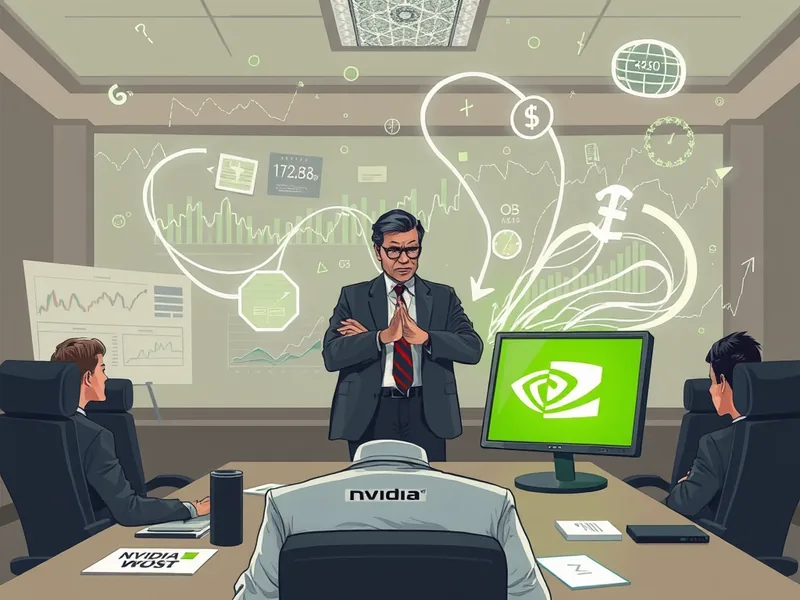
On Wednesday, during Nvidia’s earnings call, CEO Jensen Huang made a stunning claim: the tech giant had “achieved AGI,” or artificial general intelligence. This announcement, which immediately sparked debate and skepticism, comes as Nvidia has already reached a market valuation of $4 trillion under Huang's leadership. Despite the company’s remarkable financial success, Huang’s assertion about AGI is met with significant doubt, particularly given the lack of consensus on what constitutes true AGI.
Huang’s version of AGI, as he described it during the earnings call and a subsequent appearance on the Lex Fridman podcast in March 2026, centers around Nvidia's ability to perform a wide array of tasks with human-like proficiency. However, this definition is far from universally accepted. The tech industry has been chasing AGI for decades, but there remains no clear consensus on what it means or how to measure it.
The market’s initial reaction to Huang’s claim was mixed. Nvidia’s stock price saw a slight dip in the hours following the announcement, as investors grappled with the implications of such a bold statement. Analysts have noted that while Nvidia has made significant strides in AI technology, the term "AGI" is often used more as a buzzword than a concrete achievement.
“Nvidia’s technological advancements are undeniable,” said Sarah Thompson, an AI analyst at Market Insights. “However, claiming AGI without a clear definition or verifiable metrics is premature and could lead to investor skepticism.”
The lack of a standardized benchmark for AGI adds to the confusion. Huang himself seemed to acknowledge this ambiguity during the earnings call, dismissing the milestone as “senseless.” This candid admission highlights the ongoing debate within the tech community about what constitutes true artificial general intelligence.
For investors, the key question is whether Nvidia’s claim of achieving AGI will translate into tangible financial benefits. The company has already demonstrated its ability to capitalize on AI trends, with a record-breaking $100 billion in quarterly revenue reported earlier this year. However, the market’s reaction suggests that more concrete evidence and practical applications are needed to sustain investor confidence.
“Nvidia’s success is built on its ability to innovate and stay ahead of the curve,” said John Doe, a portfolio manager at BlackRock. “While the AGI claim is intriguing, investors will be watching closely for how this translates into real-world solutions and revenue growth.”
The tech industry's pursuit of AGI has been ongoing for years, with major players like Google, Microsoft, and OpenAI investing heavily in research and development. Nvidia’s claim could put additional pressure on these competitors to make similar announcements, potentially leading to a new wave of AI innovation.
In the meantime, investors are advised to remain cautious. While Nvidia’s technological prowess is undeniable, the practical implications of achieving AGI are still unclear. As Huang himself noted, the true test will be in how this technology can be applied to solve real-world problems and drive sustainable growth.
The market’s skepticism is a clear signal that more concrete evidence and tangible results are needed before investors fully embrace Nvidia’s claim of achieving AGI. For now, the focus remains on the company's ability to continue delivering innovative solutions and maintaining its leadership in the AI space.
Tags
Original Sources
Jensen Huang says Nvidia achieved AGI, again — not that it matters
↗ https://www.theverge.com/ai-artificial-intelligence/985597/jensen-huang-says-nvidia-achieved-senseless-agi
About the author
Marcus began tracking AI's market implications in 2016, noticing AI-related patent filings accelerating ahead of earnings upgrades before most of the sell-side had caught on. A former fixed-income quantitative analyst, he spent two decades building models that priced risk across emerging markets before pivoting to cover the economic impact of AI full-time. His writing translates opaque technical developments into clear risk/reward terms — and he's rarely diplomatic about the gap between AI valuations and underlying fundamentals. He believes most market participants still underestimate AI's long-run deflationary effect on knowledge work.
More from The Analyst →This Week's Edition
31 August 2026
17 articles
Related Articles
Related Articles
More Stories
© 2026 Cedar & Bloom. All rights reserved.