The Drum · Weekly AI news, freeSubscribe →

Share
Mayor Zohran Mamdani's one-year moratorium on generative AI for young learners raises a question school systems everywhere are quietly wrestling with: how much exposure to machine-generated content is safe for a developing mind?
For a parent dropping a seven-year-old off at a New York City public school this fall, the classroom will look mostly the same. But one thing will be missing: chatbots and generative AI tools designed to interact directly with students.
Mayor Zohran Mamdani announced Tuesday what his office is calling the city's first comprehensive artificial intelligence policy for public schools. At its center is a one-year moratorium on student-facing generative AI tools for children from 2-K through 8th grade, set to take effect in the 2026-2027 school year. That covers everyone from toddlers in pre-kindergarten programs through middle schoolers, a population of hundreds of thousands of children across the country's largest school system.
The move matters far beyond New York's five boroughs. School districts nationwide have spent the past several years scrambling to figure out what to do with generative AI, the technology behind tools like chatbots that can write essays, answer homework questions, and hold conversations that feel remarkably human. Some districts embraced these tools quickly, hoping they'd help struggling readers or free up teacher time. Others banned them outright, worried about cheating. Few have set out a formal, citywide policy with the scope Mamdani is proposing.
Think of generative AI the way you might think of a new medication. It might genuinely help some people. It might also carry side effects that aren't fully understood yet, especially for populations who weren't part of the original testing. Young children, whose brains are still developing basic skills like reading comprehension, emotional regulation, and the ability to distinguish fact from fiction, are exactly the kind of population regulators tend to be cautious about when new technology arrives before the research catches up.
The policy, as described, targets tools that interact directly with students rather than software used by teachers or administrators for lesson planning or grading. That distinction matters. A chatbot that a second-grader might ask to explain a math problem, or one designed to serve as a conversational tutor, would fall under the ban. Software that helps a teacher draft a syllabus would likely not.
This is a narrower approach than a blanket AI ban, and it reflects a tension that's become familiar in AI policy debates generally. Regulators aren't necessarily trying to stop AI from touching schools altogether. They're trying to draw a line between tools that support the adults responsible for children's education and tools that put children in direct, unsupervised conversation with a machine.
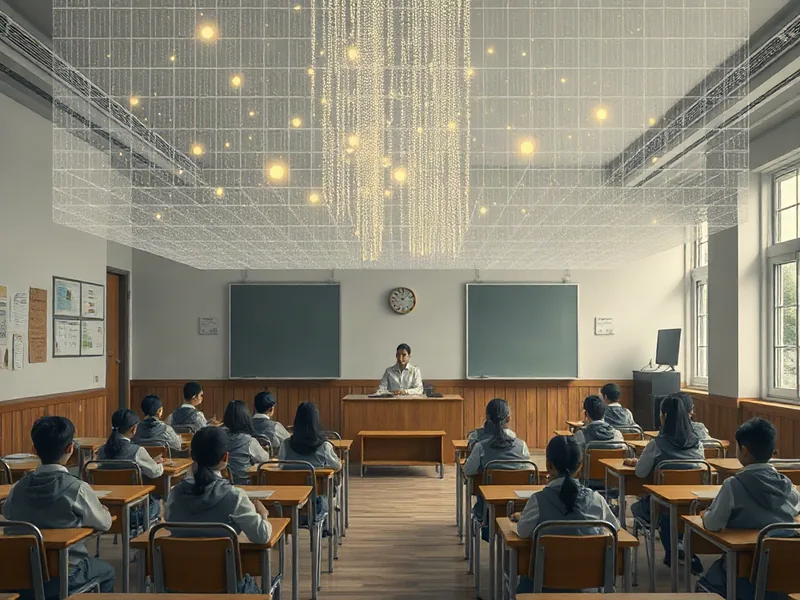
That line matters because young children process information differently than teenagers or adults do. A ten-year-old chatting with an AI tutor may not have the critical thinking skills to recognize when the tool is wrong, or to understand that the warm, conversational tone coming from a screen isn't a real relationship. Child development researchers have long flagged concerns about how young children interpret anthropomorphized technology, whether it's a talking toy or a chatbot that responds with apparent empathy. A one-year pause gives the city time to study those risks more closely before deciding whether, or how, to loosen the restriction.
The moratorium's one-year timeframe suggests this isn't meant to be permanent. It reads more like a research pause than a philosophical rejection of AI in classrooms. That's a meaningful distinction for a city that has, in other contexts, embraced technology-forward policy. Mamdani's framing of this as a "comprehensive" policy suggests more guidance is coming for older students and for the technology's use by teachers and staff, even as the youngest learners are shielded for now.
It's worth noting what this policy doesn't address. Generative AI tools are widely available outside school walls, on home computers, tablets, and phones. A moratorium covering public school systems can't stop a child from encountering the same chatbots at home, at an after-school program, or on a friend's device. Policies like this one are best understood as one layer of protection, not a comprehensive shield. Parents and caregivers will still need to make their own decisions about AI exposure outside the classroom, ideally informed by the same caution driving the school district's approach.
There's also the practical question of enforcement. School districts have struggled for years to keep unauthorized apps and websites off school devices and networks, and generative AI tools are proliferating quickly, often embedded into products that don't advertise themselves as AI at all. A search engine, a homework help app, a language learning program: many now have generative AI features baked in. Drawing a clean, enforceable line around what counts as a "student-facing generative AI tool" will likely prove harder in practice than it sounds on paper.
New York City runs the largest public school system in the United States, serving roughly a million students. When it sets policy, other districts pay attention, the way other cities often follow New York's lead on issues from congestion pricing to smoking bans. A one-year moratorium here could become a template, or at least a talking point, for school boards across the country still figuring out their own AI rules.
The bigger issue underneath this specific policy is one that shows up again and again in AI regulation: technology is moving faster than the evidence base needed to govern it responsibly. Nobody yet has years of longitudinal data on what happens to a seven-year-old's reading comprehension or social development after months of chatbot interaction. That uncertainty is precisely why a pause, rather than a permanent rule in either direction, makes sense as a starting point. It buys time for researchers, educators, and parents to gather real evidence, rather than guessing at the long-term costs of exposing the youngest and most vulnerable students to a technology still being tested on the rest of us.
Tags
Original Sources
Mamdani announces AI ban for young students in NYC schools
↗ https://www.reuters.com/video/watch/idRW980302092026RP1
Mamdani imposes one-year ban on AI for most NYC students | Reuters
↗ https://www.reuters.com/technology/mamdani-imposes-one-year-ban-ai-most-nyc-students-2026-09-02
About the author
Amara's entry point into AI was an epidemiology role at a London research hospital, where she spent five years studying how digital health tools reached — or conspicuously failed to reach — underserved communities. Watching early algorithmic systems in healthcare quietly entrench existing inequalities, she redirected her career toward the systemic consequences of AI at scale. She covers AI through an unflinching lens: who benefits, who bears the cost, and what evidence actually says versus what the press release claims. Her writing is calm and precise, but she doesn't mistake balance for neutrality.
More from The Steward →This Week's Edition
7 September 2026
23 articles
Related Articles

AI Giants Move to Govern Themselves, and Decide Who Gets the Winnings
Policy & Regulation · 5 min

FDA Weighs Treating Generative AI Medical Tools Like Physicians, Not Devices
Policy & Regulation · 5 min

Ottawa Expands AI Funding for B.C. Businesses Under $700-Million National Strategy
Policy & Regulation · 5 min
Related Articles
AI Giants Move to Govern Themselves, and Decide Who Gets the Winnings
Policy & Regulation · 5 min
FDA Weighs Treating Generative AI Medical Tools Like Physicians, Not Devices
Policy & Regulation · 5 min
Ottawa Expands AI Funding for B.C. Businesses Under $700-Million National Strategy
Policy & Regulation · 5 min
More Stories
© 2026 Cedar & Bloom. All rights reserved.
