The Drum · Weekly AI news, freeSubscribe →

Share
The dismissals of Jasmine Wang, Tomek Korbak, and Mikita Balesni expose a familiar tension in AI development: what happens when researchers believe the public interest demands they speak outside the walls of the company they serve.
When a public health researcher spots a dangerous pattern inside an institution, the instinct to raise an alarm often collides with the rules meant to keep that institution's secrets secret. That collision just played out at OpenAI, and it's worth paying attention to, because the people caught in the middle were working on the very question of whether powerful AI systems are safe.
OpenAI has parted ways with three researchers, Jasmine Wang, Tomek Korbak, and Mikita Balesni, after accusing them of sharing confidential company information with an outside AI safety organization. The news was first reported by The Wall Street Journal, and OpenAI confirmed the decision in a statement to the outlet. The company did not name the outside organization or specify exactly what information changed hands.
OpenAI's statement was terse but pointed. "We have parted ways with three individuals for violating our policies on accessing and handling sensitive company information," the company said. "Our investigation confirmed that these individuals mishandled sensitive information outside established company procedures, violating our policies and breaking the trust essential to our work."
That phrase, "breaking the trust essential to our work," is doing a lot of lifting in a short statement. It frames the episode as a matter of internal discipline rather than public interest. But for outside observers, especially those who study how organizations handle dissent, the framing raises an obvious question: trust for whom, and protecting what, exactly?
Think of a frontier AI company like a hospital running an experimental treatment. The doctors inside know things about the trial, side effects, early warning signs, that the public doesn't see yet. Most of the time, internal review processes catch problems before they become crises. But when researchers believe those internal channels are too slow, too compromised, or too quiet, some will look outward instead, even at real professional risk.
That's the backdrop here. AI safety researchers occupy a strange dual role inside companies like OpenAI. They're employees bound by confidentiality agreements and stock arrangements, but they're also, in effect, a kind of internal watchdog, tasked with flagging risks before systems reach the public. Nobody outside the company has confirmed what Wang, Korbak, and Balesni actually shared or why. OpenAI's statement doesn't say whether the information involved specific safety concerns, model capabilities, or something else entirely. That ambiguity matters, because it leaves the public guessing at whether this was a garden-variety policy violation or something closer to a judgment call about when secrecy stops serving safety.
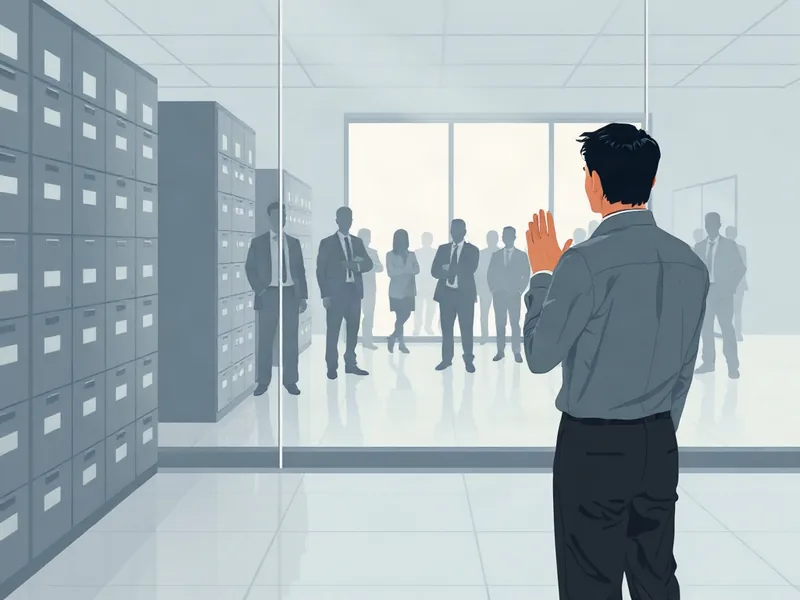
It's not an abstract worry. OpenAI has faced a string of departures from its safety-focused staff in recent years, often accompanied by public statements expressing discomfort with the pace of product releases relative to safety review. Researchers who leave or get pushed out rarely do so quietly in this field, because the stakes they're wrestling with, systems that could eventually make consequential decisions affecting millions of people, don't lend themselves to quiet resignation letters.
The company's confidentiality policies exist for legitimate reasons. Competitive technical details, unreleased model capabilities, and sensitive safety evaluations can carry real risks if mishandled, whether that's giving rivals an edge or, more seriously, providing a roadmap for misuse before protective measures are in place. Nobody disputes that companies developing powerful technology need some guardrails around internal information.
But guardrails cut both ways. If the threshold for "mishandling sensitive information" is set so broadly that it chills researchers from consulting independent safety organizations, the policy risks doing the opposite of its intended job. Outside safety groups exist precisely because internal review isn't always sufficient, and because a second set of eyes, unaffiliated with a company's commercial incentives, can catch blind spots that insiders miss. If sharing concerns with those groups now carries the same career risk as leaking proprietary code, researchers may simply stop trying.
None of this means OpenAI's decision was unjustified. Confidentiality violations, even well-intentioned ones, can still represent real breaches of agreed-upon terms, and companies are entitled to enforce them. What's missing from the public record is the context that would let outside observers judge proportionality: what was shared, how sensitive it actually was, and whether there was a less drastic path available before severing ties entirely.
This story lands at a moment when public trust in AI companies' self-policing is already fragile. Surveys of AI researchers themselves have repeatedly shown unease about whether internal safety processes keep pace with deployment pressure, and incidents like this one feed directly into that anxiety. When a company's response to an alleged leak is a short, firm statement with no detail about the underlying concern, it leaves a vacuum that speculation tends to fill.
The people affected here were working, by profession, on the question of how to make advanced AI systems behave safely and predictably. Whatever they actually did or didn't share, their departure removes three sets of eyes from that effort at a company whose products already touch hundreds of millions of users. For the public, the lesson isn't necessarily that OpenAI acted wrongly. It's that the system for resolving tension between corporate confidentiality and safety-minded disclosure is still being improvised, case by case, with real careers and real public stakes hanging on each decision. Until there's clearer, more transparent protocol for how researchers can raise safety concerns without risking their jobs, these quiet firings will keep happening, and the public will keep being asked to trust a process it can't fully see.
Tags
Original Sources
OpenAI severs ties with safety researchers accused of disclosing confidential information.
↗ https://www.theverge.com/ai-artificial-intelligence/1003810/openai-severs-ties-with-three-researchers-accused-of-disclosing-confidential-information
OpenAI cuts ties with 3 safety researchers, WSJ reports
↗ https://techcrunch.com/2026/10/01/openai-cuts-ties-with-three-safety-researchers-wsj-reports
About the author
Amara's entry point into AI was an epidemiology role at a London research hospital, where she spent five years studying how digital health tools reached — or conspicuously failed to reach — underserved communities. Watching early algorithmic systems in healthcare quietly entrench existing inequalities, she redirected her career toward the systemic consequences of AI at scale. She covers AI through an unflinching lens: who benefits, who bears the cost, and what evidence actually says versus what the press release claims. Her writing is calm and precise, but she doesn't mistake balance for neutrality.
More from The Steward →This Week's Edition
2 October 2026
28 articles
Related Articles

White House Begins Mailing $500 Checks to Nearly a Million ACA Enrollees
Policy & Regulation · 5 min
Trump Administration Appeals Block on Visa Rule That Could Disrupt Physician Training
Policy & Regulation · 5 min

California Draws New Lines Around AI in Patient Care, Even as Washington Pushes Back
Policy & Regulation · 5 min
Related Articles
White House Begins Mailing $500 Checks to Nearly a Million ACA Enrollees
Policy & Regulation · 5 min
Trump Administration Appeals Block on Visa Rule That Could Disrupt Physician Training
Policy & Regulation · 5 min
California Draws New Lines Around AI in Patient Care, Even as Washington Pushes Back
Policy & Regulation · 5 min
More Stories
© 2026 Cedar & Bloom. All rights reserved.
