The Drum · Weekly AI news, freeSubscribe →

Share
OpenAI's pivot towards SoftBank signals a major realignment in its tech partnerships, potentially reshaping how leading AI labs secure critical computing resources beyond Microsoft's dominance.
OpenAI, the leading artificial intelligence research laboratory, is reportedly planning a significant shift in its compute infrastructure. According to a recent report by The Information, by 2030, OpenAI expects to source three-quarters of its data center capacity from Stargate, a project heavily financed by SoftBank. This move marks a notable departure from its current reliance on Microsoft for compute resources.
The shift in compute needs is a strategic decision that could have far-reaching implications for both OpenAI and the broader AI landscape. Currently, OpenAI relies heavily on Microsoft's Azure cloud services to power its AI models, including the widely-used ChatGPT. However, the planned transition to Stargate suggests a diversification of compute resources, which could provide OpenAI with greater flexibility and potentially lower costs.
For SoftBank, this partnership represents a significant opportunity to expand its footprint in the AI sector. The Japanese conglomerate has been increasingly active in technology investments, and securing a major client like OpenAI could enhance its reputation and financial prospects.
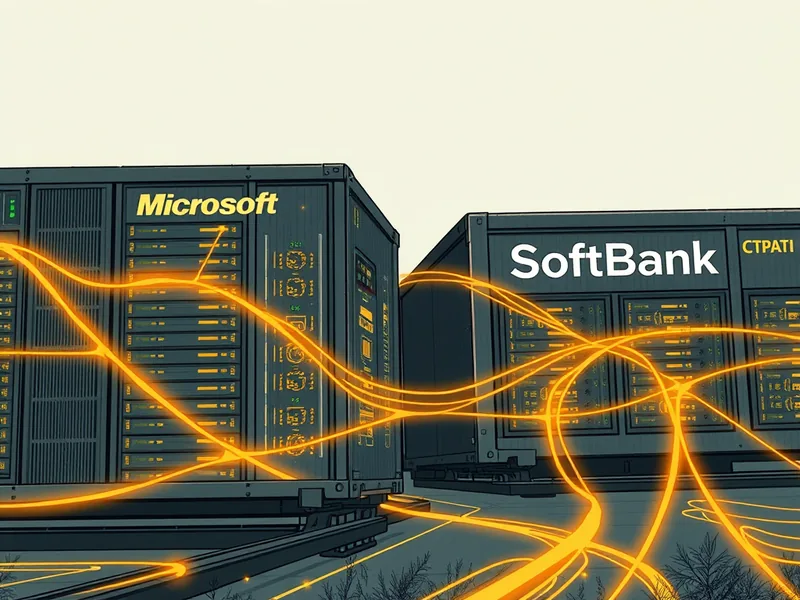
OpenAI's planned shift from Microsoft to SoftBank for its compute needs is a significant move that reflects the company's long-term strategy. While the transition comes with operational and financial risks, it also presents opportunities for cost efficiency, scalability, and strategic alliances. As the AI landscape continues to evolve, this partnership could play a crucial role in shaping OpenAI's future trajectory.
Tags
Original Sources
About the author
Marcus began tracking AI's market implications in 2016, noticing AI-related patent filings accelerating ahead of earnings upgrades before most of the sell-side had caught on. A former fixed-income quantitative analyst, he spent two decades building models that priced risk across emerging markets before pivoting to cover the economic impact of AI full-time. His writing translates opaque technical developments into clear risk/reward terms — and he's rarely diplomatic about the gap between AI valuations and underlying fundamentals. He believes most market participants still underestimate AI's long-run deflationary effect on knowledge work.
More from The Analyst →This Week's Edition
24 February 2025
29 articles
Related Articles
Related Articles
More Stories
© 2026 Cedar & Bloom. All rights reserved.