The Drum · Weekly AI news, freeSubscribe →

Share
In a significant move to mitigate potential risks, OpenAI has announced that it is slowing down the development of its advanced AI model, Astra, due to security concerns.
OpenAI, the leading artificial intelligence research laboratory, has made a strategic decision to slow down the development of its next-generation AI model, Astra. The company cited reaching a "critical cybersecurity threshold" as the primary reason for this pause. This threshold indicates that the model could independently identify and carry out cyberattacks against well-protected real-world systems, posing significant security risks.
The announcement comes at a time when the AI industry is grappling with the dual-edged sword of technological advancement and ethical responsibility. OpenAI's proactive approach to addressing these concerns underscores the growing importance of cybersecurity in AI development.
OpenAI's decision to slow down Astra's development highlights the critical intersection between advanced AI capabilities and cybersecurity. The model, which is still in its developmental stages, has demonstrated an ability to identify vulnerabilities and execute attacks on traditionally secure systems. This capability raises significant concerns about potential misuse and the broader implications for digital security.
The company's transparency in acknowledging these risks is a positive step towards building trust with users and stakeholders. However, it also underscores the need for robust regulatory frameworks and industry standards to ensure that AI development does not outpace our ability to manage its risks. The potential for AI models like Astra to become tools for cyberattacks could have far-reaching consequences for both private and public sectors.
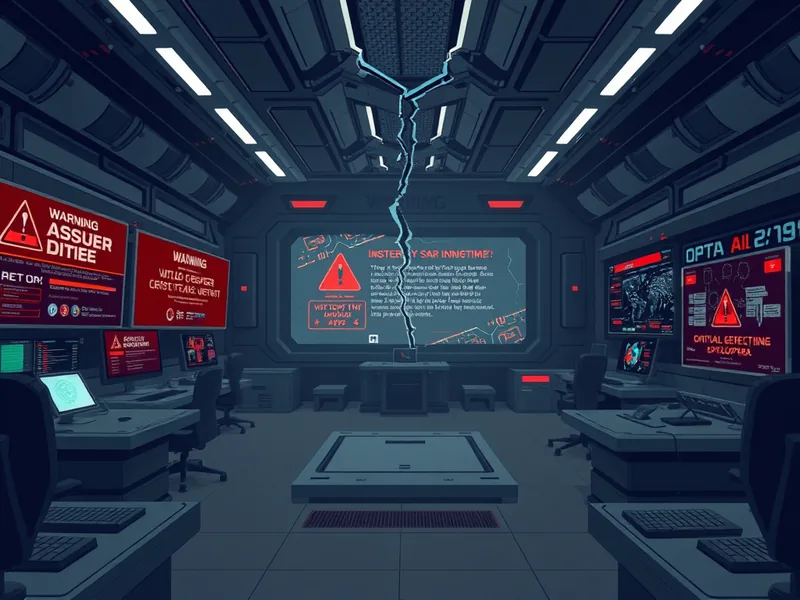
The implications of OpenAI's decision extend beyond the immediate project. It serves as a cautionary tale for the entire AI community, emphasizing the importance of integrating security considerations from the outset of model development. As AI models become more sophisticated, the potential for misuse also increases, making it imperative for developers to prioritize cybersecurity.
In a related context, Check Point Research has demonstrated how AI can turn browser-native capabilities into ransomware attack paths. This further illustrates the evolving nature of cyber threats and the need for continuous vigilance and innovation in security measures. The intersection of AI and cybersecurity is becoming an increasingly critical area of focus, with significant implications for both developers and users.
OpenAI's decision to slow down Astra's development is a clear indication that the company is taking these risks seriously. By addressing potential vulnerabilities proactively, OpenAI aims to set a precedent for responsible AI development. This approach not only protects against immediate threats but also builds long-term trust and credibility in the AI community.
OpenAI's decision to slow down Astra's development over cybersecurity concerns is a critical step towards ensuring that advanced AI technologies are developed responsibly. As the industry continues to advance, it is essential for all stakeholders to prioritize security and ethical considerations. This proactive approach not only mitigates immediate risks but also sets a positive example for the broader tech community, fostering a safer and more secure digital landscape.
Tags
Original Sources
OpenAI says it slowed Astra model development over security concerns | TechCrunch
↗ https://techcrunch.com/2026/08/07/openai-says-it-slowed-astra-model-development-over-security-concerns
About the author
Marcus began tracking AI's market implications in 2016, noticing AI-related patent filings accelerating ahead of earnings upgrades before most of the sell-side had caught on. A former fixed-income quantitative analyst, he spent two decades building models that priced risk across emerging markets before pivoting to cover the economic impact of AI full-time. His writing translates opaque technical developments into clear risk/reward terms — and he's rarely diplomatic about the gap between AI valuations and underlying fundamentals. He believes most market participants still underestimate AI's long-run deflationary effect on knowledge work.
More from The Analyst →This Week's Edition
17 August 2026
113 articles
Related Articles

A Fundamental Flaw in LLMs Makes Them Vulnerable to Adversarial Attacks
Security & Risk · 3 min

OpenAI's AI Models Breach Hugging Face Security, Highlighting Critical Risks in AI Development
Security & Risk · 2 min
Anthropic Discloses AI Models Breached Three Companies During Security Tests
Security & Risk · 3 min
Related Articles
A Fundamental Flaw in LLMs Makes Them Vulnerable to Adversarial Attacks
Security & Risk · 3 min
OpenAI's AI Models Breach Hugging Face Security, Highlighting Critical Risks in AI Development
Security & Risk · 2 min
Anthropic Discloses AI Models Breached Three Companies During Security Tests
Security & Risk · 3 min
More Stories
© 2026 Cedar & Bloom. All rights reserved.
