The Drum · Weekly AI news, freeSubscribe →

Share
While OpenAI's $122 billion funding round sounds like a venture capital windfall, most of it consists of vendor deals and contingent capital from tech giants Amazon, Nvidia, and SoftBank, rather than traditional VC investments.
OpenAI recently announced a massive $122 billion funding round, valuing the company at an astounding $852 billion post-money. However, a closer examination reveals that this headline figure is primarily composed of vendor deals, contingent capital, and strategic agreements rather than traditional venture capital investments.
The round was anchored by three major players: Amazon ($50 billion), Nvidia ($30 billion), and SoftBank ($30 billion). These contributions account for the bulk of the $122 billion, with the remaining $12 billion coming from a broader pool of institutional and individual investors.
Amazon's contribution of $50 billion is not as straightforward as it seems. Only $15 billion of this amount is committed capital on day one. The other $35 billion is contingent on OpenAI either going public or achieving the technological milestone of artificial general intelligence (AGI) by year-end.
However, the more significant aspect of Amazon's investment is the underlying commercial relationship. As part of the deal, OpenAI has committed to spending $100 billion on AWS infrastructure over eight years. This arrangement is essentially a prepayment for guaranteed future revenue, with Amazon capturing a valuation markup in the process. While this may provide strategic benefits for OpenAI, it is not a neutral financial bet on equity appreciation.
Nvidia's $30 billion contribution is primarily in the form of compute capacity rather than liquid capital. The deal includes commitments for 3 gigawatts (GW) of dedicated inference capacity and 2 GW of training on Vera Rubin systems. This structured arrangement ensures that OpenAI has access to significant computational resources, which are crucial for its operations.
While this provides a strategic advantage for OpenAI, it is not equivalent to receiving $30 billion in cash. Instead, it represents a vendor relationship where Nvidia supplies compute infrastructure at a price that likely benefits both parties. This structure is designed to look like an equity round but functions more as a long-term supply agreement.
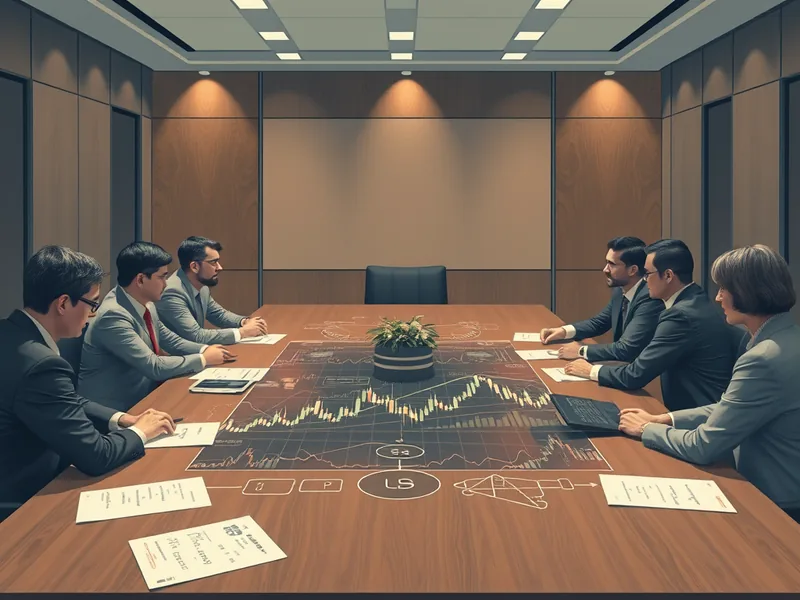
SoftBank's contribution of $30 billion is the closest to traditional equity, but it is still structured in tranches. This means that the capital will be released based on specific milestones and conditions, rather than being immediately available.
The structure of this funding round has significant implications for OpenAI’s financial health and strategic positioning. While the headline figure of $122 billion may suggest a robust valuation, the reality is more complex. The majority of the capital is tied to specific conditions and vendor agreements, which could limit OpenAI's financial flexibility.
Despite these risks, the funding round presents several opportunities for OpenAI:
In conclusion, while the $122 billion funding round for OpenAI is a significant milestone, it is important to understand its structure and implications. The balance of vendor deals, contingent capital, and strategic agreements will play a crucial role in shaping OpenAI’s future.
Tags
Original Sources
About the author
Marcus began tracking AI's market implications in 2016, noticing AI-related patent filings accelerating ahead of earnings upgrades before most of the sell-side had caught on. A former fixed-income quantitative analyst, he spent two decades building models that priced risk across emerging markets before pivoting to cover the economic impact of AI full-time. His writing translates opaque technical developments into clear risk/reward terms — and he's rarely diplomatic about the gap between AI valuations and underlying fundamentals. He believes most market participants still underestimate AI's long-run deflationary effect on knowledge work.
More from The Analyst →This Week's Edition
7 April 2026
29 articles
Related Articles
Related Articles
More Stories
© 2026 Cedar & Bloom. All rights reserved.