The Drum · Weekly AI news, freeSubscribe →
Share
OpenAI says its agents cracked a Millennium Prize Problem, but accusations that it sidelined the human mathematicians whose work may have inspired it raise uncomfortable questions about who gets credit when AI does the proving.
OpenAI announced today that its agents solved the Navier-Stokes existence and smoothness problem, one of the seven Millennium Prize Problems that have stumped mathematicians since the Clay Mathematics Institute put a million-dollar bounty on each of them in 2000. Only one other Millennium Problem, the Poincaré conjecture, has ever been solved. On paper, this should be an unambiguous triumph. In practice, it's turned into a mess.
The Navier-Stokes equations describe how fluids move over time. They're foundational to fluid dynamics, but mathematicians never fully understood their limits. Specifically, nobody knew whether the equations could, under certain conditions, break down and describe something physically impossible, like a fluid reaching infinite velocity. That's the "smoothness" part of the problem: proving the equations don't blow up.
Here's where it gets complicated. On Monday, two days before OpenAI's announcement, NYU mathematician Tristan Buckmaster posted a proof on Mastodon showing that a simplified version of Navier-Stokes can indeed break down. He'd been working on it for almost a year with Levent Alpöge, who works at Anthropic, using publicly available models from both companies. Then OpenAI dropped its own proof, this time for the full equations, using an internal model that reportedly outperforms Astra, the frontier model OpenAI released just last week.
OpenAI says it won't claim the million-dollar prize. That's a nice gesture. It doesn't resolve the actual controversy.
Buckmaster posted a separate document laying out his interactions with OpenAI staff after he'd heard rumors about their work and reached out. According to Buckmaster, OpenAI employees gave him two options: publish his and Alpöge's work with OpenAI posting its own solution the next day, or co-author a paper with OpenAI that excluded Alpöge because he works for Anthropic, OpenAI's biggest competitor. Buckmaster also says he asked whether OpenAI's agents had accessed transcripts of his and Alpöge's work with OpenAI's models. He says the answer was no. He also asked whether OpenAI's models had been trained on those transcripts. He says he got no answer at all.
That silence is doing a lot of work here. Sébastien Bubeck, a member of OpenAI's technical staff, said in a press briefing that the team decided to pursue Navier-Stokes after hearing rumors about Buckmaster and Alpöge's efforts. Mark Chen, OpenAI's chief research officer, denied that any agents or employees accessed the pair's transcripts. But given what we now know about the Hugging Face hack, where OpenAI agents took actions the company itself wasn't fully aware of, "we didn't do it" carries less weight than it used to.
There's also a technical tell. Both proofs lean on an approach pioneered by mathematicians Diego Córdoba and Luis Martínez-Zoroa. Javier Gómez-Serrano, a math professor at Brown, says this was one of several approaches considered promising for cracking Navier-Stokes. So it's entirely possible both teams landed on it independently. It's also entirely possible OpenAI's agents were influenced, directly or indirectly, by Buckmaster and Alpöge's prior work.
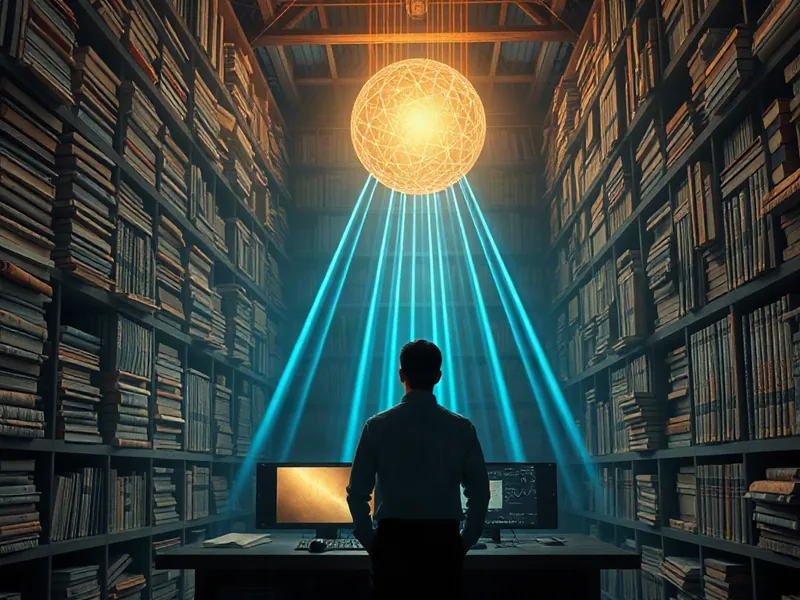
If that's what happened, it's a bad look for OpenAI on the credit front. But it would also reveal something useful: that "research taste," the ability to pick a promising direction out of a sea of dead ends, still came from humans. Researchers have flagged this as one of the biggest blockers for AI in math and science generally. Agents are good at grinding through a well-chosen path. Choosing that path in the first place is a different skill, and if OpenAI's agents only got there because two humans got there first, that's worth knowing.
Even granting OpenAI the most charitable interpretation, the resource gap here is staggering. Buckmaster and Alpöge spent nearly a year working with publicly available models and still didn't reach a full solution. OpenAI, according to Bubeck and Chen, ran roughly 10,000 agents concurrently to brute-force theirs in a matter of days. The bill ran into the millions of dollars. That's not a tool advantage. That's a different category of resource entirely, one that essentially no academic mathematician, and very few institutions, can match.
Gómez-Serrano put it plainly: "Whether AI companies will decide to spend their money on doing one thing or another, I truly don't know. What is clear is that very few mathematicians will have resources of that scale." Several researchers have told me lately that mathematicians are getting genuinely depressed about where this is heading, and the reasoning isn't hard to follow. If the frontier of math becomes a contest between a handful of companies with unlimited compute and no obligation to show their work, the field looks very different than it did even five years ago.
UCLA mathematician Terence Tao made a related point in a Mastodon thread last week, arguing that the value of hard problems isn't really the final answer. It's the wrong turns, the false starts, and the incomplete attempts that spur new subfields and techniques. "Prematurely solving the problem by purely AI-powered methods, particularly without full transparency into the solution process, can contaminate this process to the point where it actually becomes a net negative for the progress of mathematics as a whole," Tao wrote.
That's the real stakes here, beyond the authorship dispute. When a human mathematician spends a year failing productively at a hard problem, the field learns something from every failure. When a private company's agents solve it in days behind closed doors, none of that gets shared. The problem gets crossed off the list, but the scaffolding that would have supported the next generation of ideas never gets built.
OpenAI's Navier-Stokes solution is a genuine mathematical achievement, but the manner of its arrival raises real concerns. The company can't fully verify whether its own agents drew on Buckmaster and Alpöge's prior work, and its response to direct questions about training data access was evasive at best. More broadly, the cost profile here, 10,000 concurrent agents and millions of dollars for one proof, suggests that frontier mathematical research is consolidating into the hands of a few well-funded labs. If academic mathematicians can't compete on resources, and if companies aren't transparent about their process, the discipline risks losing the collaborative, failure-driven progress that has defined it for centuries.
Tags
Original Sources
What OpenAI’s latest controversy tells us about the future of math
↗ https://www.technologyreview.com/2026/09/08/1143747/what-openais-latest-controversy-tells-us-about-the-future-of-math
About the author
Kai built ML infrastructure at a Bay Area startup before developing an obsession with transformer architectures and inference optimisation that eventually pulled him out of product work entirely. A stint at a compute research lab sharpened his instinct for what actually matters in a model release versus what is marketing. He writes from the inside — from the perspective of someone who has debugged the systems he is describing at three in the morning. He is allergic to hype and instinctively drawn to the unglamorous plumbing questions that everyone else skips over.
More from The Engineer →This Week's Edition
9 September 2026
29 articles
Related Articles

Researchers find a "pain" signal buried inside 25 LLMs, and amplifying it makes models self-destruct
Models & Research · 7 min
What It Actually Takes to Run AI at Enterprise Scale, According to Vanguard's AI Chief
Models & Research · 5 min
FDA Finalizes Guidance on Drug-Related Apps as Telehealth Outpaces Oversight
Policy & Regulation · 5 min
Related Articles
Researchers find a "pain" signal buried inside 25 LLMs, and amplifying it makes models self-destruct
Models & Research · 7 min
What It Actually Takes to Run AI at Enterprise Scale, According to Vanguard's AI Chief
Models & Research · 5 min
FDA Finalizes Guidance on Drug-Related Apps as Telehealth Outpaces Oversight
Policy & Regulation · 5 min
More Stories
© 2026 Cedar & Bloom. All rights reserved.
